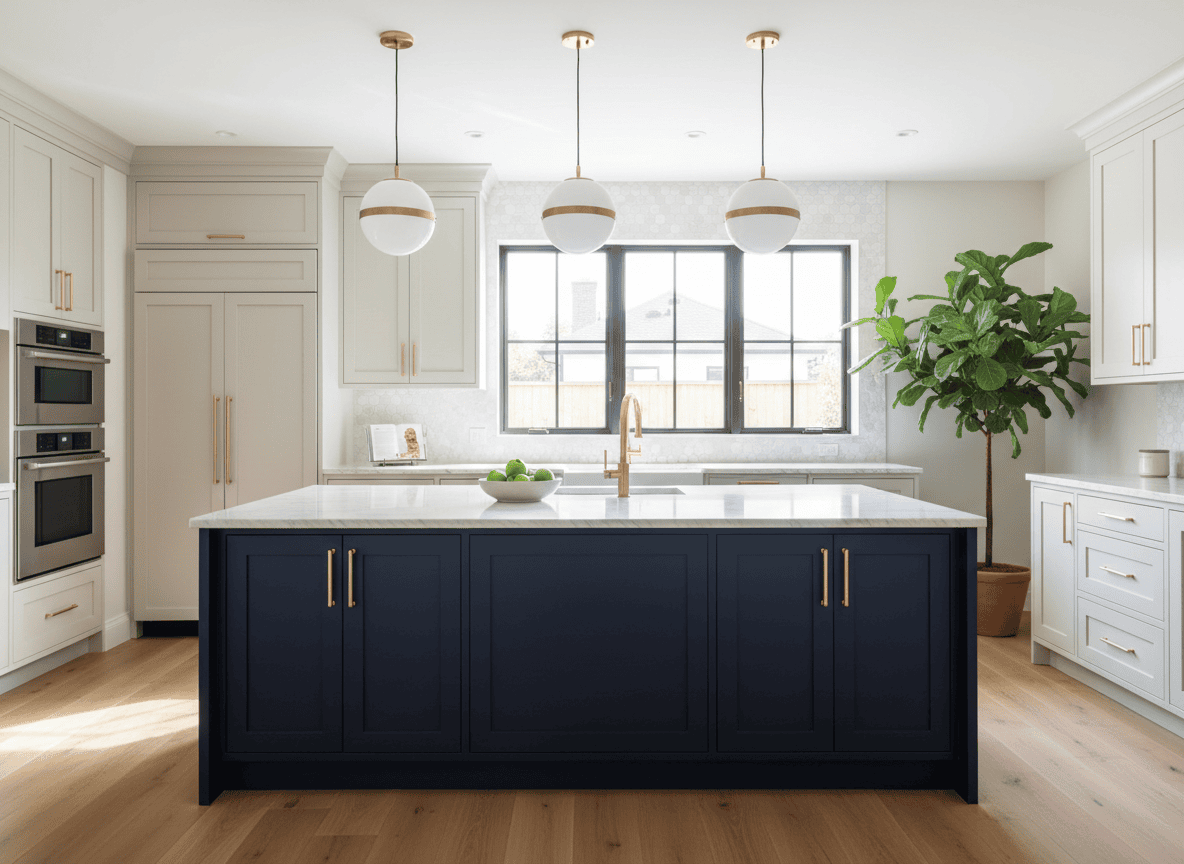
Forty-two percent of kitchen and bath designers said they were specifying mixed-color cabinetry, according to a National Kitchen and Bath Association survey of more than 450 members reported by trade publication Woodworking Network — and 60% said they expected to use multiple cabinet colors within a single kitchen more frequently going forward. That survey is a few years old now, but designers who work in kitchens today will tell you the number hasn’t gone anywhere but up. The specific look driving it has narrowed considerably since then: a dark, contrasting island anchoring a kitchen finished everywhere else in a light perimeter color, most often white, cream, or pale wood tone.
Why the Island Became the Color Experiment
Kitchen designers have long treated the island as the one piece of cabinetry a homeowner is willing to take a risk on. It doesn’t touch the ceiling, it’s usually not visible from every room the way perimeter cabinets are, and it can be swapped or refaced years down the road without redoing the whole kitchen. That’s exactly why it became the test surface for color. The NKBA’s own 2025 trends reporting found wood-grain finishes had overtaken painted white as the dominant perimeter cabinet choice, with white oak specifically named the preferred species — a shift toward warmer, lighter perimeter tones that makes a dark island read as more of a deliberate contrast than it would against a stark white kitchen. Pair a light oak or cream perimeter with a charcoal, navy, or forest-green island, and you get the exact configuration designers describe fielding the most client requests for.
Clients Are Asking Designers for Contrast, Not Matching
The same NKBA research found that 67% of designers agreed mixed and mismatched materials — in that survey’s case, backsplash tile — add a sense of uniqueness to a kitchen rather than looking unfinished, and 84% expect lighting fixtures within the same kitchen to intentionally use different materials from one another. That’s a meaningful data point beyond cabinets alone: it tells you the appetite for deliberate visual contrast, rather than a single coordinated palette, has become the default expectation clients bring into a design consultation, not something a designer has to talk them into. Two-tone cabinetry with a dark island is simply the highest-visibility version of that broader shift, because it’s the first thing anyone sees walking into the room.
The Practical Case Homeowners Don’t Always Consider
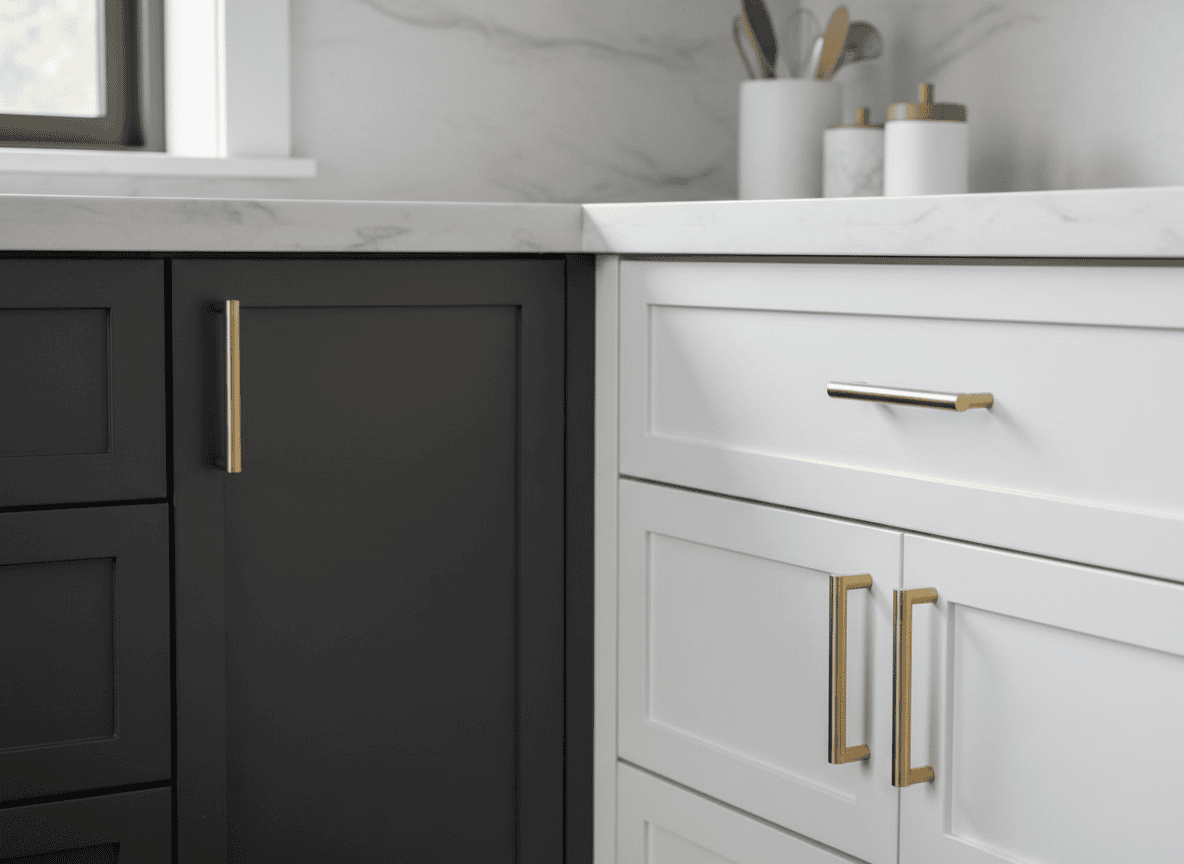
Beyond aesthetics, the two-tone island solves a maintenance problem that all-white kitchens created for themselves over the last decade. An island takes the most daily abuse in any kitchen — it’s where hands land, where kids do homework, where dishes get set down mid-cook — and a dark finish there hides fingerprints, water spots, and general wear far better than a light one does. Cabinet manufacturers have picked up on this directly: several major lines now offer matched dark-and-light two-tone packages specifically marketed around the island-versus-perimeter split, rather than leaving homeowners to mix finishes from different collections on their own.
That shift shows up in how manufacturers are now marketing entire product lines. Cabinet maker Home Decorators Cabinetry has built out dedicated collateral around two-tone kitchens as a named design category rather than a one-off customization request, which is a meaningful signal in an industry that typically only formalizes a look once demand has moved well past the early-adopter phase. It also changes the cost conversation: because the island and perimeter are frequently ordered from the same base cabinet line in two different finishes rather than as fully custom, one-off pieces, homeowners aren’t necessarily paying the premium once associated with a fully custom two-color kitchen.
Where This Trend Still Has Room to Grow
What’s notable is that the shift hasn’t fully caught up in resale-focused renovations, where all-white kitchens remain the safer, more universally marketable choice for a house going on the market soon. The two-tone island shows up overwhelmingly in kitchens people are renovating to live in for years, not flip — which tracks with designers describing it as a client-driven request rather than something they’re pushing as a resale strategy. That distinction matters for anyone deciding whether to commit to the look: it’s a kitchen you choose because you want to look at it every morning, not because an appraiser told you to.
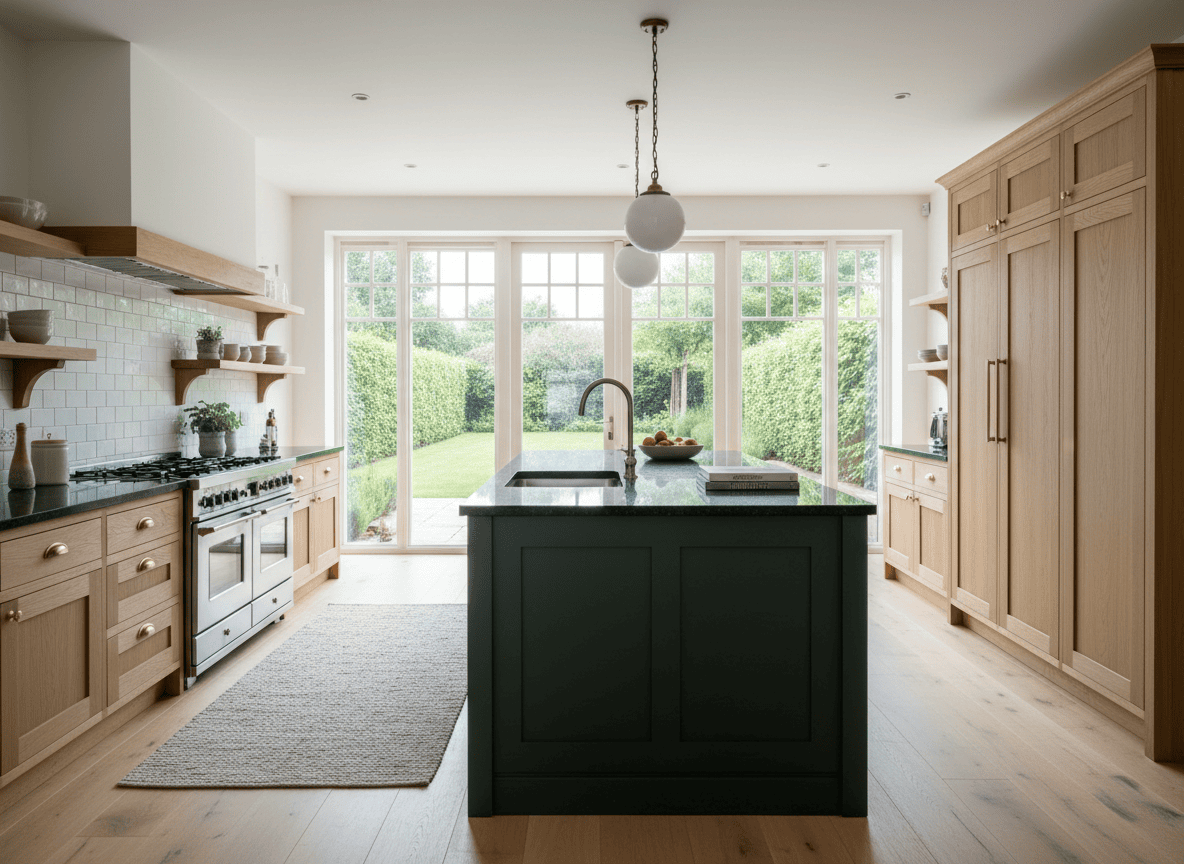
The all-white kitchen had a long run at the top of every renovation wish list, and its replacement isn’t another single dominant color — it’s two of them, deliberately kept apart, doing different jobs in the same room.