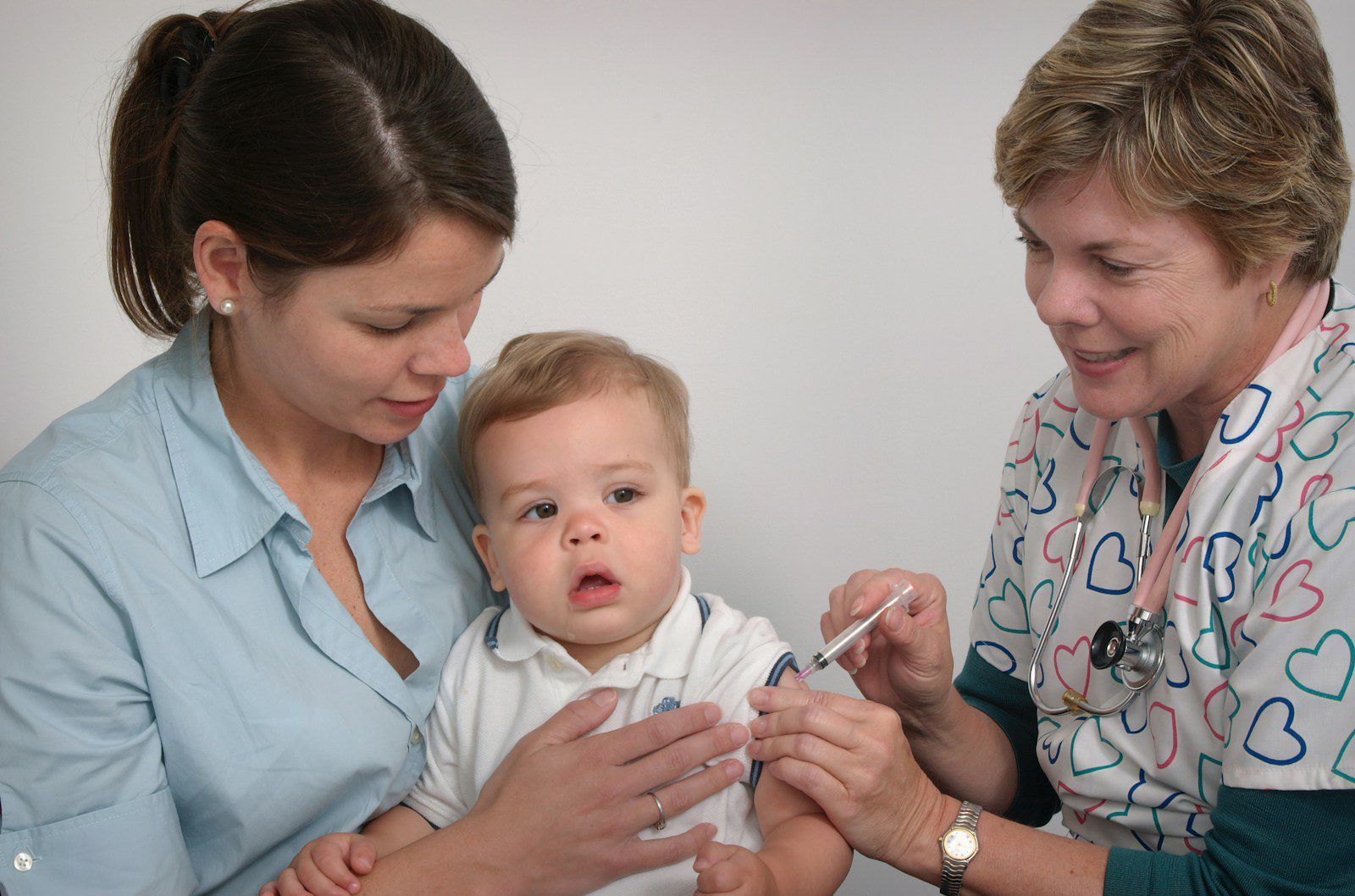
The nation’s top vaccine adviser has kicked off a political and scientific firestorm by arguing that routine shots against polio and measles should be left up to parents, even as both diseases show signs of creeping back. The comments land at a moment when the federal government is already rewriting the childhood vaccine schedule and when outbreaks are testing just how far “personal choice” can stretch before it collides with public health reality.
At stake is more than one doctor’s philosophy. The chair of the federal panel that guides the Centers for Disease Control and Prevention, and by extension schools and insurers, is openly challenging decades of consensus on how to keep kids safe from some of the most contagious viruses on earth. The clash between individual freedom and collective responsibility is no longer an abstract debate, it is playing out in real time in pediatricians’ offices, state capitols, and communities watching measles numbers climb.
Who Kirk Milhoan Is, And Why His Words Land So Hard
The man at the center of this storm is Kirk Milhoan, a cardiologist and pastor who now chairs the Advisory Committee on Immunization Practices at the CDC. In that role, the chair of the Advisory Committee on Immunization Practices helps decide which vaccines the CDC recommends for children and adults, decisions that ripple into school entry rules and insurance coverage. When someone in that seat suggests that shots against polio and measles should be optional, it is not just another opinion in the culture wars, it is a signal that the guardrails around long standing vaccine policy are shifting.
Milhoan’s rise has been closely tied to a broader political realignment around public health. He was elevated as a kind of counterweight to what critics of pandemic restrictions saw as heavy handed bureaucracy, and his skepticism of established epidemiology was part of the appeal. In one profile, Milhoan is described as rejecting decades of established research under the banner of “Personal Freedom VS” “Public Health” and “Science,” a framing that delights some activists and alarms many infectious disease specialists who spent their careers building that evidence base.
The Optional Polio Remark That Lit The Fuse
The immediate spark came when Milhoan, speaking as ACIP chair, argued that the polio vaccine should no longer be treated as a default requirement. At a recent ACIP gathering, the message was blunt: Chair Says Polio Vaccine Should be Optional, a sharp break from the panel’s historic role as a champion of near universal childhood immunization. He framed the issue as a matter of weighing risks and benefits for each family, suggesting that the threat of polio in the United States no longer justifies a strong push for every child to be vaccinated.
That argument did not come out of nowhere. In a separate interview, Milh, as he is identified in one account, described an evaluation process where he weighs the current incidence of disease, the potential side effects of vaccines, and his own skepticism of long term data. He cast the decision to vaccinate as a personal calculation about “taking a risk for a vaccine or not,” language that sounds more like a parent on a Facebook group than the chair of a federal advisory body that has traditionally leaned heavily on population level evidence.
Extending The Logic To Measles, Even As Cases Climb
Polio was only the opening act. Within days, Milhoan’s stance had widened to include measles, one of the most contagious viruses known and a disease that public health officials thought they had largely boxed in through school mandates. In a segment that quickly ricocheted around social media, Democracy Now summarized his position with the phrase Vaccine Panel Chair Says Polio and Measles Shots Should Be Optional, underscoring that he was not just talking about a single vaccine but about the core pillars of the childhood schedule.
The timing could hardly be more fraught. According to one detailed account, the Leader of U.S. Vaccine Panel Says Polio, Measles Shots Should Be Optional as Measles Cases Exceed 400 Across 14 States, a pairing of facts that captures the disconnect between the epidemiology and the rhetoric. When Measles Cases Exceed 400 Across multiple states, most epidemiologists would argue that the priority should be shoring up coverage, not normalizing the idea that opting out is a low stakes choice.
How The New Childhood Schedule Sets The Stage
Milhoan’s comments are landing in the middle of a sweeping rewrite of the federal childhood vaccine schedule, which has already narrowed the list of recommended shots. Earlier this year, the Department of Health and Human Services announced that the New schedule recommends shots against 11 diseases, down from 17, a shift that was framed as an unprecedented overhaul. The CDC will continue to recommend vaccines against 11 diseases for children, and those shots will remain covered by insurance, but the cut from 17 has already fed a narrative that some vaccines were never really necessary.
That context matters because it blurs the line between evidence based streamlining and ideologically driven rollbacks. Parents who hear that the government has quietly dropped six vaccines from the core list may reasonably wonder whether those shots were oversold in the first place, and Milhoan’s message that every single vaccine should be a matter of personal discretion plugs neatly into that doubt. When the same federal ecosystem that trimmed the schedule now features a chair arguing that even polio and measles shots should be optional, it becomes harder for public health officials to reassure families that the remaining 11 are non negotiable.
Personal Freedom VS Public Health, In One Man’s Philosophy
At the heart of Milhoan’s approach is a worldview that puts individual autonomy ahead of collective targets, even in the face of highly contagious diseases. In one widely circulated profile, his stance is framed explicitly as Personal Freedom VS Public Health, with Science treated as something to be challenged rather than a shared foundation. The piece notes that Personal Freedom VS Public Health and Science is not just a slogan but a governing principle for how he weighs recommendations, and that Milhoan has openly rejected the authority of people in a specific field who built the vaccine evidence base.
That framing resonates with a segment of the public that felt burned by pandemic era mandates, but it collides head on with how vaccines work at scale. Herd immunity is not a personal lifestyle choice, it is a math problem, and diseases like measles require extremely high coverage to keep from spreading. When the person setting the tone for national guidance signals that “every single vaccine” should be optional, as one opinion piece summarized, it sends a message that the social contract around immunization is up for renegotiation, even if the viruses have not changed their behavior.
The Trump Administration’s Role And The Politics Around It
None of this is happening in a political vacuum. The Trump administration has made clear that it wants to shrink the footprint of federal health agencies and lean harder into parental rights language, and Milhoan’s appointment fits neatly into that agenda. One analysis described how the CDC Vaccines Chief Says Every Single Vaccine Should Be Optional, noting that The Trump appointed head of the federal panel that recommends vaccines has embraced the cut in recommended vaccines from 17 to 11 as a starting point rather than an endpoint.
That political backing matters because it shapes how seriously other agencies and state leaders take Milhoan’s comments. When the White House is signaling that it is comfortable with a looser, more choice driven approach, governors and legislators who were already skeptical of mandates may feel emboldened to chip away at school requirements or to block new public health campaigns. The result is a feedback loop where federal rhetoric and state level policy reinforce each other, even as career scientists inside the CDC quietly warn that the epidemiological risks are rising, not falling.
Measles Cases Exceed 400 Across 14 States, And The Stakes Get Real
The abstract debate over freedom and science is colliding with a very concrete number: Measles Cases Exceed 400 Across 14 States, according to detailed tallies that have circulated in recent weeks. One report on the Leader of U.S. Vaccine Panel Says Polio, Measles Shots Should Be Optional as Measles Cases Exceed 400 Across 14 States spells out the stakes plainly, pairing Milhoan’s comments with the reality that hundreds of families are already dealing with a disease that can cause pneumonia, brain swelling, and death. For pediatricians on the ground, the idea that this is the moment to normalize opting out feels like a punch in the gut.
Those numbers also highlight how quickly progress can unravel. Measles was once declared eliminated in the United States, meaning there was no sustained transmission, but that status depends on keeping vaccination rates extremely high in every community. When clusters of unvaccinated children grow, the virus finds them, and the figure of 400 cases Across 14 states is a warning that those clusters are no longer isolated. Public health officials worry that if the national conversation shifts toward treating measles shots as a lifestyle choice, the next number will not be 400 but several times that, with hospital wards and intensive care units feeling the strain.
How Scientists And Advocates Are Pushing Back
Inside the scientific community, Milhoan’s comments have been met with a mix of disbelief and grim determination to correct the record. One viral post described the situation bluntly, saying that, Rejecting decades of science, the chair of the federal panel that recommends vaccines for Americans said that shots against polio and measles should be optional. The Rejecting decades of science phrasing captured the mood among many epidemiologists, who see the ACIP chair’s stance as not just a policy disagreement but a repudiation of the very methods that brought polio and measles to heel in the first place.
Reporters covering the beat have also highlighted the tension between Milhoan’s personal philosophy and the CDC’s institutional mission. One dispatch noted that By Thomson Reuters Jan, in a story written By Leah Douglas from WASHINGTON, Jan, Reuters described how the chair of a U.S. government vaccine panel is questioning whether the polio recommendation still makes sense, even as the CDC’s broad recommendations remain in place. That kind of coverage underscores that the agency’s official guidance has not yet changed, but it also makes clear that the person leading the advisory process is out of step with the consensus of infectious disease and vaccinology experts.
Parents Caught Between Conflicting Messages
For parents, the result of all this is a whiplash inducing mix of signals. On one hand, the CDC still lists polio and measles vaccines as part of the core childhood schedule, and insurers continue to cover them as essential preventive care. On the other, the very person who chairs the Advisory Committee on Immunization Practices is telling the country that polio and measles shots should be optional, and that every single vaccine should be a matter of personal choice. When the Vaccine Panel Says and Measles Shots Should Be Optional at the same time Measles Cases Exceed 400 Across 14 States, it is no wonder that families are confused about what “recommended” really means.
That confusion is not a neutral outcome. When parents hear mixed messages from authority figures, many default to inaction, which in the case of vaccines means skipping or delaying shots. The risk is that a philosophy framed as empowering individual choice ends up nudging people toward decisions they might not make if the scientific consensus were communicated clearly and consistently. As outbreaks grow and the political fight over public health hardens, the gap between what the data supports and what some leaders are willing to say in public may turn out to be the most dangerous variable of all.
More from Decluttering Mom: