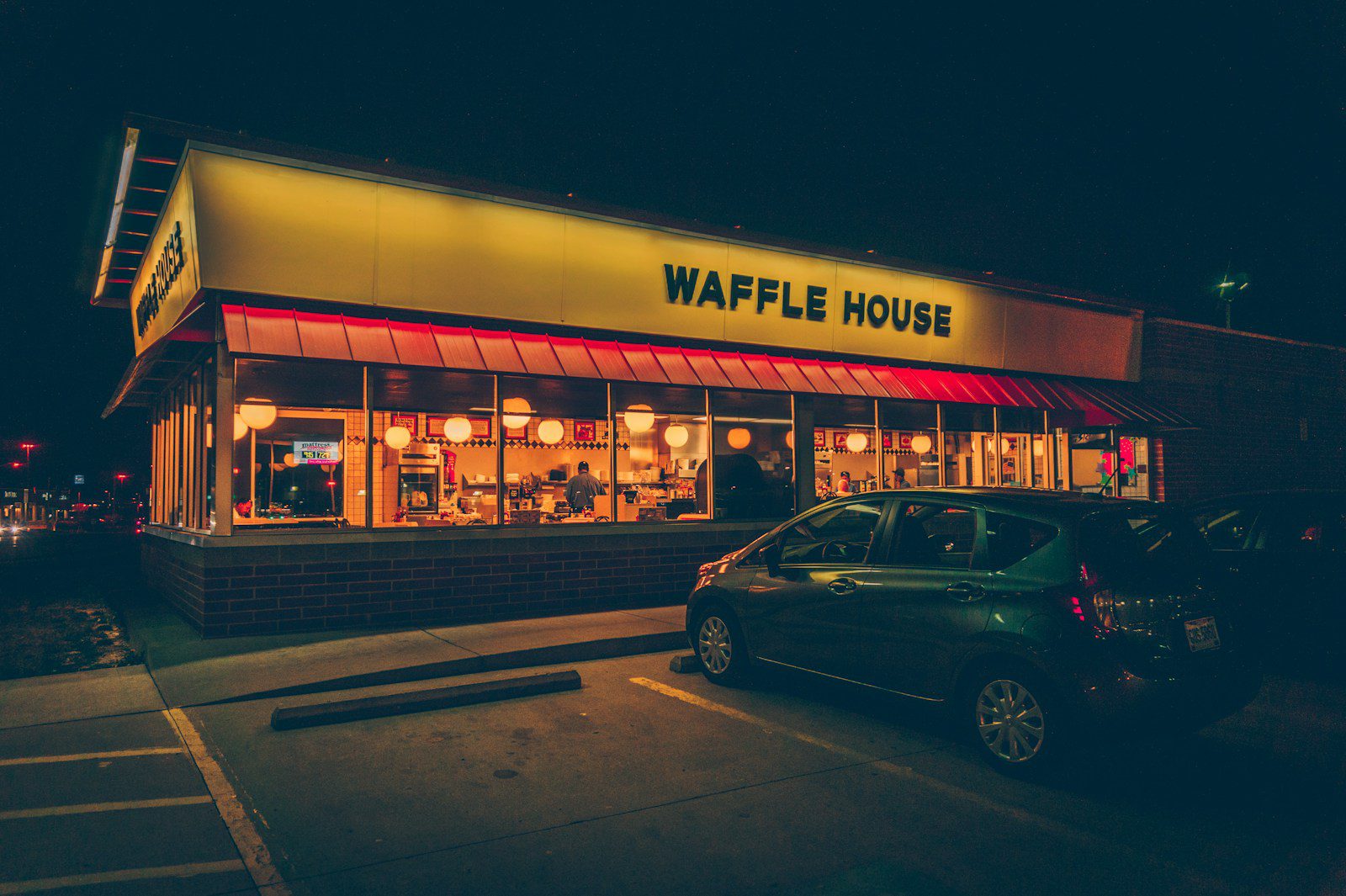
When Waffle House goes dark, people know something is seriously wrong. The famously always-open chain has now pulled the plug on multiple diners across four Southern states, citing “Code Red” winter conditions and leaving regulars to find breakfast and coffee somewhere else. For a brand that prides itself on riding out hurricanes and ice storms with the grills still hot, an indefinite shutdown is a loud alarm bell about how rough this storm really is.
The closures stretch across the South, where Waffle House is as much a piece of local infrastructure as it is a restaurant. With roads coated in ice, power lines snapping, and emergency crews stretched thin, the company’s decision to lock its doors in so many spots at once signals that the weather has crossed a line from inconvenient to dangerous.

The rare moment Waffle House blinks
Waffle House has built its reputation on being the place that never closes, the 24/7 stop where the lights stay on even when the rest of the block is dark. That is why the sight of multiple locations across four Southern states going dark at the same time has grabbed so much attention. Company messaging shared on social media described how Waffle House, the famously resilient 24/7 restaurant chain, has indefinitely shut down multiple locations across four Southern states, a move that underlines just how disruptive this storm has become for the region.
The company is tying those closures directly to what it calls “Code Red” conditions, language that lines up with how emergency managers talk about life-threatening winter weather. In coverage of the shutdowns, officials and reporters have pointed to a mix of Ice storm impacts and Severe weather, with the chain deciding that keeping doors open would put both staff and customers at risk. For a brand that usually leans into its toughness, that is a notable shift in tone.
What “Code Red” actually means for the chain
Inside Waffle House, “Code Red” is not just dramatic phrasing, it is a specific internal status that tells managers how to operate when conditions are at their worst. Reporting on the current storm notes that locations in four states have been tagged with that label, prompting full closures instead of the usual pared-back service. One widely shared story on the shutdowns described how a rare Code Red threat tied to Winter Storm Fern pushed the company to shutter diners that would normally be flipping hash browns through almost anything.
Emergency planners often talk about the “Waffle House Index,” and the chain’s own color system mirrors that idea. Guidance shared with customers explains that Green, or Full Menu, means a Restaurant has power and minimal damage, while Yellow, or Limited Menu, signals that Power is absent or being delivered by generator and supplies are tight. The current “Code Red” label goes beyond either of those, indicating that the restaurant is closed or conditions are unsafe, which is exactly what diners across the South are seeing this week.
The storm behind the shutdowns
The trigger for all of this is a sprawling winter system that has iced over highways, snapped tree limbs, and knocked out electricity across a wide swath of the country. Weather reports describe a massive winter storm bringing ice, frigid temperatures, and widespread power outages, with images of a person walking across a frozen street in Philadelphia on Sunday, Jan. 25, 2026, captured in an AP Photo by Matt. That kind of scene has been repeated in city after city as the storm drags a mix of snow and glaze ice across the map.
Closer to Waffle House country, the same system has coated interstates and local roads in a slick layer that even seasoned Southern drivers are struggling with. In Tennessee, one report focused on how a When a Waffle House location closes, it has become an unofficial way of scaling just how dangerous the weather is, with a specific restaurant at 2210 Armory Drive in Nashville shutting its doors as ice piled up. That kind of closure is not just about one corner lot, it is a shorthand for how rough the roads and power grid have become.
How the Waffle House Index went Code Red
The Waffle House Index started as a bit of disaster-nerd trivia and has turned into a real tool for gauging how bad a storm is. The idea is simple: if the local Waffle House is open and serving a full menu, things are probably manageable, but if it is running on a limited menu or closed entirely, the situation is serious. One explainer on the Tennessee shutdown spells it out clearly, noting that Waffle House closures have become a marker for the severity of a storm.
Federal agencies have taken notice too. A widely shared video breakdown points out that FEMA actually utilizes the Waffle House Index when determining the extent of a natural disaster, because the chain’s ability to stay open reflects both infrastructure damage and how quickly a community is bouncing back. Another explainer notes that the index has three levels based on the extent of operations and service at the restaurant, with GreenFull Menu listed as Normal Operati and more restrictive levels kicking in as conditions worsen, a structure that matches what customers are seeing on the ground right now.
From Green to #WaffleHouseIndexRed
In calmer times, most Waffle House locations sit comfortably in the green zone, serving full menus and acting as a kind of unofficial town square. The current storm has pushed a surprising number of them into the red. One breakdown of the index spells out that #WaffleHouseIndexRed corresponds to 418 Waffle House restaurants closed and 1,574 open, with a reminder to Call your local Waffle House today for a carry-out order if it is still operating.
On the ground, that red status is playing out in specific communities. In South Carolina, coverage of the ice storm highlighted how South Carolina Waffle close, indicating severity of ice storm, with BUSINESS coverage zeroing in on Greenville Waffle Houses that had gone dark while a nearby location off Interstate 85 was still accepting online orders. Another local report broke down how the index consists of three levels based on the extent of operations and service at the restaurant, listing GreenFull Menu and Normal Operati as the baseline before closures kick in.
Greenville, Nashville and the local shock factor
In Greenville, S.C., the sight of darkened yellow signs has been jarring. One report noted that several Greenville Waffle Houses had closed from Saturday afternoon to Monday because of the ice storm, even though the chain is well known for being open 24 hours a day. For locals who treat those dining rooms as a default meeting spot, that kind of closure is a clear sign that staying home is the smarter move.
In Nashville, the storm has scrambled the usual retail pecking order. One rundown of business impacts listed which spots were still Open, including Target, Costco, Longhorn Steakhouse, Panda Express, Las Palmas Restaurant and other chains, even as some Waffle House locations went dark. That flip, where big-box stores manage to keep operating while the 24/7 diner shuts down, has become another shorthand for just how icy the roads and parking lots have become around Middle Tennessee.
Social media tracks the closures in real time
As the storm rolled across the South, people did what they always do now and started tracking the fallout online. One viral post labeled STORM UPDATE and jokingly dubbed itself The Waffle House Closure Index noted that, As of that evening, at least 26 Waffle House locations were closed, including 7 in Georgia, turning a serious situation into a kind of running weather scoreboard.
Reddit users have been doing their own version of that tracking. In one long Comments Section, posters swapped updates on which diners were still open and which had gone dark, with one noting that some locations were expected to reopen Sunday at 7 am if conditions improved. Another thread shared the Full text of a news article under the heading that Waffle House shuts down locations across four states, giving weather watchers a centralized place to compare notes as the storm moved east.
Why emergency managers care so much
For people who work in disaster response, Waffle House is more than a quirky cultural reference. A widely shared explainer video notes that Waffle House is during a disaster, it is a real-world gauge that FEMA uses when determining the extent of a natural disaster, because the chain’s ability to reopen quickly reflects how well local infrastructure is holding up. If a restaurant that prides itself on staying open 24/7 cannot get food, staff, or electricity, that tells officials a lot about what nearby neighborhoods are dealing with.
Local news coverage has echoed that point, explaining that Even federal emergency officials use this informal indicator when storms hit. One segment followed a customer at an Atlanta-area Waffle House as they talked through how the index works and why they check whether the restaurant is open before deciding to drive. That kind of on-the-ground logic is exactly why the chain’s “Code Red” status across four states is being treated as more than just a business story.
What the closures say about the modern South
For the Southern communities that grew up with Waffle House on every other exit, these closures hit on a cultural level too. One analysis of restaurant trends pointed out that Major sign of how bad winter storm will be: Waffle House locations close across the South, framing the chain as a kind of barometer for how the region is coping with more frequent extreme weather. Another piece described the 24-hour Southern breakfast chain as famous for braving any storm to stay open, with Videos by Suggest noting that the Southern chain finally met its match and shut down in the face of this storm.
That mix of practicality and symbolism is why people are paying such close attention to which diners are open and which are not. One Instagram post about Southern closures captured the mood, with locals treating the darkened signs as a cue to stay off the roads and check on neighbors. On Reddit, another Full discussion of the shutdowns turned into a broader conversation about how climate and infrastructure are changing across the region, and what it means when even the most reliable late-night stop has to hang up a “closed” sign.
More from Decluttering Mom: