You walk into a salon expecting a quick mani-pedi and some relaxation, but a simple towel turns the moment awkward. She was handed what people are calling a “towel of shame” moments after sitting down, sparking questions about intention, embarrassment, and salon practices.
You’ll follow what happened, why it upset so many, and how people reacted online. The post will also look at how salons handle customer comfort and what counts as proper etiquette.
The “Towel of Shame” Incident Explained
A woman sat for a mani-pedi and was handed a towel that implied a judgment about her clothing. The interaction lasted only moments but quickly sparked reactions from the client, salon staff, and social media viewers.
How the Situation Unfolded
The customer arrived wearing shorts and took a seat for a manicure. Shortly after she sat down, a salon worker handed her a small towel, which the woman interpreted as implying she was improperly dressed for the service.
She recorded the moment on video, showing the towel and her visible reaction. The clip captured the exchange from her perspective, making the towel the focal point and prompting viewers to question the salon’s intent.
The short video includes the woman’s annoyed body language and a text overlay calling the towel “the towel of shame.” It does not show any explicit verbal confrontation, but the item’s placement and timing framed the action as passive judgment.
Reactions From the Woman and Staff
The woman reacted with visible embarrassment and irritation in the recording. She used humor and incredulous commentary to call attention to what she saw as unnecessary shaming.
Salon staff appeared briefly in the background in some frames, but the video does not include their side of the conversation. No clear defensive or apologetic statements from employees are captured in the clip itself.
Later reporting and reposts focused on the woman’s perspective and did not provide an on-camera statement from the salon. That left the incident presented mainly through her reaction, which shaped public interpretation.
Immediate Aftermath and Social Media Buzz
The recorded clip circulated on social platforms and was picked up by news aggregators, increasing attention to the incident. People debated whether the towel constituted harmless practical use or an unnecessary slight.
Comments ranged from sympathetic support for the woman to defenses of the salon’s routine practices. Some viewers suggested the towel might have been sanitary rather than judgmental.
One repost of the story appears on a small entertainment feed, which helped spread the clip beyond the original poster’s followers. That reposting amplified questions about customer treatment at small salons and kept the exchange visible to a wider audience (see an example reposted article on Pressbee).
Public Reactions and Cultural Impact
Reactions ranged from sympathetic calls for respect to mockery and jokes, while the incident sparked conversation about salon etiquette, customer treatment, and gendered shaming in public spaces.
Mixed Responses Online
Comments split sharply. Many users expressed sympathy for the woman, calling the towel move “embarrassing” and “demeaning.” Those voices highlighted how small acts in service settings can signal exclusion or policing of bodies.
Others downplayed the episode as an awkward but harmless mistake, arguing staff might have used a reused towel for hygiene reasons or misread salon protocol. A third group used the moment to criticize performative outrage on social media, pointing to rapid viral escalation instead of direct resolution with the salon.
Local community threads, including a Facebook post visible in coverage, became a main venue for eyewitness accounts and follow-ups. Those firsthand comments influenced how the story circulated beyond the original clip.
Memes, Hashtags, and Viral Moments
The clip generated fast memeification: screenshot edits, captioned reaction images, and wry threads framing it as the “towel of shame.” Hashtags with playful language trended briefly, amplifying reach across platforms.
Creators turned the scene into short-form sketches and remixes that reframed the towel as a prop for satire. That content widened the audience beyond beauty circles and fed news outlets looking for social angles.
Viral attention pushed some commenters to demand apology or policy clarity, while others treated the incident as fodder for entertainment. The split digital response shaped how the salon’s reputation evolved in subsequent coverage.
Perspectives From Beauty Industry Experts
Industry pros noted this reflects broader customer-service tensions. Salon owners and stylists emphasized consistent training and transparent hygiene policies to avoid misunderstandings and protect both clients and staff.
Experts warned against reflexive public shaming of workers without verified context, recommending private resolution and documentation when possible. They also urged salons to use clear signage and uniform practices—like labeled fresh-towel bins—to prevent similar incidents.
Some beauty commentators pointed to cultural layers: clients bring expectations about dignity and salons must balance efficiency with personalized care. Pressbee-style community outlets amplified practitioner tips on de-escalation and policy communication to rebuild trust after viral episodes (see a related local post).
Nail Salon Etiquette and Customer Experience
This section explains what customers can expect at a typical salon, how staff can handle awkward moments respectfully, and practical steps salons can take to build better client relationships.
Common Salon Practices
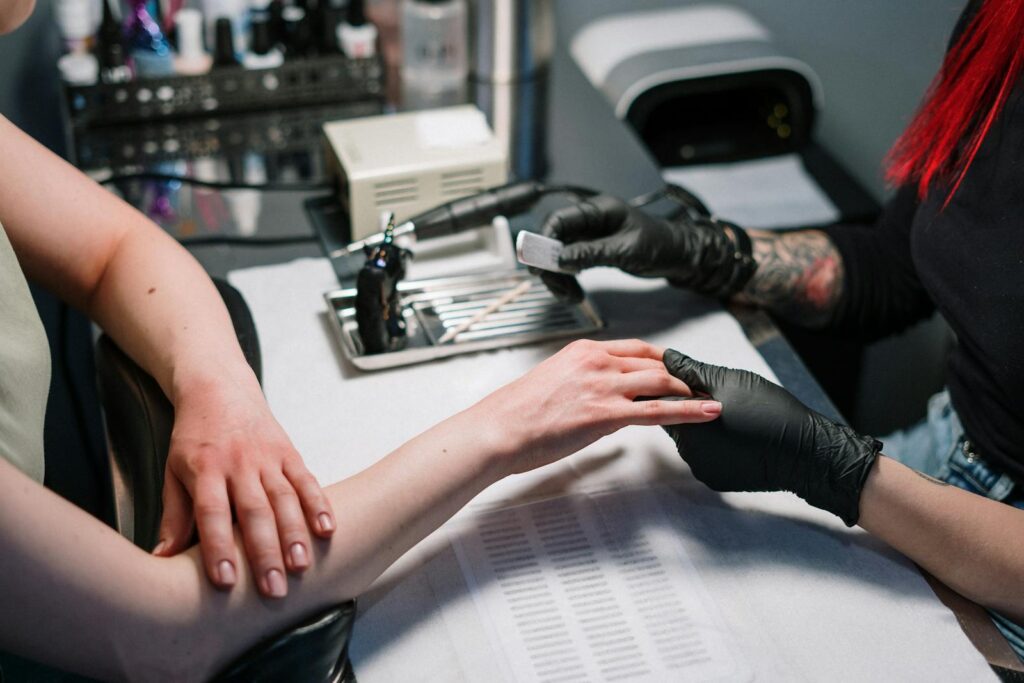
Most salons provide a clean gown or towel for services like pedicures to protect clothing and maintain hygiene. Technicians usually explain what they will do before starting—so customers should ask questions if anything feels unclear.
Customers often remove shoes for foot treatments and may be offered a disposable liner for foot baths. Payment methods, tip expectations, and service duration are usually posted or shared when booking; asking for a written price list avoids surprises.
Technicians sanitize tools between clients, but customers can request to see sterilization practices or single-use implements. If a salon uses community items like shared towels, customers can request fresh linens or disposable covers.
Handling Embarrassing Moments
When a customer feels embarrassed—like being handed an unexpected towel—staff should respond calmly and apologize without making a spectacle. A brief, direct apology and an offer to replace the item or remake the setup restores dignity quickly.
Customers should state preferences clearly: for example, “I prefer shorts to stay on” or “Please use a fresh towel.” Staff can de-escalate by acknowledging the request, confirming the change, and checking back during the service.
If a customer feels shamed or uncomfortable, management should offer alternatives: a private seating area, different staff, or a refund for a visibly upsetting error. Documenting the incident and following up with the client helps prevent repeat occurrences.
Building Respectful Client Relationships
Salons reinforce respect by training staff in clear communication and boundary awareness during consultations. Role-play scenarios—covering clothing accommodations and sensitive reactions—help technicians practice polite, consistent responses.
Posting visible policies about modesty options, towel use, and privacy choices reduces misunderstandings. Encouraging clients to share preferences during booking gives staff time to prepare special linens or private rooms.
Regular feedback channels—comment cards, short post-visit surveys, or a follow-up message—allow salons to correct problems and recognize strong staff behavior. Rewarding technicians for positive customer reviews reinforces respectful habits.
More from Decluttering Mom: