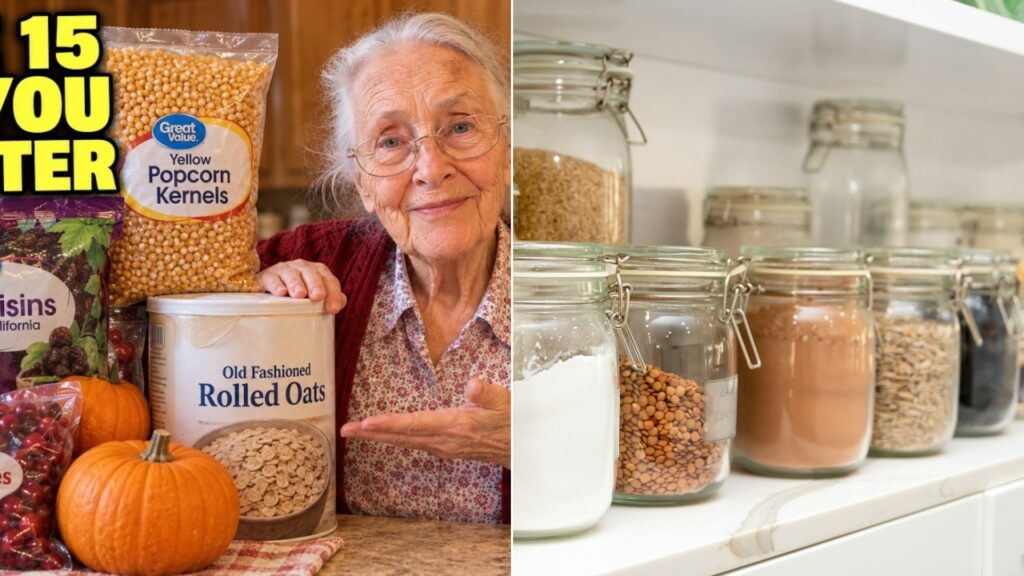
Last spring a woman stood in a checkout line and stared at the screen. It said $168 for two people for one week of groceries.

She tells the story on the channel @LivingLike1950, and her mind went straight to her mother. Her mother fed a family of five on a grocery list the size of a playing card, written in pencil on the back of an old envelope every Tuesday night, and she never once went over.
“She had less money than I do. She had more mouths to feed,” the woman says. “So, how did she do it? And why couldn’t I?”
At 52 Her Grocery Bill Was The One Thing She Could Not Tame
When she turned 52, a lot changed at once. Her kids were grown and gone, and her husband cut back his hours at work.
The budget got tight in a way it had not been in years, and groceries were the bill she could not tame. She would go in for milk and come out with $40 of stuff, throw out wilted greens every Sunday, and order takeout because there was nothing to eat with a full fridge behind her.
“I felt wasteful. Honestly, I felt a little ashamed,” she says.
She Dug Her Mother’s Rules Out Of An Old Recipe Box
So she made a decision. She went back to her mother’s grocery list rules, every single one, pulling them from memory and from an old recipe box her mother left her.
Within two months she says she was spending $60 a week, and not just once. She says it happened every week, which she counts as over $5,000 a year.
She breaks it down into 12 rules, and each comes with her own weekly savings.
Write It Down And Eat First, Or A Hungry Woman Buys The Whole Store
Rule one is to write the list before you leave the house. Her mother kept a stubby pencil in the kitchen drawer next to the rubber bands and jotted down items all week, then folded the envelope into her purse like a train ticket.
Without a list, the woman says, shoppers wander every aisle like a museum. She cites studies saying shoppers without a list spend 20 to 40% more than planned, and says that habit alone cut her bill by about $25 a week.
Her mother also ate lunch before she shopped. “A hungry woman buys the whole store,” she would say, and the daughter says a hungry trip used to cost her about $18 more, so she now shops on Saturday mornings after breakfast and saves at least $10 a week.
Three Open Jars Of Cumin Proved She Had Not Looked At Her Own Kitchen
Before her mother wrote a single word on that envelope, she opened every cupboard and peeked behind the cans. Half a bag of rice went on the menu, not the list.
The woman says she counted three open jars of cumin and two bottles of soy sauce at home, about $14 sitting forgotten on a shelf. Now she walks through the cupboards, fridge and freezer for five minutes before every list and plans two or three meals around what is already there, saving about $15 a week.
She also lets the sale flyer plan the menu. Her mother circled deals with a red pen and shopped first and decided dinner second, and she now checks the store app each Wednesday to build her week around whatever is on sale, saving about $20.
The Cash Envelope Left Her Coming Home With Change
Her mother left for the store with a single white envelope holding $25 in cash. If the total went over, something went back on the shelf, and the daughter once watched her hand a box of cereal to the cashier and say, “Not this week.”
These days the woman takes $60 in cash. The first week was scary, but by the third week she was coming home with change, and she says the envelope keeps her from overspending by about $20 a week.
Her mother also made one trip a week, no more. The daughter tracked her own quick stops and found each extra trip cost an average of $22, so she now goes once and makes do if she runs out of milk or onions, saving about $30 and nearly two hours of her Saturday.
Buy It Whole, Choose Store Brand, Make Your Own Pancake Mix
Her mother never bought boneless chicken breasts. She bought a whole chicken and took it apart herself, grated her own block cheese and bought heads of lettuce instead of bags.
The daughter points out that a tray of cut melon at her store is $6 while the whole melon is $3. She spends 15 minutes on Sunday cutting and saves about $12 a week.
Her mother’s saying about brands was, “You can’t taste the label.” The daughter now looks low on the shelf, switching nearly everything to store brand for about $14 a week, and she makes pancake mix, taco seasoning, salad dressing and gravy at home for about $10 a week. She says one seasoning packet costs about $2 while the same spices from her jar run about 15 cents.
Friday Became Leftover Night And Meat Became The Flavor, Not The Meal
In her mother’s house, Friday was clean-out-the-fridge night. Little dishes came out, a bit of meatloaf, half a pot of beans, two spoonfuls of peas, and the family picked from a buffet. The woman revived the habit, no cooking and no shopping, and her trash can got lighter and she saved about $15 a week.
Her mother also made meat stretch. One pound of ground beef became a giant pot of chili or a shepherd’s pie piled with mashed potatoes, and it fed five with seconds.
The daughter had been spending $60 some weeks on meat alone. Now she uses half the meat and twice the vegetables, with beans and cornbread or egg fried rice two nights a week, and her meat bill dropped to about $25, a saving of $35.
The One Word At The Bottom Of Every List
Rule number one is not about food at all. Her mother wrote one word at the bottom of every list, and the daughter found it again on an old envelope inside the recipe box. The word was “enough,” underlined twice.
“She didn’t shop to fill a hole,” the woman says. Today so many people shop from a feeling rather than a need, she says, buying just-in-case food, treats to cheer up after a long day and fancy ingredients for the person they wish they were.
Now she writes “enough” at the bottom of her own list, and before adding anything extra she asks, “Do we need this? Or do I just want to feel something?” Most of the time she puts it back. That one word, she says, took her from $168 to $60 a week, and she no longer feels shame in the checkout line. “I feel calm. I feel like her.”
More Stories You May Like
- Mom Of Two Who Got Rid Of Half Of Her Family’s Belongings Says Most People Wear Just 20% Of Their Clothes 80% Of The Time
- Woman Gave Away Her Whole Decluttered Pile To A Struggling Stranger From Facebook Instead Of Selling It And Says It Made Her Day
- Home Organizer Let Her Husband Take The Lead On Decluttering Their House And He Went Straight For Her Beloved Book Table