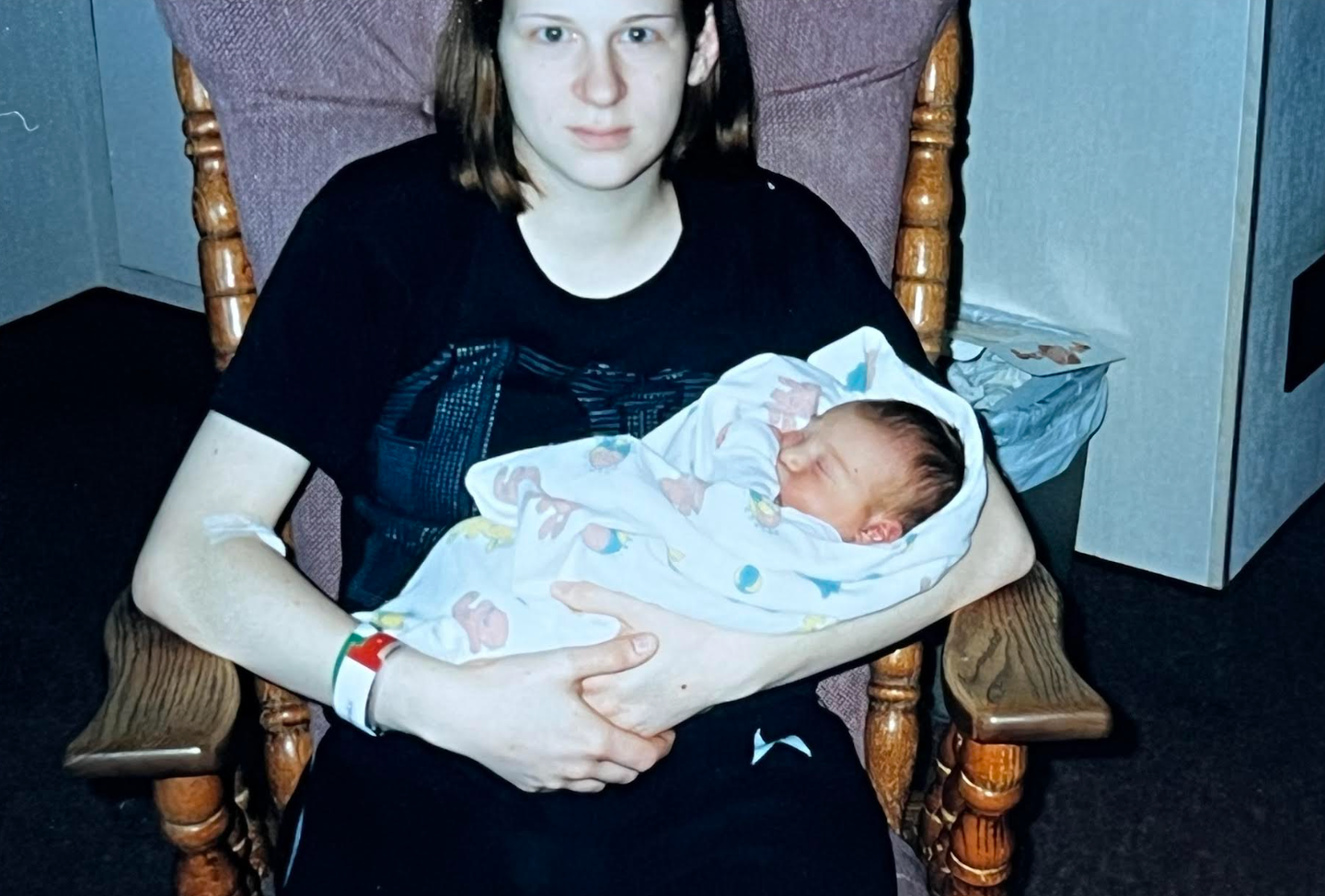
At 17, a girl who still needed rides to school and reminders to do her homework made a decision most adults hope they never face: she placed her newborn for adoption. Years later, long after she had tried to pack that choice into a sealed box in her memory, her phone lit up with a two-word message from the child she had not seen since infancy, and the life she had built around that absence shifted in an instant.
Her story is not a neat before-and-after makeover. It is a long, messy arc of grief, curiosity, and cautious hope, one that shows how a single notification can reopen an old wound and, at the same time, offer the first real chance to heal it.
The 17-year-old who signed the papers and the woman she became

As a teenager, she was not the kind of girl anyone would have picked as a future birth mother. She was still figuring out who she was, still testing boundaries, still more likely to be found scrolling on a cracked iPhone than planning for a crib. When she discovered she was pregnant, the adults around her suddenly seemed to speak a different language, full of legal terms, medical risks, and timelines. In that blur, she chose adoption, signing papers that would send her baby home with another family while she went back to algebra tests and cafeteria gossip. The decision, as she later described it in a personal essay about how she gave her baby up at 17, felt both impossibly heavy and strangely rushed, like stepping off a ledge before she had fully looked down.
In the years that followed, she did what a lot of birth parents do: she tried to move forward without pretending the past had not happened. She finished school, cycled through a couple of starter jobs, and learned how to be an adult in the ordinary ways, from paying rent on a studio apartment to figuring out how to file taxes. The baby she had placed for adoption, a girl named Hanna, existed in her mind as a series of what-ifs and half-imagined milestones. She knew, from the arrangement she had made with the adoptive parents, that Hanna was safe and loved, but that knowledge did not erase the ache of birthdays she did not celebrate or first days of school she did not see. When she later wrote about that season of her life, she framed it as a long stretch of quietly carrying a story most people around her did not know, a private chapter that shaped every relationship that came after.
The two-word message that cracked everything open
The turning point arrived on an otherwise forgettable day, years after the adoption, when her phone buzzed with a notification from a social media app. On the screen was a message from a teenager whose name she recognized immediately: Hanna. The text was only two words, simple enough that they could have come from any classmate or coworker, but in this context they landed like a small earthquake. Those words, which she later described in a follow-up reflection on the moment her child’s message popped up on her screen, carried years of unasked questions: Did you think about me? Do you regret what you did? Are you willing to know me now?
Her first reaction was not cinematic joy but a rush of panic. She worried about saying the wrong thing, about overwhelming a teenager who was already brave enough to reach out, about reopening her own grief in a way that might spill onto Hanna. She sat with the message, rereading those two words until they blurred, before finally typing back. The early exchanges were cautious, almost formal, as if both were testing the edges of a fragile bridge. Over time, though, the conversation widened. They compared favorite shows, swapped photos, and slowly filled in the blank years between them. In one account of that period, she recalled how the contact information she had once scribbled on adoption paperwork, “Courtesy of Joanna Good” as the person figuring out what to do, suddenly felt real when Hanna used it to reach the woman who had signed those forms all those years earlier.
Living with the reunion, not just the moment
What makes her story resonate is not only the shock of that first message but the slow, ordinary work of building a relationship afterward. There was no instant transformation into a picture-perfect blended family. Instead, there were awkward first meetings, careful boundaries with the adoptive parents, and a lot of conversations about what each of them needed. She had to learn how to be present without trying to rewrite the past, to accept that she would never be the one who packed Hanna’s elementary school lunches or taught her to ride a bike. At the same time, she discovered that there was room for a different kind of connection, one rooted in honesty about the choice she made at 17 and the love that had been there even when she was absent. That mix of regret and gratitude, of loss and new possibility, echoes the kind of emotional whiplash that writer Erin Chack captures in the Description of the Seventeen Magazine Best Book of the Year “This Is Really Happening” by Erin Chack, which leans into big feelings without pretending they are tidy.
For the woman who once walked out of a hospital with empty arms, the reunion did not erase the hardest parts of her story, but it did give her a new way to carry them. The two-word message that she never expected turned out to be less of an ending and more of an opening chapter, one that allowed both her and Hanna to ask questions they had been holding for years. In telling that story publicly, she has offered a rare, unvarnished look at what it means to be a birth parent long after the ink on the adoption papers has dried, and how a single notification can change not only a day but the entire shape of a life.
More from Decluttering Mom: