You can have a gorgeous kitchen and still dread cooking dinner in it, because pretty and functional are not the same thing. Sometimes the issue is obvious — not enough counter space — but more often it’s a collection of small, easy-to-overlook friction points that make every single task take longer than it should. You open three drawers looking for the same spatula. You walk past the stove four times to grab something from across the room. None of it is dramatic, but it adds up to a kitchen that quietly exhausts you.
The good news is that most of these problems are about layout and habit, not square footage. Here are eight of the most common ones, and why they matter more than they seem to.

A Broken or Ignored Work Triangle
Kitchen designers have long organized layouts around the relationship between the sink, stove, and refrigerator — the three spots you move between most while cooking. The National Kitchen and Bath Association still uses this relationship as a core planning principle because when those three points are too far apart, or something blocks the path between them, every meal turns into extra footsteps and wasted motion. If your fridge is across the room from your stove and sink, you’ll feel that gap every single time you cook.
Everyday Items Stored Out of Reach
The mugs you use daily shouldn’t live on the top shelf you need a step stool to reach, and the pots you cook with most shouldn’t be buried behind ones you use twice a year. When the things you touch constantly aren’t stored at an easy, waist-to-eye-level height, you end up building tiny obstacle courses into routine tasks, which makes even simple cooking feel like more effort than it should.
A Junk Drawer That’s Taken Over
Every kitchen earns one junk drawer, but when it expands to swallow a second drawer, or starts creeping into cabinet space, it starts eating into storage that could hold things you actually use for cooking. A junk drawer that’s really a junk cabinet means less room for the tools, pans, and ingredients that need to be close at hand, pushing them further away and adding steps to every task.
No Clear Landing Zone Near the Door
Mail, keys, bags, and school papers all need somewhere to go the moment they come through the door, and if the kitchen doesn’t have a designated spot for that, those items pile up directly on the counter you’re trying to cook on. A missing landing zone doesn’t just create clutter — it actively steals usable counter space from meal prep every single day.
Small Appliances Crowding the Counter
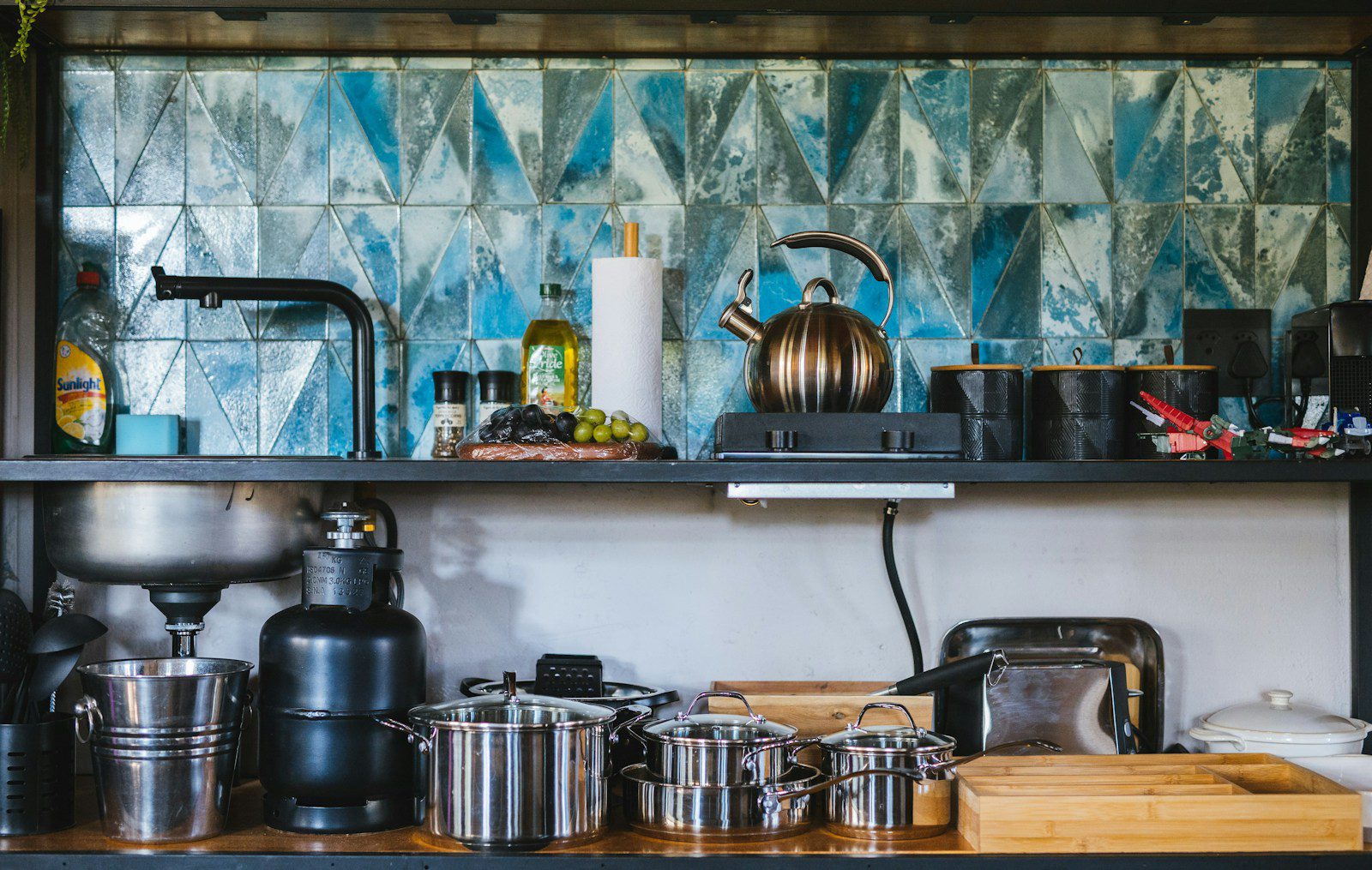
A stand mixer, air fryer, coffee maker, toaster, blender, and slow cooker all lined up on the counter might mean everything is technically accessible, but it also means you’re prepping meals in a narrow strip of remaining space. Appliances used daily earn their spot on the counter; ones used monthly are better stored in a cabinet, freeing up the room you actually need to chop, mix, and plate.
Cabinets Organized by What Fit, Not What Makes Sense
It’s common for kitchen cabinets to get organized reactively — something goes wherever there’s an open spot — rather than by how the kitchen actually gets used. Baking supplies scattered across three different cabinets, or pot lids stored nowhere near the pots, mean you’re hunting for basics mid-recipe instead of grabbing them on instinct. Grouping items by task, rather than by whatever gap they once fit into, cuts down on that search time dramatically.
Dull Knives Left Unsharpened
A dull knife doesn’t just make cutting slower, it makes it more dangerous, since a dull blade requires more pressure and is more likely to slip off whatever you’re cutting instead of through it. Beyond the safety issue, dull knives turn a five-minute vegetable prep into a fifteen-minute chore, which is often the quiet reason cooking at home starts to feel like a burden.
Poor or Mismatched Lighting
Overhead lighting alone often casts a cook’s own shadow directly onto the cutting board or stovetop, making it harder to see what you’re actually doing while chopping or checking food for doneness. Under-cabinet task lighting over counters and a dedicated light over the stove solve a problem most people assume is just “a kitchen thing,” when it’s really a fixable lighting gap.