More than 800,000 children were injured on trampolines between 2009 and 2018, and roughly 110,000 of them end up in a U.S. emergency room in an average year, according to the American Academy of Pediatrics’ patient-education arm, HealthyChildren.org. Backyard trampolines have become such a routine fixture of summer that the injury numbers barely register as a warning sign to most parents watching from the porch. What actually separates a scraped knee from a broken arm or worse, according to both the AAP and federal regulators, comes down to one specific and very common scenario: more than one kid bouncing at the same time.
Why Collisions Are the Real Danger, Not Just Falls
The Consumer Product Safety Commission has been tracking this pattern for decades. When emergency room trampoline injuries nearly tripled in the 1990s, climbing from an estimated 37,500 visits in 1991 to almost 100,000 by 1999, the agency’s own investigation found that most trips to the ER came from jumpers colliding with one another, not from falling off the mat entirely, according to a CPSC news release issued at the time. The agency’s response was a new voluntary safety standard requiring trampoline warning labels to state plainly that only one person should be on the mat at a time. That guidance hasn’t changed since, mostly because the physics behind it hasn’t either.
The Mechanism Behind the Worst Injuries
Two kids of different sizes bouncing together create what pediatricians call a double-bounce effect: one child’s landing on the mat launches the other higher and less predictably than either could achieve jumping alone. That extra, uncontrolled height is where the more serious injuries come from, including fractures that require surgery and, in rarer cases, spinal injuries. According to the AAP’s own guidance, kids also get hurt colliding directly with each other mid-air, especially when a larger or older child is sharing the trampoline with someone smaller. Trampoline parks, which let strangers of different sizes bounce in shared zones, carry their own added risk; studies the AAP cites found park visitors were about twice as likely to need surgery compared with injuries from home trampolines, partly because bouncier commercial-grade mats let jumpers reach greater heights.
What Actually Reduces the Risk
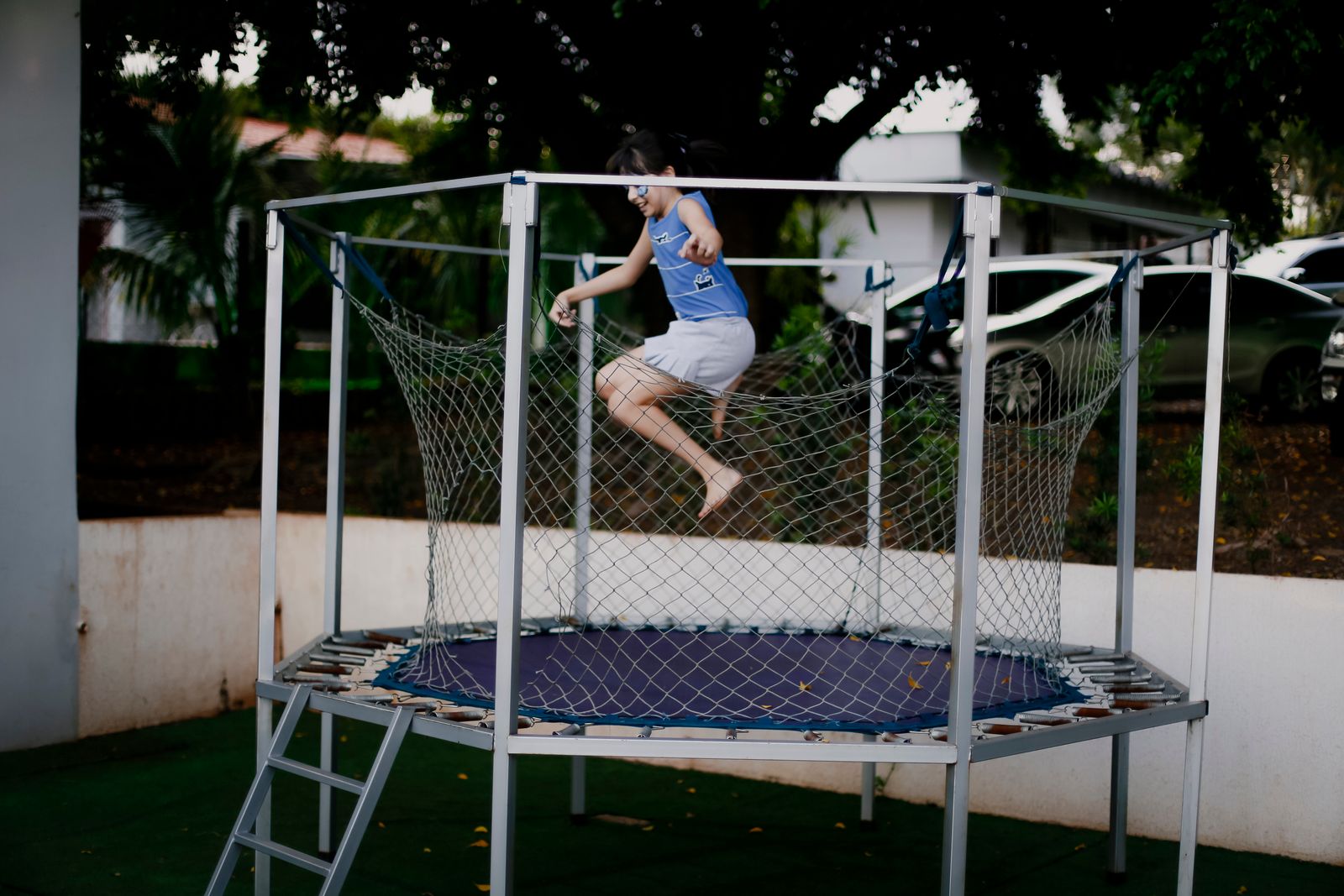
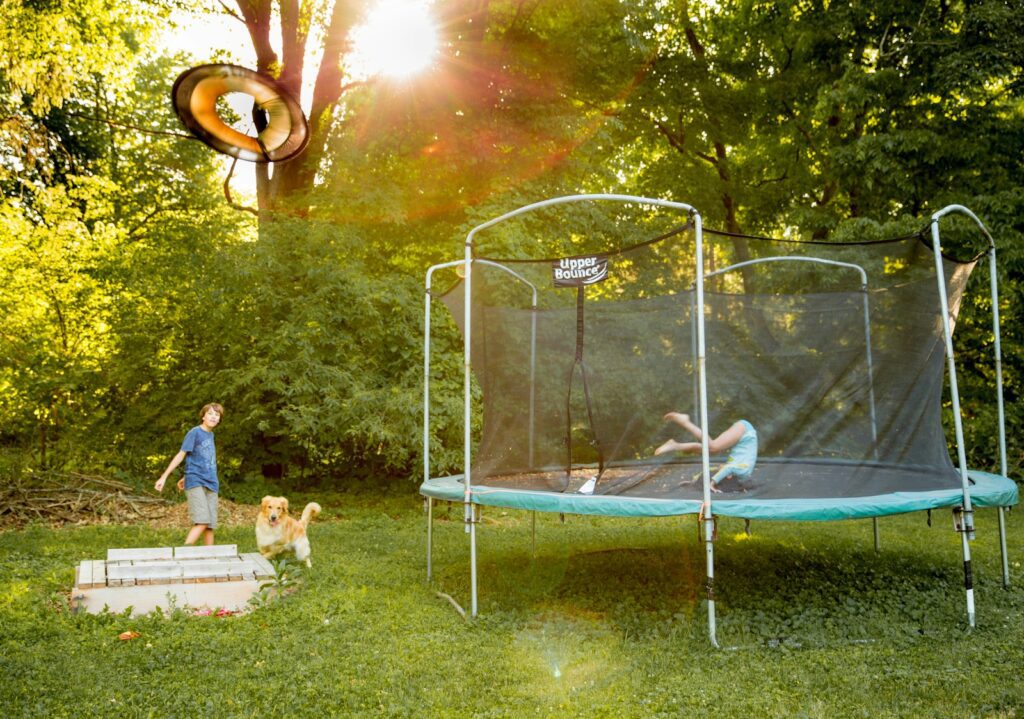
The single-jumper rule is the recommendation that shows up most consistently across both AAP and CPSC guidance, and it’s also the one families tend to ignore first, since watching one kid bounce alone while three others wait their turn rarely feels practical on a summer afternoon. Beyond limiting the mat to one child at a time, the AAP also recommends constant adult supervision rather than periodic check-ins, keeping protective netting zipped shut during use, maintaining padding over the springs and frame, and setting an age minimum of about 6 years old before a child jumps at all, since younger kids’ bones and coordination make them disproportionately likely to get hurt even in a solo bounce. Banning flips and somersaults is another recommendation that specifically targets the neck and head injuries that account for a small but serious share of trampoline cases each year.
Where Structured Alternatives Fit In
For families who want the bouncing without the collision risk, the AAP points to supervised gymnastics and tumbling programs with trained instructors as a meaningfully safer setting for the same kind of activity kids are drawn to on a backyard trampoline. Those programs control for the exact variable that drives most severe injuries at home: multiple kids of different sizes and skill levels sharing the same bouncing surface at once, without anyone specifically watching for it.
The hazard in a backyard trampoline shows up the moment a second kid climbs on, not in the equipment itself, and that single detail explains most of the serious injuries the data actually shows.
How Trampolines Compare to Other Backyard Equipment
Federal injury surveillance run through the CPSC’s National Electronic Injury Surveillance System tracks trampolines as a distinct product category precisely because the injury volume rivals or exceeds other backyard staples like swing sets and inflatable pools combined in a given year. Unlike a swing set, where the height and motion are largely fixed by the equipment itself, a trampoline’s risk changes in real time based on how many people are on it and how differently sized they are, which is part of why simple product recalls or design tweaks haven’t moved the injury numbers the way they have for other outdoor equipment. The mat and springs work exactly as designed. The danger comes from how the equipment gets used once the kids are the ones deciding the rules.
Setting Expectations Before the Trampoline Goes Up
Families who’ve had the fewest injuries tend to set the one-jumper rule before the trampoline is even assembled in the yard, rather than trying to enforce it after siblings and neighborhood kids have already established their own habits on it. A simple posted rule, paired with an adult who is actually watching rather than half-watching from a phone, closes most of the gap between the AAP’s recommendations and what actually happens in a typical backyard on a Saturday afternoon.