Somewhere in your parents’ or grandparents’ house, there is probably a dining set, a cabinet of china and a few framed paintings that the next generation has already decided it does not want. According to thrifting author @vchamlee, that scene is about to play out in millions of homes, and she says it will change what shows up at your local thrift store.
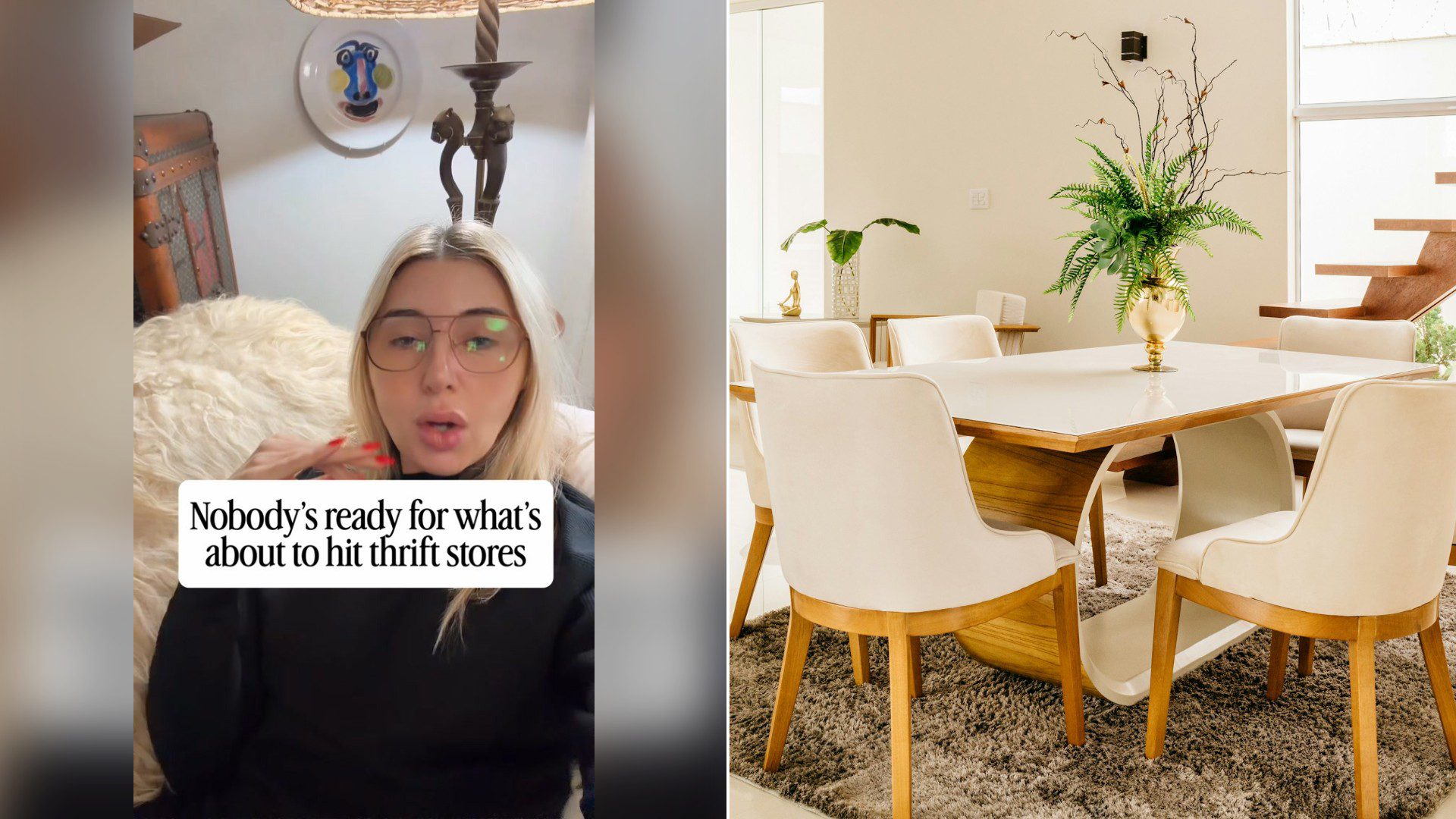
“Over the next 20 years, the biggest handoff of stuff in American history is going to hit the thrift stores,” she says, adding that most people have no idea what to look for. In her caption she puts it even more bluntly, calling it the “Boomer stuff avalanche” and saying it is already here.
View this post on Instagram
Her claim centers on a big number. She says Boomers and older generations are expected to hand off nearly $100 trillion in wealth. A chunk of that, she says, is sitting right in their houses in the form of dining sets, art, china and clothes.
Why She Says The Kids Are Saying No
The next part of her claim will sound familiar to many families. According to her, a lot of the children who inherit these items do not want them. Instead of staying in the family, she says, the pieces go to Goodwill, to estate sales and to online marketplaces, and “it’s going for cheap.”
In her caption she says estate sales, thrift stores and Facebook Marketplace are about to be flooded with quality pieces that nobody in the family wants. She says the shoppers who know what to look for are going to furnish their homes for pennies.
If you are a parent or grandparent holding a houseful of treasures, that may sting. If you are a shopper, she says it is an opportunity. Either way, the shift she describes is the reason smart sorting matters, both for those clearing a home and for those hunting for bargains.
Her Three Picks To Grab
She says she has a short list of what she would grab. First is solid wood furniture. Her reason is simple: “they don’t make it like that anymore.” Second is original art, even if the artist is a stranger to you. Third is designer clothing with labels from the 1970s, 1980s and 1990s, which she says is exactly what collectors are looking for right now.
- Solid wood furniture, since she says it is not made the way it used to be.
- Original art, even from an artist whose name is new to you.
- Designer clothing with labels from the 70s, 80s and 90s, which she says collectors want right now.
Those are her picks, and she presents them as the categories where careful shoppers can furnish and fill a home for far less than retail prices.
Who Is Behind The Advice
She says she has been thrifting for years. By her own account, she wrote a best-selling book about thrifting, and she says she has sold her finds to designers and celebrities. She invites followers to keep watching her account and says she will teach them what is worth grabbing.
How To Check A Piece Before You Buy
You do not need an expert’s training to shop smarter. A few general habits help at any estate sale or thrift store.
For wood furniture, look at how it is built. Solid wood pieces tend to feel heavy, and drawers that are joined at the corners instead of stapled or glued flat usually signal better construction. Pull a drawer out and look inside, since the inner wood often shows whether a piece is solid or thin veneer over particle board. A wobbly leg or a missing hardware piece can often be repaired, but deep water damage or a strong musty smell is harder to fix.
For art, turn it over. Handwritten notes, gallery labels, a signature in the corner and a hand-painted surface can all be signs of an original instead of a print. Brush strokes you can see and feel are often a good clue. Even when you do not recognize a name, a piece you love on your wall is worth something to you.
For clothing, check the label and the stitching. Look at the inside seams, the weight of the fabric and the tag. Older labels from past decades are exactly what the creator says collectors like, so keep the tags attached and avoid cutting or cleaning off anything until you have checked the item.
What To Do If You Are The One Clearing A Home
If you are on the other side of this handoff, the same advice flips. Before donating a full set of china or a dining table, ask yourself if it is solid wood, if the art on the walls is original and if any clothing carries a designer label from the 70s, 80s or 90s. Those are the categories the creator says people are chasing, and they may be worth selling at an estate sale or online instead of dropping at a donation bin.
Talk with family before the day of the cleanout. Heirlooms with real meaning can stay in the family, and the rest can go to a buyer who will use and enjoy them. A little planning can keep a good piece out of the dumpster and put it in a home where it will be loved.
The creator’s message is plain: the avalanche is coming, and the people who know what to look for will be ready for it.
More Stories You May Like
- Family Of Four That Decluttered Down To Eight Suitcases And Moved To Europe Debt Free Says Selling Their Old Clutter Online Brought In Over $15,000
- Selling Or Handing Down An Old Phone Without Wiping It First Can Hand Strangers Your Photos And Accounts, So Sign Out, Factory Reset And Remove The SIM
- This Shopper Who Always Grabbed Any Deal Hired A KonMari Certified Organizer To Clear The Home And Says Learning To Trust Their Own Gut Was The Real Breakthrough