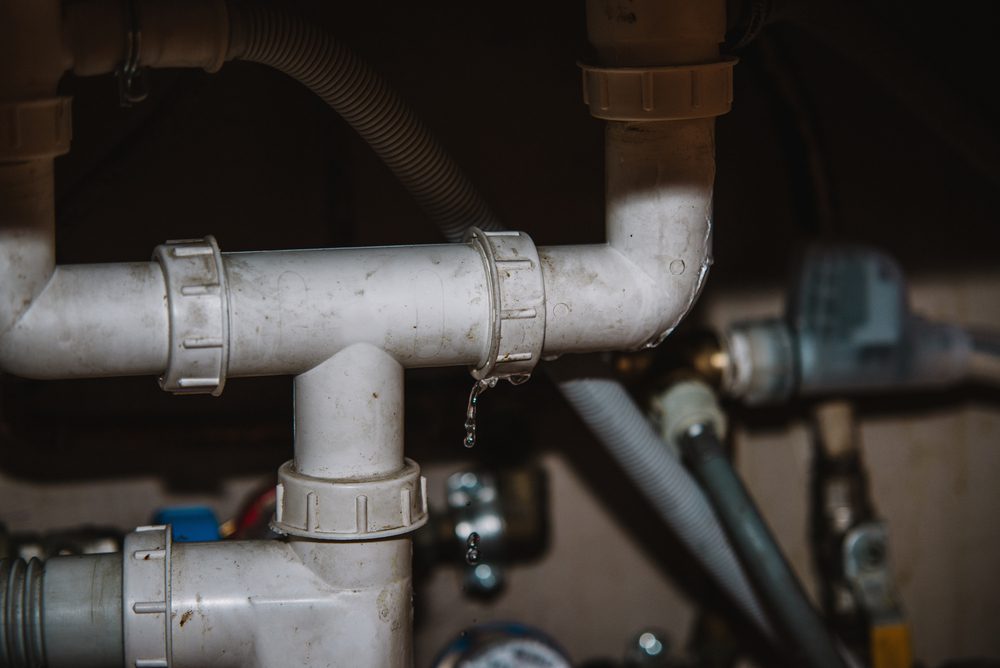
A city water customer who loses water pressure calls the utility. A private well owner who loses water pressure calls a drilling contractor, and the bill that follows can run into the thousands before the faucet works again. More than 23 million U.S. households, roughly 43 million people, get their drinking water from private wells according to the EPA, and almost none of them are budgeting for what happens when the pump underground finally fails.
What a well pump actually costs to replace
Industry cost guides put the national average for a full well pump replacement at around $1,898, with a typical range between $975 and $2,821. That’s before anything unusual is going on. Add in new pipework or rewiring, which is common on an older system where the original wiring wasn’t sized for a replacement pump, and labor alone can add another $250 to $1,000 on top of the equipment itself.
The type of pump changes the math considerably. A shallow jet pump for a well under 25 feet can run $450 to $1,500 installed. A submersible pump, the kind used in most residential wells over 25 feet deep, typically runs $1,000 to $2,500 or more. Constant-pressure systems, which are increasingly common in newer installations because they avoid the pressure fluctuation of older tank-based setups, run $1,300 to $4,000 or higher. Depth matters just as much as pump type: a well under 25 feet might cost as little as $400 to fix, while a well over 150 feet deep can run $2,000 to $10,000, since a technician has to physically pull hundreds of feet of pipe and wiring out of the ground before they can even diagnose the failed part.
Why this bill doesn’t exist for city water customers
A municipal water customer’s monthly bill already has the cost of pump maintenance, treatment, and infrastructure repair baked in, spread across an entire customer base and smoothed out over decades of rate-setting. A well owner has no such pool to draw from. The pump, the pressure tank, the wiring that runs it, and the wellhead itself are the homeowner’s sole responsibility, and none of it is optional infrastructure the way a city water line is treated by a municipality. When it breaks, there is no shared cost to spread it across and no 24-hour utility line to call for an emergency repair credit.

The responsibility gap most owners don’t realize they have
The bigger issue isn’t just the size of the bill. It’s that federal law doesn’t require anyone to warn homeowners this is coming. The EPA is direct about this: private well owners are responsible for delivering safe drinking water to their households, because private wells are not regulated under the Safe Drinking Water Act the way public water systems are, and most states don’t fill that gap either. That framework covers water quality testing, but the same logic extends to the mechanical side of well ownership. Nobody is inspecting a well pump on a schedule the way a municipality inspects water mains, which means the first sign of trouble for most homeowners is the pump simply stopping.
Why almost nobody budgets for it
Well pumps typically last somewhere between 8 and 15 years depending on usage, water chemistry, and how hard the pump has to work to move water from a given depth, which is long enough that most homeowners forget the well system is even a piece of equipment with a lifespan. A furnace or a water heater gets replaced on a schedule most people vaguely track, because those systems are visible and their failure is loud and immediate. A well pump sits at the bottom of a hole in the ground, invisible for over a decade at a stretch, until the day it isn’t there for you anymore.
What a well owner can actually do about it
The realistic move isn’t panic-inspecting a working well. It’s building a repair fund the way a smart homeowner already budgets for a roof or an HVAC system, based on the pump’s age and depth rather than waiting for a failure to force the issue. A homeowner with a 150-foot well and a 12-year-old pump is a very different risk profile than one with a shallow well and a five-year-old system, and the cost difference between those two scenarios, potentially $400 versus $10,000, is exactly the kind of gap that a little advance planning can close before it becomes an emergency plumbing call on a Saturday morning.
The homeowners who get burned hardest by well repairs aren’t the ones with bad luck. They’re the ones who assumed, reasonably enough, that water infrastructure is somebody else’s job to maintain, right up until they found out it was theirs the whole time.