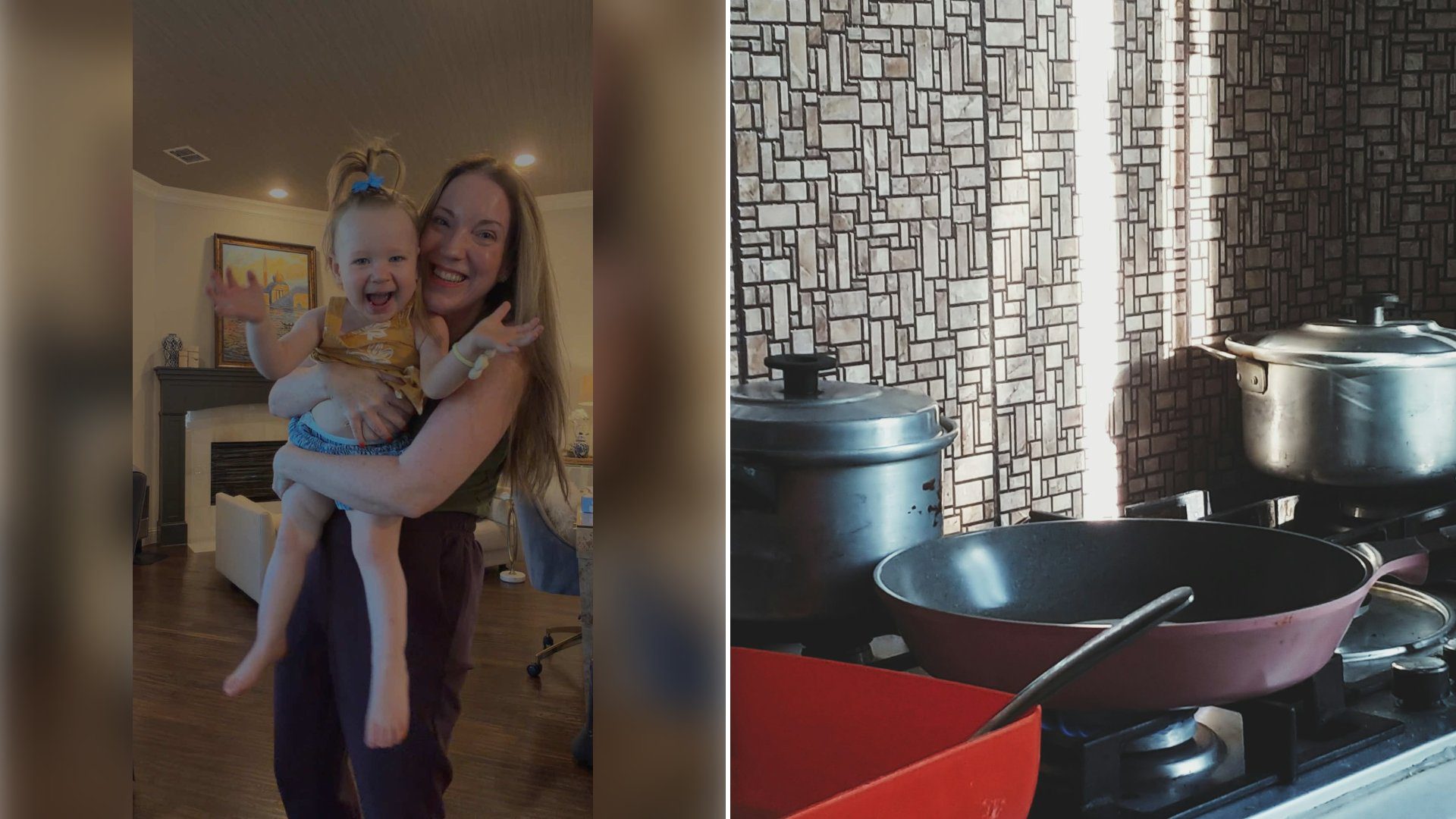
A video from the account Amanda Hooper shows her cooking at the stove while carrying her toddler on her hip, on-screen text reading “I had her at 45, I won’t get to see her grow old.” Her caption lays out the full picture: “I’m 47 with a one-year-old and a 13-year-old. My husband is 54. We became parents later in life, and the reality is, we may not get as many years with our kids as parents who started younger.” She describes a specific kind of FOMO that comes with the math, wondering whether she’ll see her daughter become a mother herself or how many family Christmases will happen after her and her husband’s seats at the table are empty, before outlining three things they’re doing instead: making the years count, planning financially so they don’t become a burden, and writing down the lessons they want to leave behind. The video pulled in 48,800 likes, 1,501 comments, 3,112 saves, and 1,274 shares.
@amanda.hooper7 I’m 47 with a one-year-old and a 13-year-old. My husband is 54.
The broader shift this video reflects shows up clearly in the government’s own numbers. CDC data tracking trends from 2016 to 2023 found the average age of first-time mothers rose from 26.6 to 27.5 years old nationally, with the share of first births to mothers 35 and older climbing 25% over that same period, even as the share to mothers under 20 fell by 26%. The most recent federal birth data, covering 2024, shows the birth rate for women ages 40 to 44 specifically rose again, from 12.5 to 12.7 births per 1,000 women, while the rate for women 35 to 39 held steady. Amanda Hooper’s own experience, becoming a mother again at 45 after already raising a teenager, sits inside a trend line that has been climbing steadily for years rather than representing an isolated case.
The specific worry she names, the math of how many years she’ll actually have with her younger child compared to parents who started decades earlier, isn’t something CDC birth data addresses directly, since birth rate statistics track how many babies are born to mothers in a given age bracket, not how long those parents are likely to live afterward. That’s a genuinely separate calculation, one more families are having to make explicitly as births to parents in their 40s become less rare and more visible in public conversation. What’s notable about this video isn’t that it resolves that uncertainty, it’s that it treats the uncertainty as something to plan around rather than something to avoid discussing, converting an emotional reality into three concrete actions a family can actually take.
That shift, from grief or anxiety toward a short, practical list, is part of what likely drove the engagement on this one. A caption that names the hard math honestly, then pivots immediately to “here’s what we can do instead,” gives viewers in a similar position something to act on rather than just something to feel. For older parents working through the same calculations privately, seeing those three steps, making the years count, planning financially, and documenting what they’ve learned, laid out plainly by someone living the same reality offers a framework that’s easier to actually use than vague reassurance would be.
More from Decluttering Mom
- Mom of Two Opens Her Three Car Garage on a Doom Pile of Boxes, Finds Diapers From a Subscription Still Running and a Sauna Boxed for a Year, Then Clears Enough to Park Inside
- Woman Says She Came Home From a Cleaning Service Visit to a Gas Burner Left On With No Flame, Then Found Her Purse, Tax Documents and Real Silverware in Two Garbage Bags Downstairs
- Homeowner Whose Husband Said He Could Not See the Garage Floor Hauls Out Four Years of Stuff, Patches and Paints One Wall White, Then Hangs Bikes, Helmets and a Vacuum on Rails