“Maybe this is a hot take, but I think we’re using our homes to store emotions that we don’t want to deal with.” That is how @lauraelizabethschroeder opens a video that has nothing to do with bins, labels or folding techniques, and everything to do with why so many of us hang on to things we do not want or need.
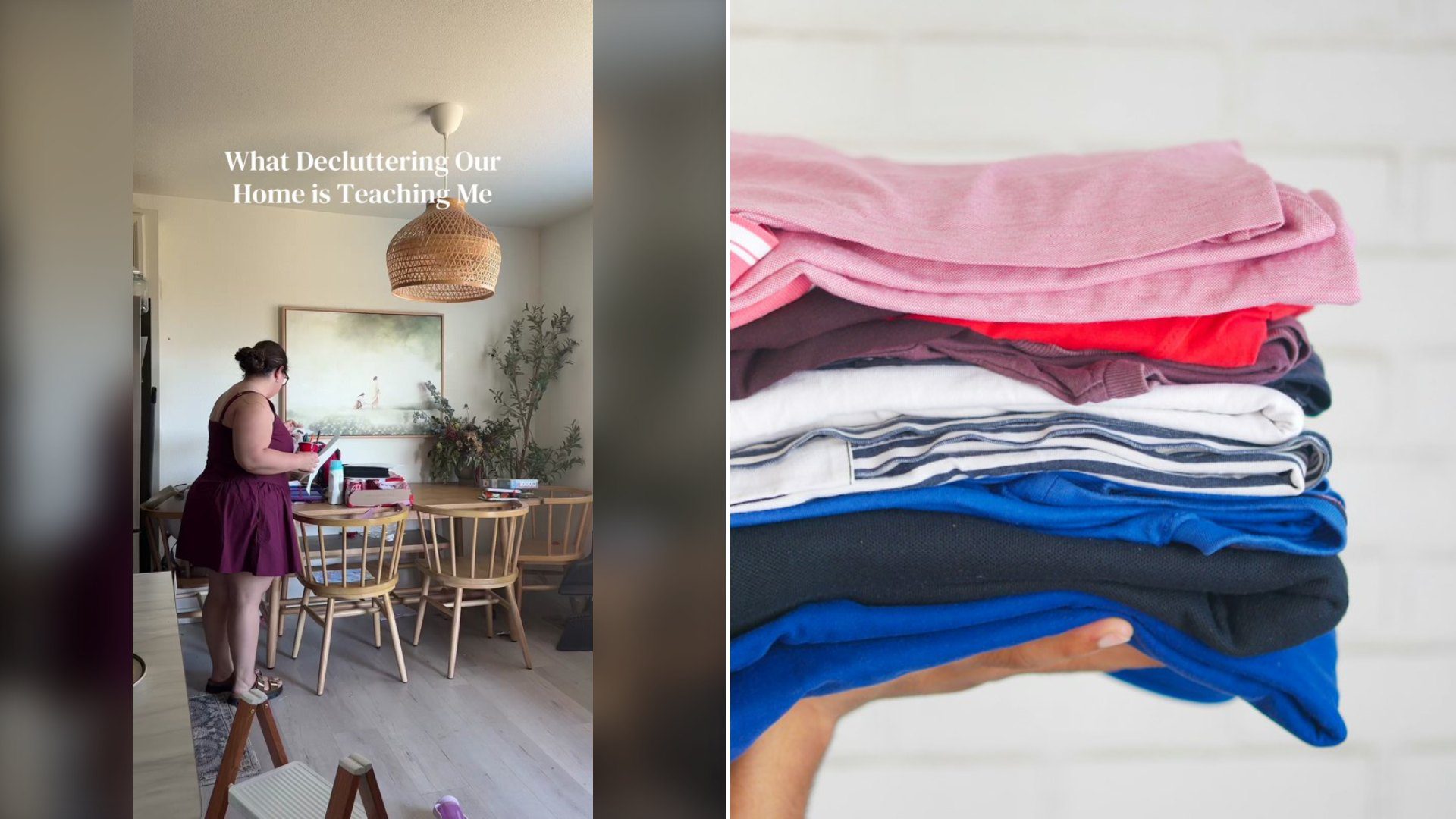
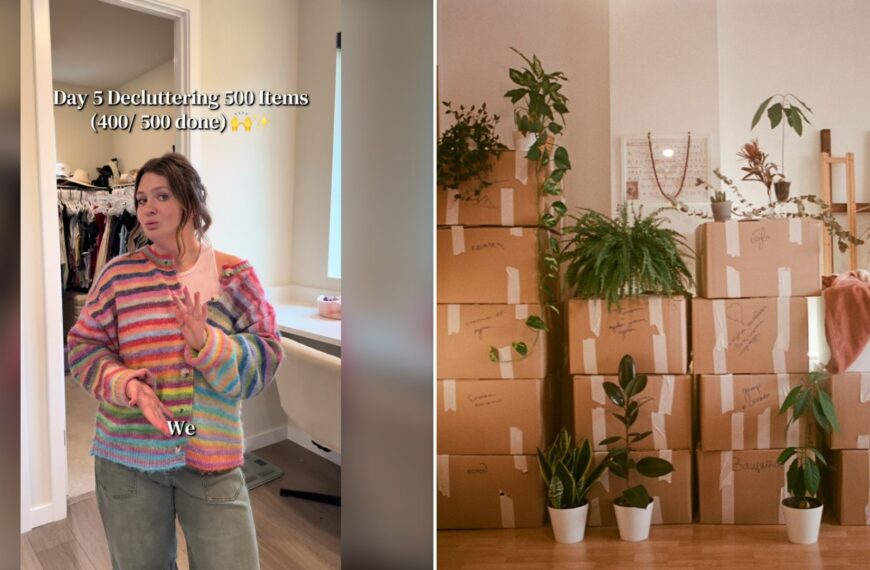
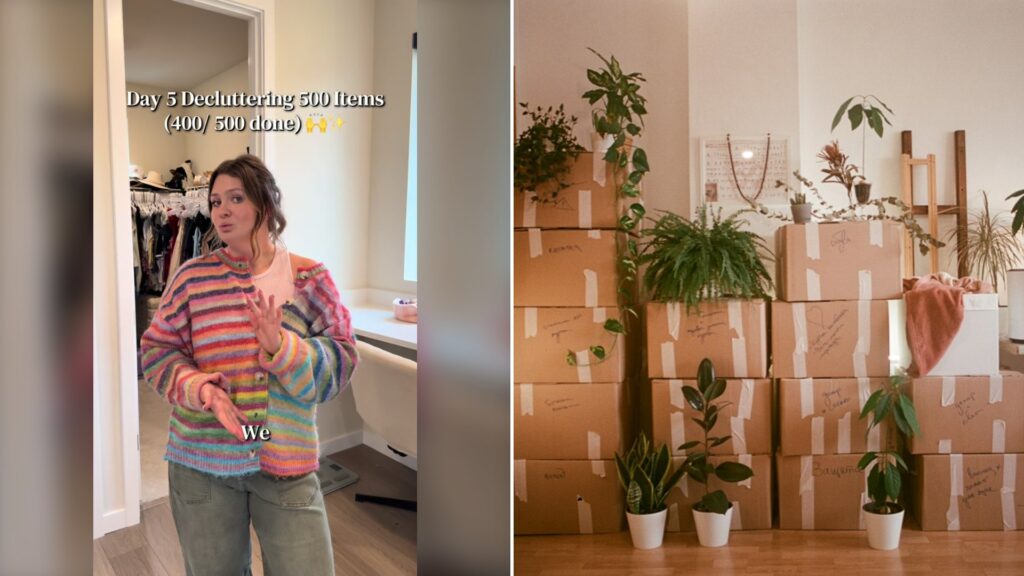
She introduces herself as Laura, a mom who spent October documenting her goal of getting rid of at least 500 things from her family’s home. With about 100 items left to go, she says she realized something unexpected.
“I don’t think the hardest part of decluttering is actually getting rid of things,” she says. “I think it’s confronting all the emotions attached to them.”
@lauraelizabethschroeder
The Feelings Hiding in Our Stuff
She runs through the kinds of feelings that come up as she sorts through her house, and the list will sound familiar to just about anyone.
There is “the guilt of money wasted.” There is the gift you never really liked but feel bad giving away. There are “the books you swore you’d read, the workouts you’d do, the hobbies you’d start.” She describes those things as “representing versions of yourself that you genuinely intended to become, but never quite did.”
And then there is the hardest one for parents: going through your children’s clothes “and realizing they’re never going to be that little again.”
But she says she came to a simple truth. “Keeping those things doesn’t change any of it,” she says. “I can’t undo a bad purchase by keeping it forever. I can’t make myself love a gift. I definitely can’t stop my kids from growing up.”
She admits that sometimes “it’s easier to keep the clutter than it is to face the feelings that come with letting it go.” Instead of pushing those feelings aside, she has decided to let them be hard. She acknowledges the money wasted, the goals she has not reached and the memories she is not ready to release.
“Getting rid of something doesn’t mean it didn’t matter, and keeping it doesn’t change what’s already happened,” she says. “I can appreciate what something meant to me, learn what I can from it, and still give myself permission to let it go.”
In her caption, she asks if anyone else holds onto things out of guilt, and says recognizing the pattern is going to help her keep her home decluttered in the future. Her closing line sums it up: “We all deserve homes that aren’t weighed down by things we’re keeping simply out of guilt or fear.”
Why Guilt Keeps Clutter in Place
She is far from alone. Many people find that the items hardest to part with are not the most useful or valuable ones, but the ones tied to a feeling. A pricey kitchen gadget used twice. An exercise bike that became a coat rack. A sweater from a beloved relative that never fit right.
Part of what makes these things sticky is that getting rid of them can feel like admitting a mistake or rejecting a person. Keeping them lets us put off that feeling. But as she points out, the money is already spent, whether the item stays in a closet or not. The relationship with the gift-giver does not live inside the gift.
For people in the later chapters of life, the pull can be even stronger. Decades in one home means decades of gifts, hobbies, children’s keepsakes and things kept “just in case.”
Gentle Ways to Let Go
If her words hit home, here are some practical ways to work through the emotional side of decluttering.
Name the feeling. When you pick up an item and hesitate, ask yourself what you are feeling. Guilt? Sadness? Fear of needing it later? Simply naming the emotion often takes away some of its power.
Forgive the purchase. Tell yourself the lesson was worth something. Then pass the item on to someone who will use it. Selling it can recover a little of the cost, and donating it gives it a second life.
Separate the giver from the gift. Most people who give gifts want you to enjoy them, not feel weighed down by them. Keeping a gift you dislike does not honor the person. Remembering them does.
Let go of the “someday” self. Unused craft kits, unread books and exercise gear can be donated to someone who will use them now. If the interest returns, you can always pick it up again.
Save a few, not all, of the children’s things. Choose a small number of the most meaningful outfits or keepsakes and store them in a single box. Some families turn favorite baby clothes into a quilt or pillow. Photographing the rest before donating them can help.
Give yourself time. Not every decision needs to happen today. Put truly difficult items in a “maybe” box, date it, and revisit it in a few months. Often the decision is easier with a little distance.
Talk about it. Sharing memories with a spouse, friend or grown child as you sort can make the process feel less lonely, and it often turns a hard task into a warm afternoon of stories.
Her October goal may be about 500 things, but her bigger point reaches well past a number. The stuff is not the memory, and letting it go does not erase what it meant.
More From Decluttering Mom
- Mom Shares Three Things She Wishes She Had Known Before Becoming a Mother Including Why Toddlers Are Harder Than Newborns and Sleep Progressions Feel Like a Scam
- Woman’s One Hundred Year Old Mother Clears Out Her Things Almost Every Week and Hands Them Over and This Week the Pile Held a Sewing Kit She Has Wanted Since Childhood
- Dresser Flipper Who Has Restored Over Three Hundred of Them Takes Fifty Dollars to a Thrift Store and Shows Why He Walked Past the Dresser With Metal Drawer Bottoms