Some numbers stop you in your tracks. For @belle.cropley, that number was $45,000. “We got a moving quote for $45,000,” she says, “which is so shocking.” Instead of simply paying it, she decided to fight back the only way she could: by getting rid of her stuff.
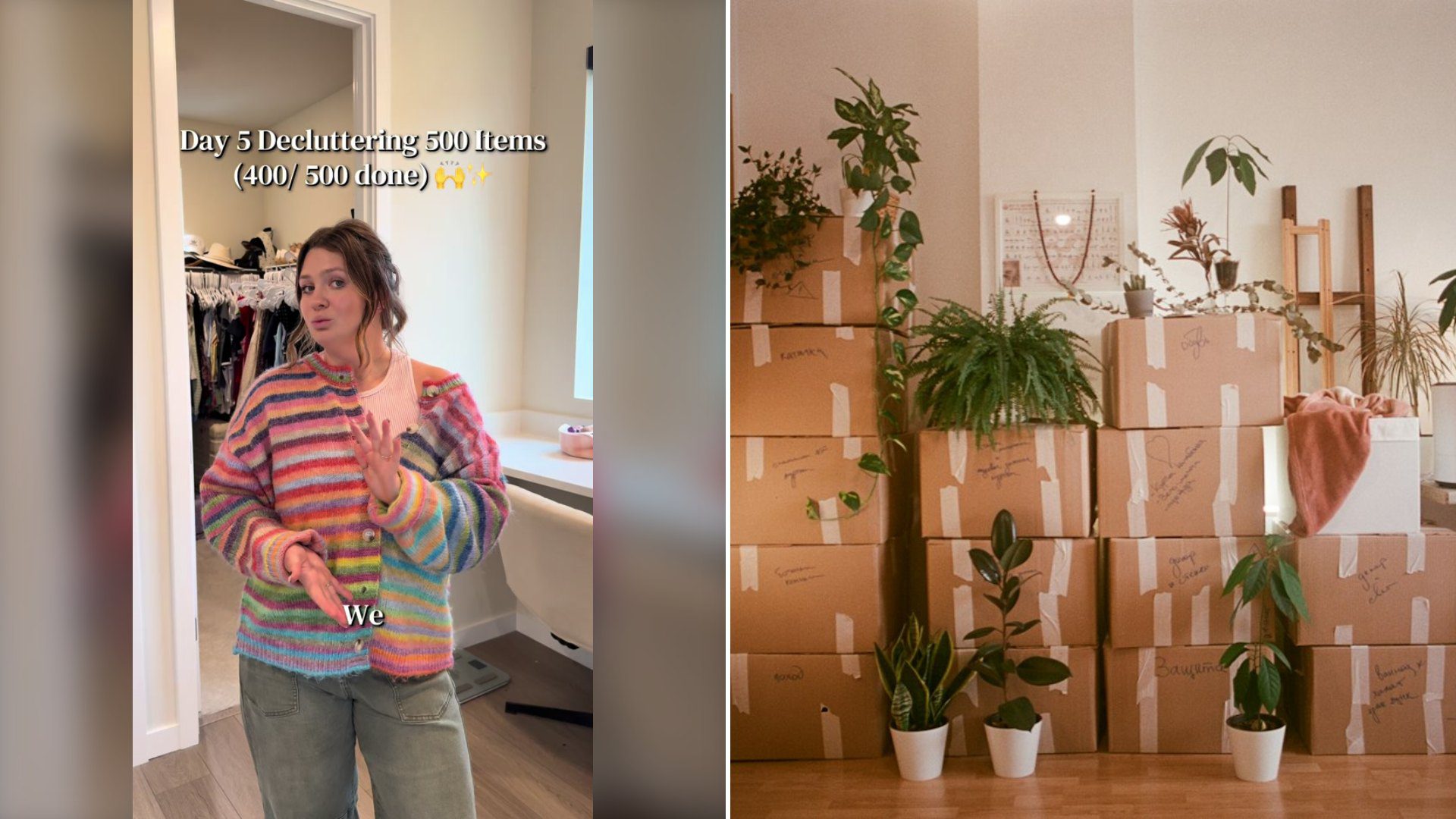
“There’s something we can do about it,” she says, “and it’s starting by getting rid of some of my stuff.” She set herself a challenge to get rid of 100 items for every day her husband was out of town.
By the time she recorded this video, she was on day five, which meant 400 items were already gone. But she was not done. She headed back into the bedroom, bathroom and closet, the same spaces she had already gone through.
She credits the people commenting on her earlier videos for the push. “People in the comments were so right,” she says. “I need to be harsher with what I’m getting rid of.”
And harsher she was. She counts out loud, item by item, all the way to 100. “We’ve done it,” she announces. She then adds a few more items that she had already sold online to the count, landing on her big milestone: “I’ve successfully decluttered 500 items in the past five days.”
Her caption celebrates the moment, “500 items decluttered!!”, and says she will be listing plenty of the items for resale online. She also makes clear the job is not finished. “The series is definitely not over,” she says, “because we have lots we need to get rid of.”
@belle.cropley
Why Less Stuff Means a Smaller Moving Bill
Her instinct is a smart one. Professional moving costs are driven largely by how much you are moving. For long-distance moves, companies typically price by the weight or the volume of your belongings along with the distance. For local moves, the bill is usually based on how many workers are needed and how many hours the job takes. Either way, every box, chair and bookcase adds to the total.
Packing services, specialty items such as pianos, and the need to store belongings between homes all push the price higher still. A household that sheds a few hundred items before the movers arrive may need a smaller truck, fewer workers or fewer hours.
Questions to Ask Before You Pack It
When you are deciding what is worth moving, a few questions cut through the hesitation.
Would I buy this again today? If the answer is no, it probably is not worth paying to move.
What would it cost to replace? Cheap, bulky or heavy items, such as particleboard furniture, old books and worn-out rugs, can cost more to move than to replace after you arrive.
Will it fit the new home? Furniture that suits your current rooms may not fit the new layout. Measure before you move it.
Have I used it in the last year? Things that have sat untouched for a year rarely become essential just because you moved.
Can it be sold? Like her, you can offset some of the cost by reselling clothing, furniture and decor online or at a garage sale before moving day. Start early, because selling takes longer than you think.
How to Get a Better Moving Quote
Decluttering is the biggest lever you have, but it is not the only one.
Declutter before the estimate. Movers base their quote on what they see during the walk-through or video survey. Clear out first, so the estimate reflects what you are actually taking.
Get at least three quotes. Prices can vary widely between companies for the same move. Compare what each one includes, such as packing materials, insurance and fees for stairs or long carries.
Ask what kind of estimate it is. In the U.S., a binding estimate sets the price for the items listed, while a non-binding estimate can change based on the actual weight or time. Know which one you are getting before you sign anything.
Check the company’s credentials. For moves across state lines in the U.S., movers must be registered with the federal government and have a USDOT number you can look up. Read reviews and be wary of a quote far lower than the rest.
Be flexible on timing. Summer is peak moving season, and the beginning and end of each month are busy. A midweek, mid-month move in the off-season is often cheaper.
Do some of the work yourself. Packing your own boxes, or moving small items in your own car, can trim the bill considerably.
One Day at a Time Adds Up
What makes her approach work is the daily target. A goal of 100 items a day is ambitious, but it is specific, and it turned an overwhelming job into five manageable days. Going back through rooms she had already cleared, and being tougher the second time, is a habit any declutterer can borrow.
For @belle.cropley, the series continues the next time her husband is away. For anyone facing a move of their own, her shock at that $45,000 quote is a strong reminder to clear out before you pack up, not after you unpack.
More From Decluttering Mom
- Woman Decluttering Her House Before Downsizing Draws a Number From One Bucket and a Room From Another to Decide Exactly What to Throw Away Each Day for Thirty Days
- Reseller Who Says Thrift Flipping Helped Pay Off Thirty Thousand Dollars of Credit Card Debt Shows One Week That Turned Three Hundred Eighty Six Dollars Into Over Two Thousand
- Five Ruthless Decluttering Tricks That Go Against Everything You Have Heard Are Shared by a Woman Who Used Them to Empty Her Packed Attic