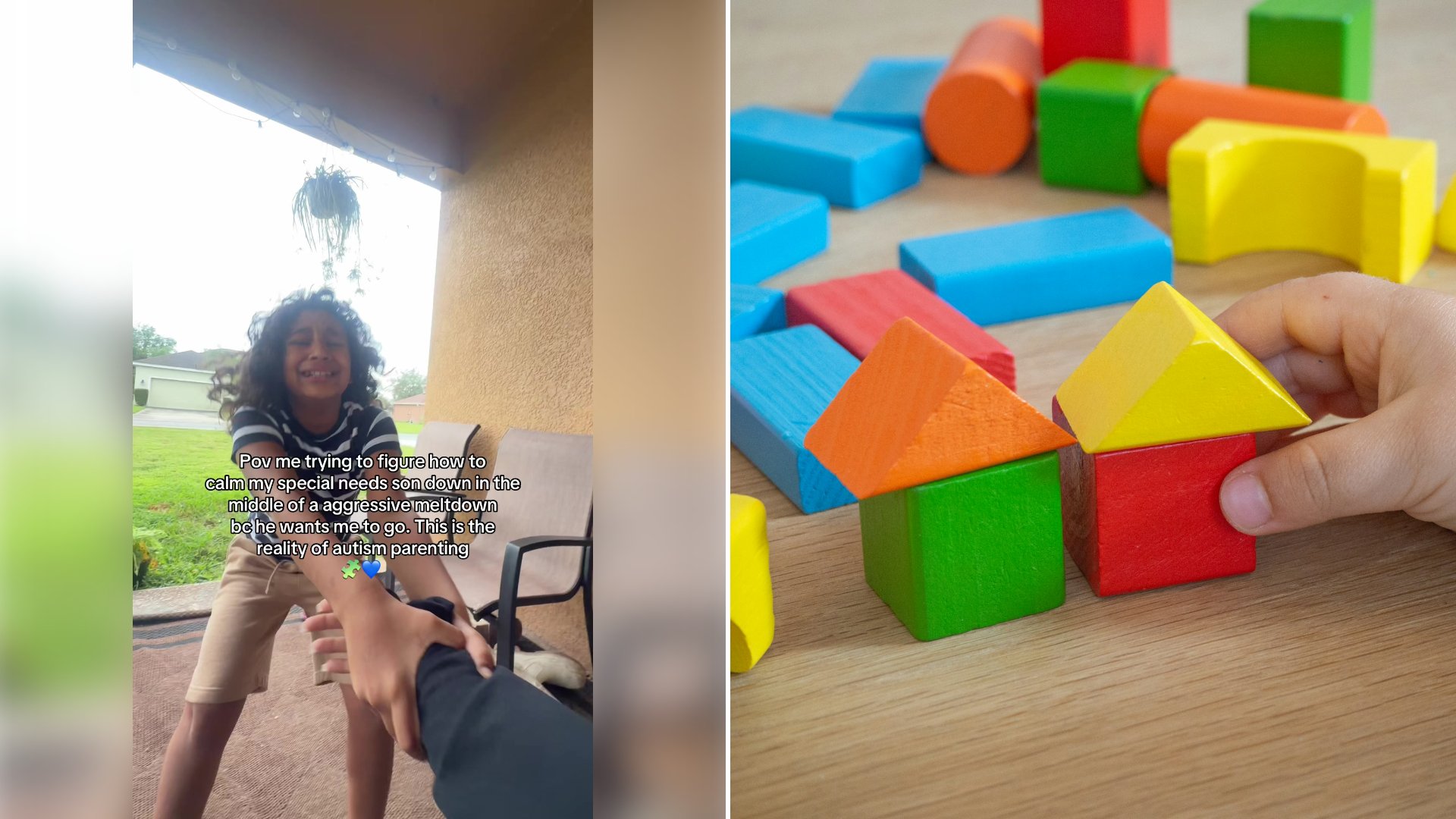
Mom and creator @itscassieblanko filmed a moment most parents of kids with intense meltdowns rarely show online: the middle of it, unedited, with no tidy resolution waiting at the end. The on-screen text reads like a confession more than a caption, explaining that she is still trying to figure out what works for her special needs son in the middle of an aggressive meltdown, filmed up close on her porch as he pleads with her to go. There is no music cue softening the moment and no after-the-fact lesson tacked onto the end, just a parent documenting a hard few minutes exactly as they happened.
itscassieblanko
What makes the video stand out in a feed full of polished parenting hacks is the honesty in that caption. She is not presenting herself as an expert who has cracked the code on her son’s meltdowns. She is saying, plainly, that even after years of being his mother and learning his patterns, some moments still leave her without a clear plan, just trying to stay present while he works through something bigger than either of them can control in that instant. For parents raising kids with similar sensory or communication challenges, that admission can feel more useful than a tidy five-step list, because it matches their own lived experience far more closely.
Aggressive meltdowns in autistic children and other neurodivergent kids are generally understood by behavioral specialists as a nervous system overload response rather than defiance. When a child’s sensory input, communication frustration, or emotional load exceeds what their brain can process in the moment, the body can shift into a fight, flight, or freeze state that looks and feels nothing like a typical tantrum. Hitting, screaming, or trying to push a caregiver away during a meltdown is often the nervous system’s attempt to release unbearable pressure, not a targeted act meant to hurt anyone.
Occupational therapists and behavioral specialists who work with meltdown-prone kids generally recommend a few consistent anchors during an active meltdown: lowering sensory input where possible, keeping language short and predictable, giving the child physical space when safety allows, and waiting for the nervous system to come back down before attempting any teaching or problem-solving. Trying to reason with a child mid-meltdown rarely works, since the part of the brain responsible for logical processing is temporarily offline. The real work, specialists note, almost always happens afterward, in the calm stretch when the child can reflect and the parent can plan for next time.
That is likely why this video struck such a chord. It does not promise a fix. It shows a parent staying in the hard moment anyway, filming it not for sympathy but because so many other parents in the same position have told her they needed to see it. Sometimes the most useful thing one parent can offer another is simply proof that they are not the only one still figuring it out in real time.
More from Decluttering Mom
- Autism Mom Filming Her Daughter at an Autism Festival Steps In When a Bounce House Meeting With Another Girl Turns Fast, and Both Moms Redirect Their Own Kids
- Mom Whose Autistic Son Walked the Mall in His Socks Says a Stranger Warned Her About Diseases on the Floor, Then Said She Herself Likes to Dance in the Rain
- Parenting Expert Shows What To Do When a Child Melts Down in a Public Place and Offers the Phrase She Wants Overwhelmed Parents To Try Next Time