In a clip that has spread across TikTok over the past few weeks, father and content creator @yodunston captured an unscripted bedtime moment with his two year old son that has struck a nerve with parents far beyond his own following. The two were lying face to face during the nightly wind-down routine when, out of nowhere, the toddler looked his dad dead in the eyes and asked, in his own words, “Do you love mommy?”
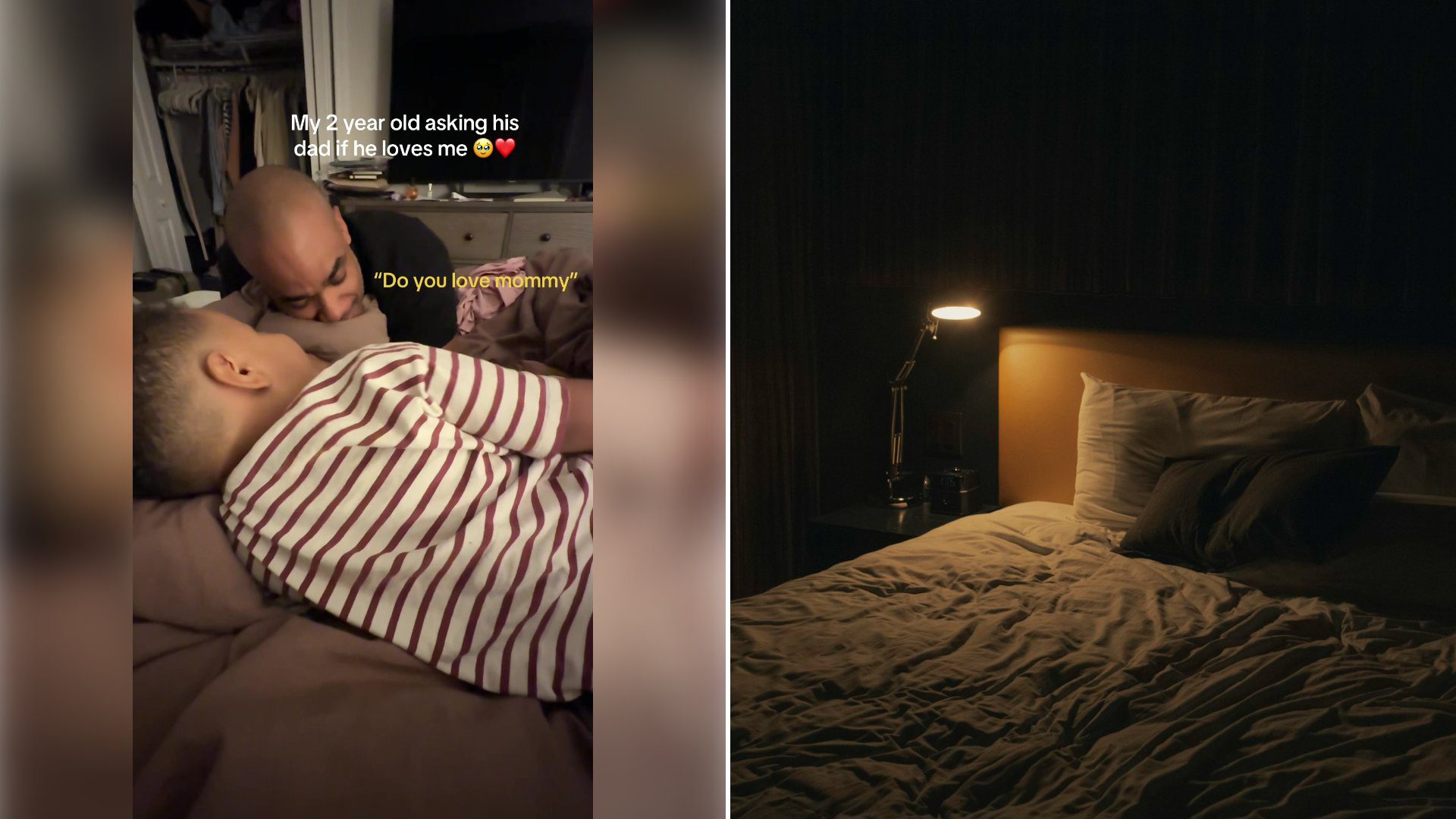
It is a simple, four-word question, but it clearly was not a throwaway one for the little boy. He waited for the answer with real intensity, and the second his dad said yes, his whole face broke open into a burst of pure, unfiltered joy. The caption on the original video reads “My 2 year old asking his dad if he loves me,” which has led some viewers to assume the toddler was asking whether his father loves him. Watching the exchange in full makes something else clear: the boy wasn’t asking about himself at all. He wanted to know, with complete sincerity, whether his dad loves his mom.
@yodunston
It is exactly that kind of question only a very young child would think to ask out loud, and it says something about how closely toddlers are watching the relationships around them long before they can fully talk about what they’re noticing.
Child development researchers have spent decades studying how young children absorb cues about the relationships in their household, and a two year old asking whether his parents love each other fits squarely into what that research describes. Attachment theory, one of the most established frameworks in developmental psychology, holds that a child’s sense of security comes not just from being loved directly, but from witnessing a stable, affectionate bond between the adults who care for them. A household where warmth is spoken out loud, rather than just assumed, gives a toddler consistent evidence that the people he depends on are a safe, connected unit.
Toddlers around the age of two are also in the middle of a major cognitive shift: they are starting to develop what psychologists call theory of mind, the ability to understand that other people have their own feelings, thoughts, and relationships separate from their own. A one year old is almost entirely focused on his own needs. A two year old asking whether his dad loves his mom is showing an early, genuine curiosity about the emotional world between two other people, which is a real developmental milestone even if it looks like nothing more than a cute moment on camera.
Verbal affirmation matters more than many parents realize, too. Experts on early childhood communication consistently point out that young children cannot yet read subtext or infer feelings from context the way adults can. A parent might feel deep love for their spouse and show it through everyday actions, but a toddler often needs to actually hear the words to register it as a clear, confirmed fact. That is part of why the dad’s simple, immediate “yes” lands so powerfully in the video. There is no hesitation, no joking around, no deflecting the question. The answer is instant and plain, and the boy’s reaction shows just how much that clarity meant to him.
Family therapists who work with young children often encourage parents to say affectionate things about each other directly in front of their kids, not just to each other in private. Hearing a parent openly affirm love for the other parent gives children a model for what healthy affection sounds like, and it reinforces the idea that their family is stable and secure. Kids who grow up hearing that kind of open affirmation tend to carry a template for what respectful, loving relationships look and sound like into their own friendships and, eventually, their own partnerships.
None of that context was on the dad’s mind in the moment, of course. He was just answering his son honestly. But the overwhelming response to the video, with comment sections full of parents saying they got choked up watching it, suggests plenty of people recognize something important in that small exchange: a toddler who feels secure enough, and curious enough, to ask the question at all, and a parent who answers it without a second of hesitation.
More from Decluttering Mom
- Parenting Expert Shows What To Do When a Child Melts Down in a Public Place and Offers the Phrase She Wants Overwhelmed Parents To Try Next Time
- Parent Lists the Signs of Childhood Anxiety That Moms Often Miss and Explains When It Is Time To Bring Concerns To Your Child’s Pediatrician
- Mom Explains Why She Puts Her Marriage Ahead of Her Kids and Describes What That Looks Like in an Ordinary Week Inside Her Busy Family Home and Why It Matters