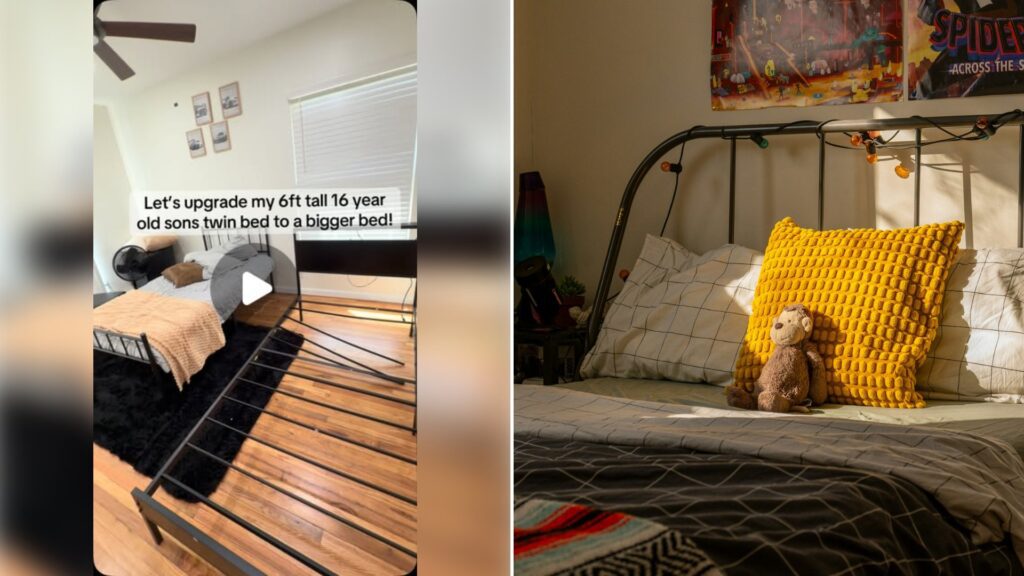
Most parents of teenagers eventually give up the fight over a messy bedroom and just close the door. One mom took the opposite approach, filming herself quietly stripping the sheets, clearing the floor and resetting her teenage son’s entire room while he was out, explaining in a voiceover that she wasn’t doing it because she was angry about the mess. She was doing it because his schedule had gotten so hectic that something had to give, and she decided it wasn’t going to be his room.

The creator behind the clip, @asiarenise_, doesn’t frame the cleanup as a chore she resents. She moves through the room with the calm efficiency of someone solving a problem, not punishing a kid, and that tone is exactly what struck viewers. There’s no lecture in the voiceover about responsibility or growing up. There’s just a mom noticing her son is stretched thin and quietly removing one source of friction from his day before he even gets home to see it.
The video taps into something that comes up constantly in conversations about teenagers: the teen years are one of the only developmental stages where major life transitions — a new school schedule, a first job, a demanding sports season, increased academic pressure — can all land at once, while the teen is still learning basic time and task management. Executive functioning skills, the mental tools that let a person plan, prioritize and follow through on multi-step tasks like keeping a room tidy, are still actively developing throughout adolescence and aren’t fully mature until the mid-twenties. That’s not an excuse for a messy room; it’s context for why a sudden schedule change can make something a teen used to manage fine suddenly feel impossible.
When a teenager takes on something new and demanding — a job with closing shifts, a varsity practice schedule, an AP course load — the hours they used to spend on chores often get the first cut, not because they stopped caring but because something has to lose when the day only has so many hours in it. Parents who’ve navigated a teen’s first job or a new sports season successfully tend to describe a similar pattern: they temporarily lower the bar on household expectations during the adjustment period, then gradually hand responsibility back once the new routine has settled, rather than treating every slipped standard as a permanent surrender.
There are a few ways parents can support a teen through that kind of transition without taking over indefinitely. Naming the trade-off out loud helps — telling a teen directly that it’s normal for chores to slide for a few weeks while they adjust to a new schedule takes the shame out of it and keeps the conversation about logistics instead of character. Offering one piece of concrete help, like this mom did, rather than a vague “let me know if you need anything,” actually gets taken up, since teens are notoriously bad at asking for support even when they’re drowning. And checking back in once the schedule stabilizes — asking what from the old routine can realistically come back now — keeps the help temporary rather than becoming the new permanent arrangement.
It’s worth noting what the video doesn’t show: a kid being bailed out of consequences for laziness. The mom isn’t erasing an ongoing pattern of neglect; she’s responding to a specific, time-limited overload. That distinction is probably why the clip reads as tender instead of enabling. Plenty of viewers in the comments recognized the moment from their own households — the season where a teenager is handling more than they ever have before, and a parent decides the most useful thing they can do isn’t a lecture about balance. It’s one less thing on the list, done quietly, so the kid comes home to a room that feels like a reset instead of one more task waiting for them.
More from Decluttering Mom
- Professional Cleaner Shows How He Vacuums a Whole House Room by Room and Explains Why the Order Matters for a Faster and More Thorough Cleaning Job
- Mom Shares the Non Negotiable Morning Rules for Her Kids’ Bedrooms and Says the Simple Routine Gets Everyone Out the Door Calmer and On Time
- Mom Reads Her Kids’ Family Group Chat Aloud as Her High School Senior Protests His New Schedule, Gets Told Biology Is the Last Science He Needs and Asks for a Ride Home