Mom and creator @jenna.booher opens her latest reel with a number that sits heavy the moment she says it out loud: three years. That is how long she waited to hear her oldest daughter speak, a daughter she shares is autistic and nonverbal. Now her second child, just twenty two months old, is already chattering, narrating her day and offering unsolicited commentary on everything around her. The contrast between the two timelines is the whole emotional core of the video, and it is landing hard with parents who recognize the specific kind of whiplash that comes from loving two children on two completely different developmental clocks.
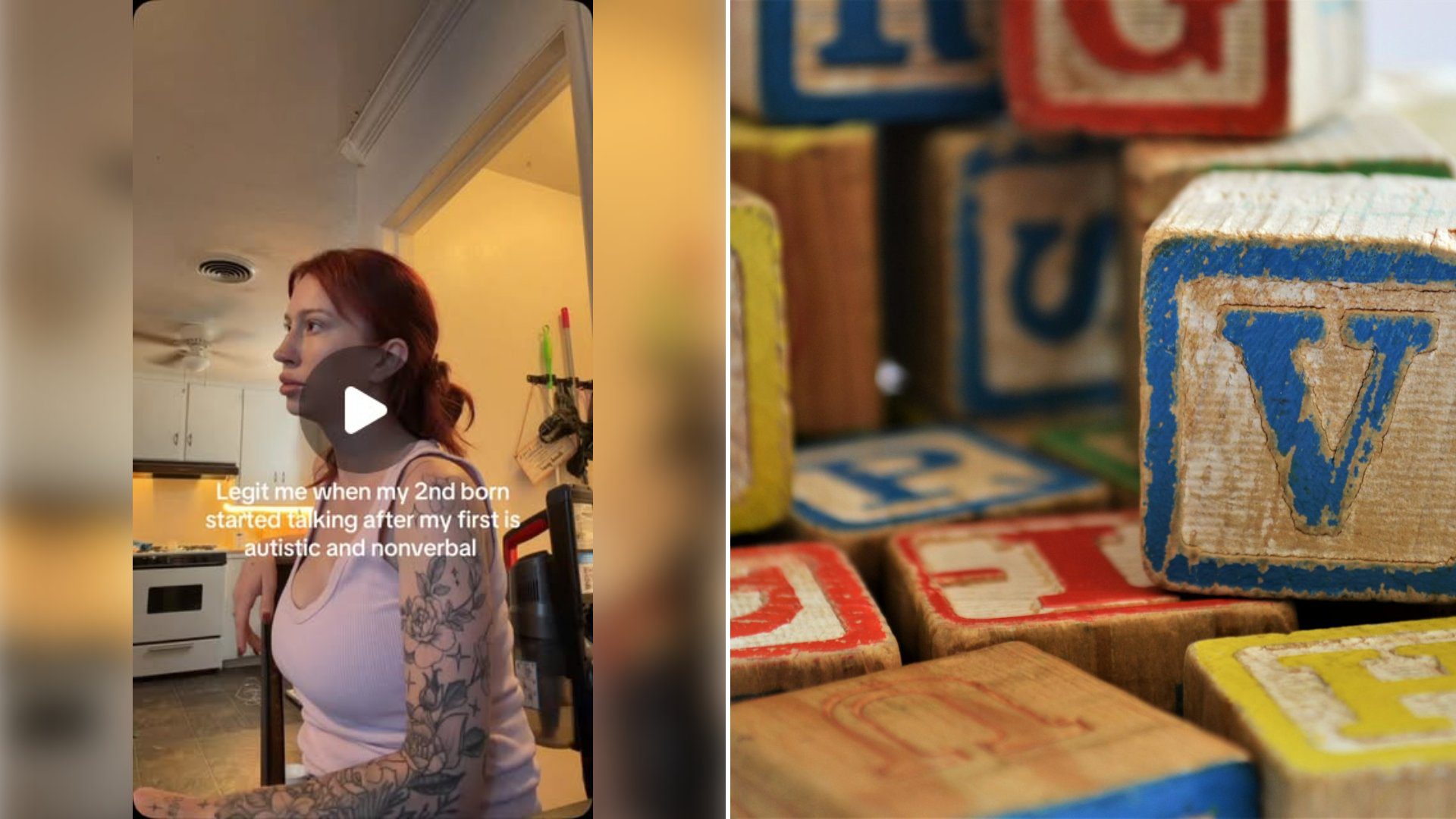
What she describes is not resentment toward her toddler’s early talking, it is grief sitting right next to joy, which is a harder combination to explain than either feeling on its own. She is thrilled for her younger daughter’s babbling and her first words. She also cannot help running the comparison in her head every single day, measuring a milestone her older child never hit against one her younger child is hitting ahead of schedule. Parents of children with very different needs often describe this same split screen of emotion, and naming it out loud, the way this video does, is part of why it resonates so widely.
Nonverbal autism is far less rare than many assume, though the data has shifted over the years as diagnostic tools and awareness have improved. Research generally estimates that a meaningful minority of autistic children, somewhere in the range of one in four, remain minimally verbal or nonverbal past the age when most children are speaking in sentences. That number includes children who eventually develop spoken language later than typical and children who communicate through other means entirely, including sign language, picture systems, or speech-generating devices. Communication, researchers emphasize, is not the same thing as spoken words; a child can be deeply communicative without ever saying a sentence out loud.
Speech and language pathologists who work with nonverbal and minimally verbal autistic children often describe timelines in this population as genuinely unpredictable, which is part of what makes the waiting so hard on parents. Some children make a leap in communication at age four, five, or later, sometimes with the help of augmentative communication tools, sometimes through intensive therapy, sometimes with no clear single trigger. That unpredictability is exactly why a typically developing younger sibling hitting milestones on the usual schedule can feel so disorienting to watch in real time; there is no map telling a parent whether their older child’s path will eventually bend toward spoken language or toward another form of communication altogether.
What comes through clearly in the reel is that none of this diminishes how much she loves either daughter. She is not asking her nonverbal child to be someone she is not, and she is not asking her toddler to slow down. She is simply telling the truth about how strange it feels to parent two children whose communication journeys look nothing alike, and giving other parents in similar positions permission to feel the whiplash too instead of pretending it is not there.
More from Decluttering Mom
- Mom Whose Autistic Son Walked the Mall in His Socks Says a Stranger Warned Her About Diseases on the Floor, Then Said She Herself Likes to Dance in the Rain
- Autism Mom Filming Her Daughter at an Autism Festival Steps In When a Bounce House Meeting With Another Girl Turns Fast, and Both Moms Redirect Their Own Kids
- Parent Lists the Signs of Childhood Anxiety That Moms Often Miss and Explains When It Is Time To Bring Concerns To Your Child’s Pediatrician