A mother who posts on TikTok as vicdorough shared 19 seconds of her toddler son’s face in the moments after she scolded him in the car. Her caption tells the rest: “That one time I got on to my son & learned real quick to never do it again! 🥹🥹 that baby got so much love after.”
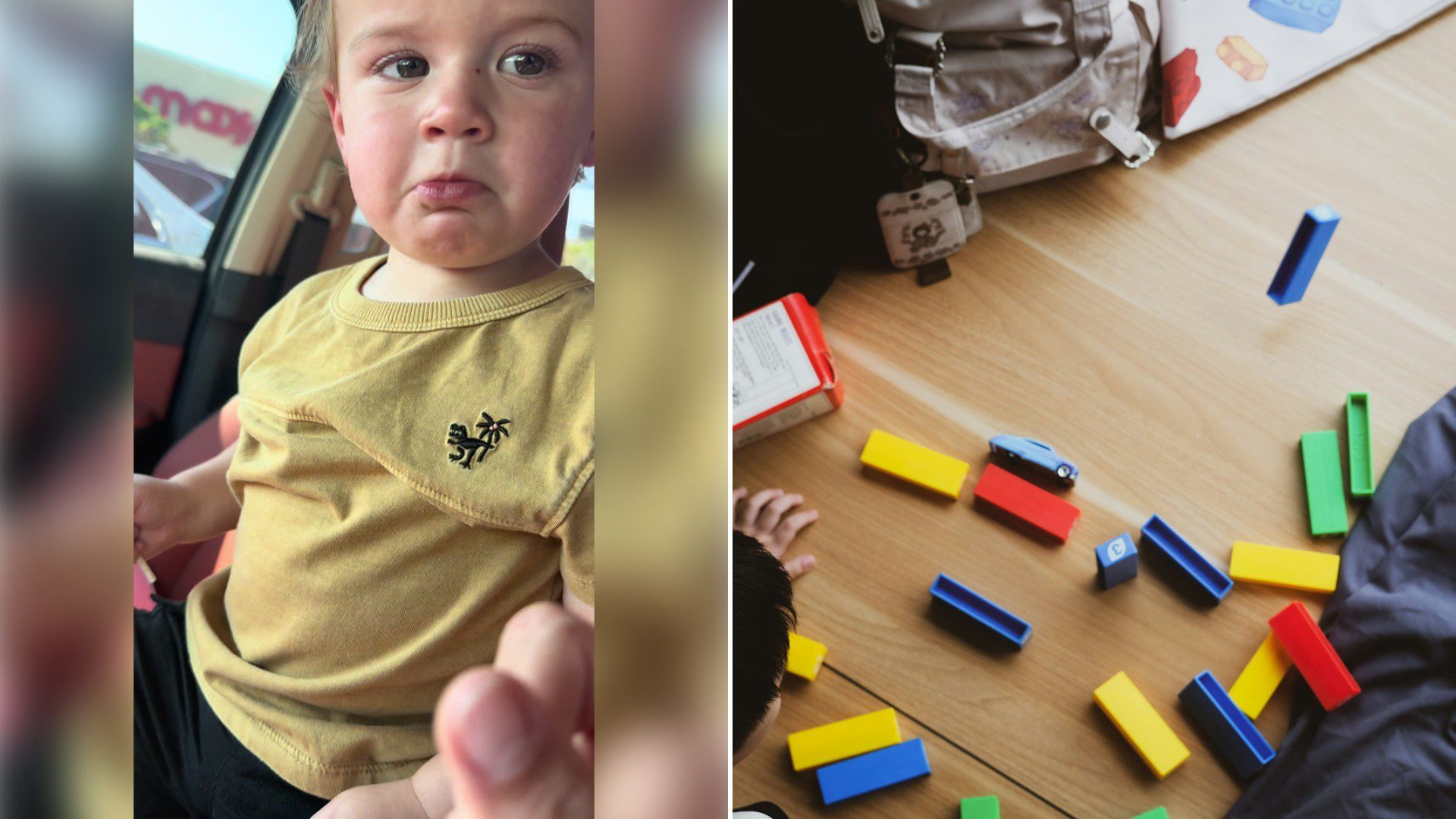
The camera is close and level with his face. He is sitting in a car with reddish-brown seats, a storefront sign visible through the window behind him, wearing a mustard-yellow T-shirt with a small palm tree design on the chest. In one hand he holds a treat on a stick. His bottom lip is pushed all the way out.
@vicdorough That one time I got on to my son & learned real quick to never do it again! 🥹🥹 that baby got so much love after. #fyp #foryoupage
For the first few seconds he looks straight into the lens with his brows drawn together and his chin puckered. An adult’s finger comes into the frame, pointing at him. His mouth opens for a moment and then the lip goes back out.
About six seconds in he drops his eyes and turns his head away, looking down toward the treat in his hand. He looks back up with his mouth open, a hand passes through the frame, and he turns away again as the hand reaches toward the side of his head. The pattern repeats to the end of the clip: a long look at the camera with the lip out, then a turn of the head and a stare at the floor of the car. He never lets go of the stick.
The video has no text on screen and no subtitles, so the post itself does not spell out what he had done or what she said to him. All she gives is the phrase “got on to,” the verdict that she “learned real quick to never do it again,” and the ending: “that baby got so much love after.”
That is a small amount of material, but it holds a few things worth taking from it.
The first is how much a change in a parent’s tone can weigh on a child this age. Nothing dramatic happens in these 19 seconds. Nobody is shouting in the frames and nothing is taken away from him. He still has his treat. What is on his face is a response to being corrected by the person he most wants to please. For a lot of toddlers, hearing a firm voice from a parent is already the whole consequence, and it does not need anything added to it.
The second is that a correction can be short. If a firm tone alone produces this face, the words that go with it can be few: what happened, what the rule is, and what to do instead. One sentence, said once, at the child’s level, is easier for a small child to take in than a longer talk delivered while he is already upset.
The third is what she did next, which she puts in six words. Going back in with affection after a correction is not undoing it. A hug, a calm voice and a plain statement that you love him tell a toddler that the problem was the thing he did and not him. That repair can come within a minute or two, and it can sit alongside the limit: the rule stays, and so does the warmth.
The fourth is that her conclusion is hers. She says she will never do it again, and that is a decision about her own child, made after watching his reaction up close. Other parents do not have to give up correcting their kids to take something from it. The narrower lesson is to fit the tone to the child in front of you. Some children shrug off a stern voice. Others, like the boy in this clip, feel it all the way down, and with them a quiet word does the same work.
It also helps to think about timing. A car is a tight space with nowhere for a child to go, and a correction delivered there, face to face and at close range, is hard for him to step back from. When the behavior is not dangerous, it can wait a few minutes until everyone is out of the car and calmer. When it is dangerous, deal with the danger first and keep the talking for afterward.
Finally, there is the choice to post it at all. She did not share the correction as a win. She shared it as a moment she felt bad about, with the note that she made it right. Parents who have had the same sinking feeling after raising their voice can borrow that order of events: notice the child’s reaction, say to yourself what you would do differently, and then go and give the love after.