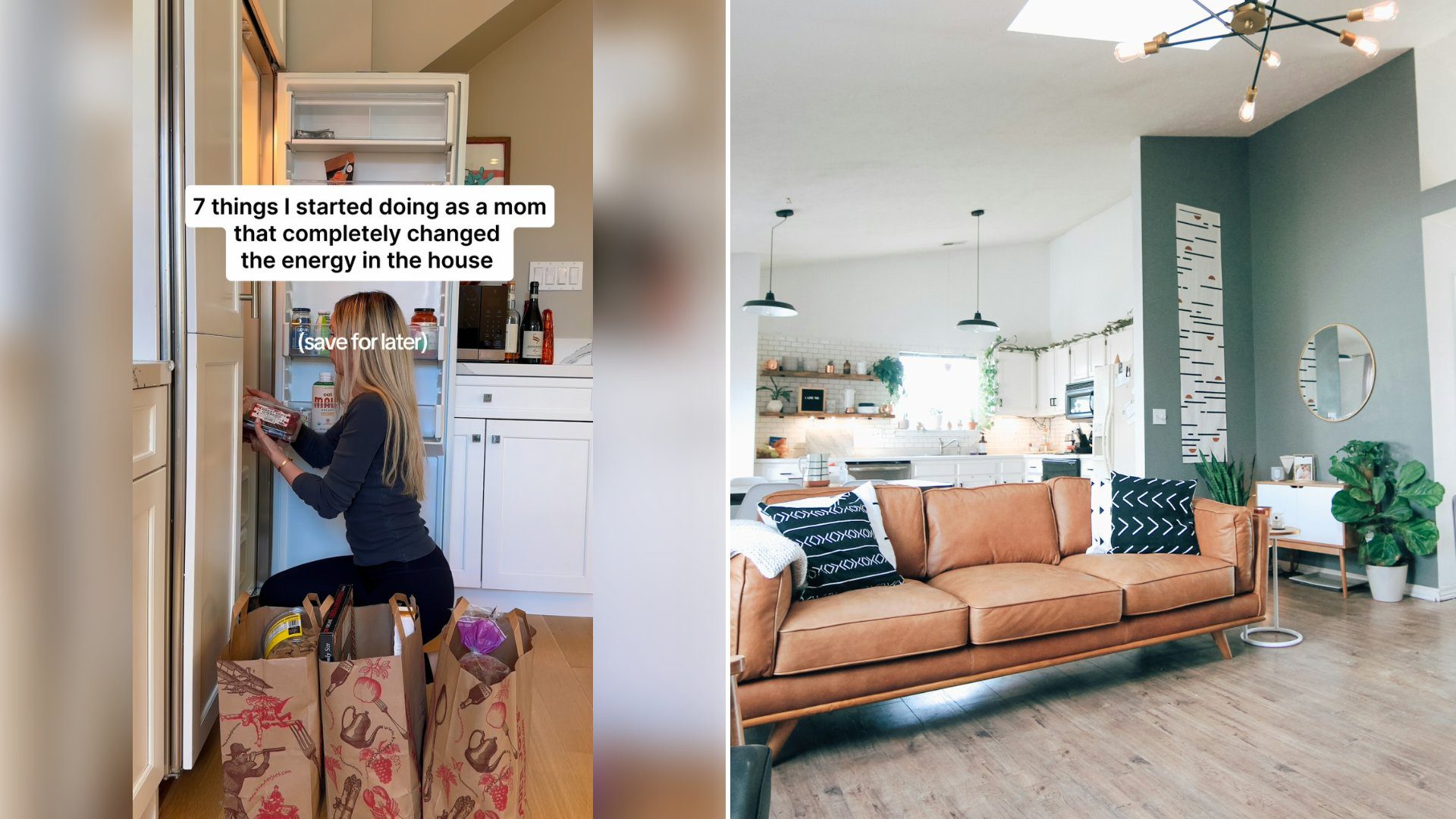
A video from the account annakentley lists seven habit shifts the creator says have genuinely changed her household, numbered on screen one at a time. They range from mindset (“accepted that the hard days are only hard in the moment, and I will be missing my son’s childhood when he grows up”) to logistics (“planned the week’s dinners on Sunday so I don’t get annoyed with ‘what’s for dinner’ during the week”) to language choices (“replaced ‘how was school’ with a question about one specific thing from his day” and “stopped saying ‘I’m so tired’ in front of my son. He started saying it about himself too”). The creator, who describes herself as “a mom and a founder,” pulled in 7,350 likes, 93 comments, and 20 shares.
Two of the seven points have direct support in how researchers study parent-child communication and behavior modeling. The swap from “how was school” to a specific question is backed by findings on why that broad, open-ended question so often gets a one-word “fine” in response: psychologists note that younger kids genuinely struggle to organize an entire day into a coherent narrative on demand, and older kids often resist the vulnerability of unpacking their social or emotional experience in one open-ended go. Narrower prompts, “what did your teacher talk about the most today,” “did anything surprise you,” or “who did you spend the most time with,” give a child a specific, answerable starting point instead of an overwhelming blank page, which is why they tend to produce longer, more genuine answers.
The point about no longer saying “I’m so tired” in front of her son, and watching him pick up the same phrase about himself, is a textbook example of observational learning, the process Albert Bandura’s social learning research describes extensively: children absorb language and emotional framing from the adults around them simply by hearing it repeated, independent of whether anyone intended to teach it. A parent’s casual self-narration, tired, stressed, fine, frustrated, becomes a template a child reaches for to describe their own internal state, which is exactly the pattern this creator noticed and chose to interrupt.
The more logistical habits on the list, planning meals in advance and giving a child one household job that’s entirely their own, reflect a more general principle that shows up across organizing and family-routine guidance: decisions made once, in advance, at a calm moment, reduce the number of small frictions that accumulate during a busy week. “What’s for dinner” asked five times a week is a repeated decision point; planned on Sunday, it’s one decision instead of five. The same logic applies to handing a child one consistent responsibility rather than assigning chores ad hoc each day, it turns a recurring negotiation into a settled expectation.
More from Decluttering Mom
- Mom of Two Opens Her Three Car Garage on a Doom Pile of Boxes, Finds Diapers From a Subscription Still Running and a Sauna Boxed for a Year, Then Clears Enough to Park Inside
- Homeowner Whose Husband Said He Could Not See the Garage Floor Hauls Out Four Years of Stuff, Patches and Paints One Wall White, Then Hangs Bikes, Helmets and a Vacuum on Rails
- Woman Says She Came Home From a Cleaning Service Visit to a Gas Burner Left On With No Flame, Then Found Her Purse, Tax Documents and Real Silverware in Two Garbage Bags Downstairs