Packing a hot lunch for school sounds like a dream until you realize it has to stay safe for hours. One mom decided to put a popular gadget to the test with a bag of frozen chicken nuggets.
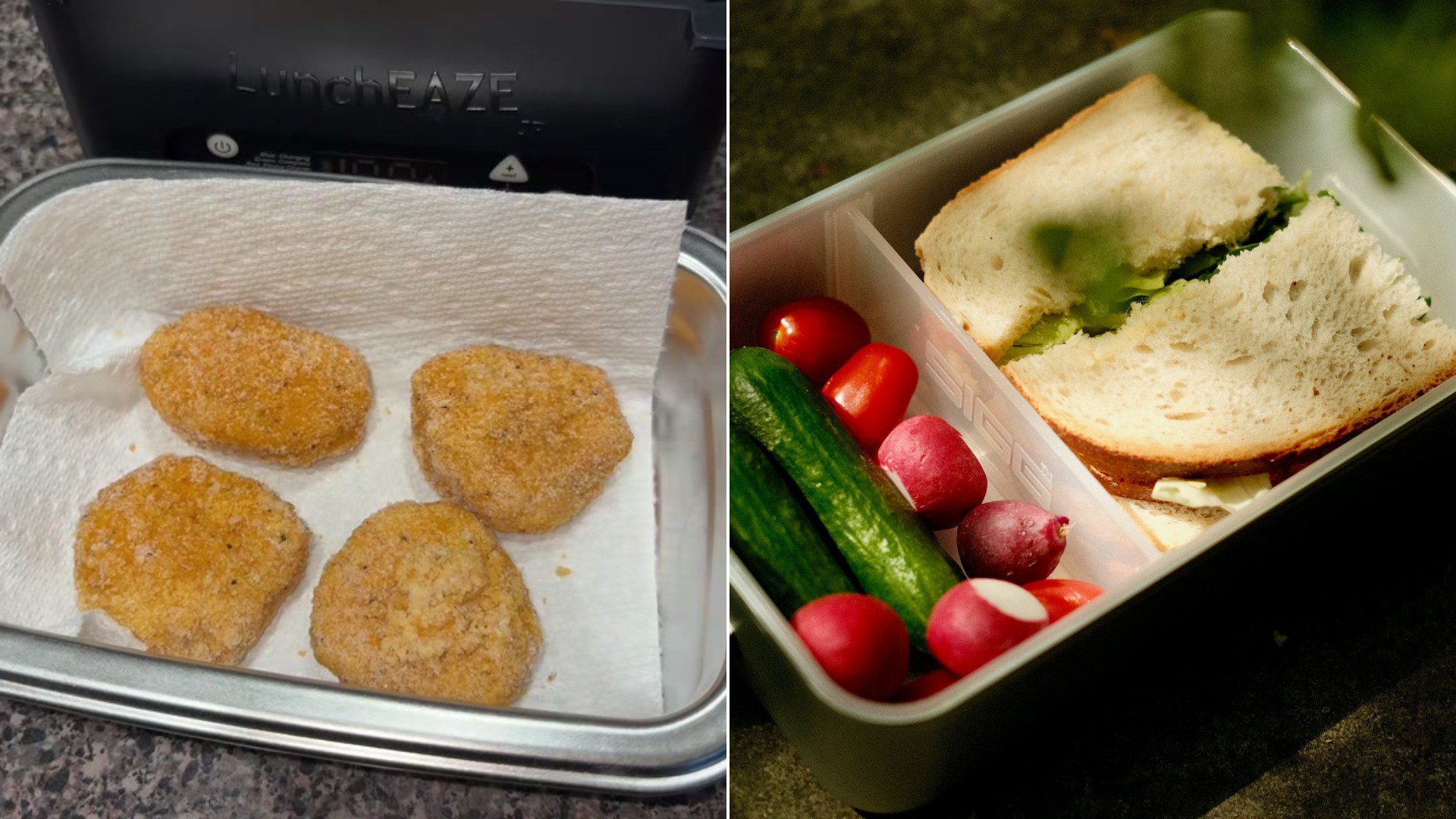
In a TikTok video, @eatingthrulifehappy picks up where an earlier lunch left off. “We packed frozen chicken nuggets in our lunches, and they were mushy, but they were hot,” she says.
Her followers had a fix. They told her to put a paper towel on the bottom, which should make the nuggets crispy and hot by lunchtime.
@eatingthrulifehappy
Five And A Half Hours On The Highest Heat Setting
For the test, she set the heated lunchbox for five and a half hours on the highest heat setting. She says the lunchbox reaches a top temperature of 220 degrees.
Her caption sums up the hope: frozen chicken nuggets with a paper towel “might actually work!?”
Commenters Asked The Big Question: Is It Safe To Eat?
She says a few comments asked whether food cooked this way is safe. She raises the same point herself. Does anyone actually know whether the inside of a nugget ever reached 165 degrees? “I don’t think so,” she admits, adding that she wants to see if it works.
One thing she feels good about: paper towels in the lunchbox are safe. That has her thinking about a second round. She would like to go back and test air fried nuggets with a paper towel on the bottom to see if they would have stayed crispier.
Before signing off, she shows what else went into the lunchboxes. Her daughter wanted bagel minis from Dunkin, and her son wanted a full bagel that would not fit, so she put the other half on the side. She rinsed the apple, but she does not wash the inside, she explains, because rinsing just keeps it from turning brown.
She wraps up with a promise to be back soon with the results.
Why Food Safety Is The Big Question
The challenge is not just whether food gets warm. It is whether it gets hot enough, for long enough, and stays out of the danger zone. The U.S. Department of Agriculture says bacteria grow fastest between 40 and 140 degrees Fahrenheit.
Foods should not sit in that range for more than two hours, or one hour when the temperature is above 90 degrees. That is why lunch safety is about more than taste.
What The Experts Say About Cooking Chicken
The USDA recommends cooking poultry to an internal temperature of 165 degrees Fahrenheit, measured with a food thermometer. Many frozen chicken products are sold already cooked or partly cooked, but package directions still matter.
Always read the label on your nuggets. If the package says to cook to a certain temperature using an oven or air fryer, a lunchbox heater is a different kind of tool, and results can vary.
How To Test Any Lunchbox Hack At Home First
Before sending a new method to school, try it on a weekend. A simple home test can show you whether it works for your family.
- Use a food thermometer to check the center of a nugget, not just the outside.
- Time the test for the same number of hours your child will wait until lunch.
- Check that the food reaches at least 165 degrees Fahrenheit if it needs cooking.
- Test more than one nugget, since heating can be uneven.
- Throw away anything that did not heat properly.
Better Ways To Send Hot Food To School
If you want your child to have a hot lunch, a preheated insulated food jar is a trusted option. Fill it with boiling water for a few minutes, empty it, then add piping hot soup, pasta, or chicken nuggets cooked that morning.
A well-made thermos can keep food hot for several hours. Pack it right before leaving, and make sure the food is steaming when it goes in.
Cold Lunches Can Be Just As Fun
Hot lunch is not the only way to please a picky eater. Cold chicken nuggets paired with dips, crackers, and fruit make a tasty bento-style meal. Fully cooked nuggets can be reheated in the morning and packed with an ice pack for safety.
Keep cold foods below 40 degrees Fahrenheit with an insulated bag and a frozen gel pack. Check that the lunchbox stays closed and out of the sun.
Save Time On Busy School Mornings
If the real goal is easier mornings, there are other tricks. Bake a big batch of nuggets on the weekend and freeze them in portions. Pack fruit, veggies, and sides the night before, and keep a lunch station stocked with containers.
Letting kids help pack their own lunch also makes them more likely to eat it, which beats a fancy gadget any day.
Keep Lunch Gear Clean And Check The School Rules
Insulated jars and lunchboxes should be washed every day. Moisture and crumbs can build up quickly, and bacteria love a damp corner. Let everything dry fully before storing it, and replace gel packs that are cracked or leaking.
If you use any heated gadget, read the manufacturer’s directions closely and follow the stated limits for food types and times. Some schools also have policies about electric lunchboxes, so a quick look at the handbook can save you a headache.
Why Parents Love A Good Lunchbox Experiment
Lunch is a daily challenge, and parents are always looking for the next trick. Tests like this one remind us to try things out before we trust them, and to keep safety at the front of the line.
Whatever you choose to pack, the best lunch is the one that is safe, easy to prepare, and gets eaten. Test your ideas, use your thermometer, and your kids will return with an empty lunchbox and a full tummy.
More Stories You May Like
- Florida Mom Pays $200 For Her 9 Year Old’s School Photos And Only Notices When They Print That His Pants Are On Backwards, Then Admits She Is The One Who Dressed Him
- Mom Reads Her 13 Year Old Daughter’s $12,000 Christmas List, Clicks One Link, And Finds The $35 TV Is Really $500 So The List Might Be $50,000
- Couple Spots A Middle Schooler Sitting In The Dirt At The End Of Their Driveway On Their Doorbell Camera, Buys Her A Bench, Then A Thank You Note From ‘Bus Kid’ Shows Up