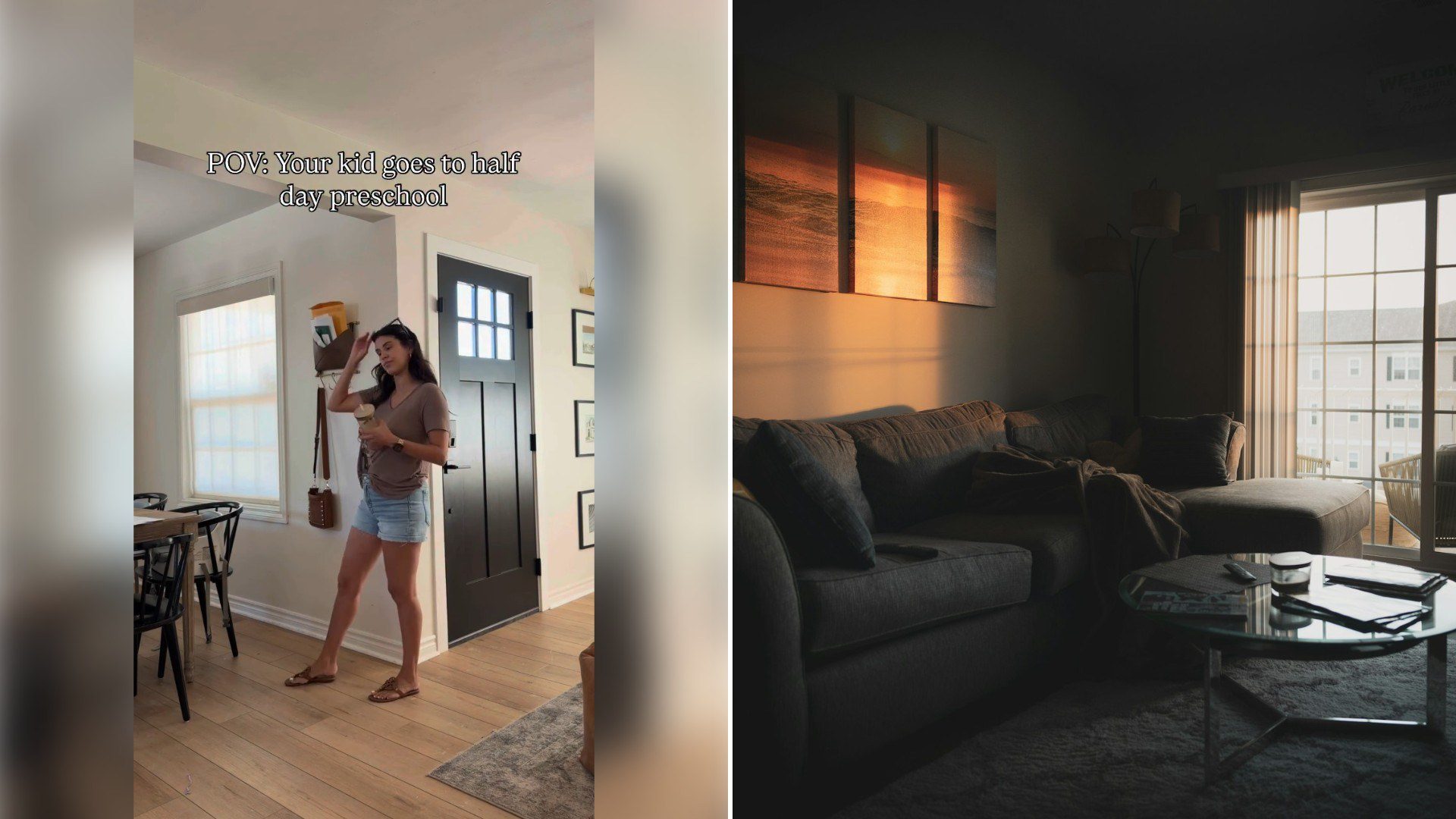
There’s a very particular kind of quiet that settles over a house the moment the last child has been dropped off somewhere else for the day, and a mom posting under the handle daniellealanareyes captured exactly that feeling in a clip that has since struck a nerve with parents everywhere. The video shows her walking back into her home immediately after dropping her child off at preschool, and in the span of just a few seconds, visibly exhaling and settling into a rare moment of peace.
There’s no dramatic narration, no elaborate setup — just the simple, honest body language of someone finally alone in her own space after a morning of managing a small child’s needs. The caption she posted alongside it leaned into the humor with a rhetorical question, asking simply whether she was wrong for feeling that way, tagged with the kind of hashtags — parent humor, mom life, mom of toddlers, mom of four, preschoolers, mom humor — that signal she knew exactly the audience who would understand.
The response confirmed she was right to assume so. The clip drew approximately 5.7 million views from an account with about 32,000 followers, a dramatic jump in reach that suggests the moment tapped into something far beyond her regular audience of followers.
There’s a particular kind of parenting honesty that tends to go viral precisely because it’s rarely said out loud: the relief of a few unstructured, quiet minutes alone is not the same thing as not loving your kids. It’s simply the natural byproduct of round-the-clock caregiving, a role that, by design, leaves almost no space for a parent’s own nervous system to reset. Preschool drop-off, in that context, isn’t just a logistical milestone — it’s often the only scheduled pocket of solitude in an otherwise fully booked day.
What makes videos like this one resonate so widely is the permission they quietly grant. So much of parenting culture is built around performing constant gratitude and joy, and there’s real relief in watching another parent admit, without guilt, that a few minutes of silence feels genuinely good. It doesn’t diminish the love; if anything, it makes the return to noise and chaos a little easier to face, because the nervous system got a brief chance to reset first.
For parents looking to build more of that kind of restorative quiet into their own routines, the takeaway doesn’t have to be complicated. Even five or ten minutes of intentional stillness — a cup of coffee taken in silence, a short walk around the block, sitting in a parked car for an extra minute before heading inside — can function as a small reset button for a nervous system that spends most of its day in a heightened state of alert. The key is treating that time as legitimate rather than something to feel guilty about, since a parent who gets even a sliver of recovery time tends to come back to their kids with more patience, not less.
In the end, the appeal of this video isn’t really about preschool at all. It’s about the universal, rarely spoken truth that loving your children fiercely and needing a few minutes away from them are not contradictions — they’re simply two honest parts of the same exhausting, rewarding job.
There’s also a growing body of parenting research that backs up what this video captures instinctively: consistent, brief breaks from active caregiving are linked to lower reported stress and greater patience during the hours that follow. The relief isn’t a luxury or a sign of insufficient love — it’s closer to a basic physiological need, the same way any demanding job requires periodic recovery to sustain performance over the long haul.
What tends to get lost in parenting culture is the difference between wanting a break and wanting to be away from your kids permanently — two things that sound similar but function completely differently. The first is a normal, healthy response to sustained caregiving demands. The second would suggest something more serious. Videos like this one help draw that line more clearly for parents who might otherwise feel guilty for craving even a few minutes of solitude.
For parents who don’t have a scheduled drop-off to create that pocket of quiet, it’s worth deliberately building one into the day rather than waiting for it to happen by chance — even something as small as sitting in silence for two minutes before starting the next task can provide a meaningful reset, especially on the hardest, most demanding days.
It’s worth adding that this kind of honesty tends to ripple outward in useful ways, well beyond the original viewer who laughed in recognition. Partners, grandparents, and friends who watch clips like this one often come away with a clearer sense of just how much unstructured caregiving actually demands, which can translate into more concrete offers of help — a scheduled hour of childcare, a standing invitation for coffee during nap time — rather than the vaguer, less useful “let me know if you need anything” that so often gets offered instead without much thought behind it.