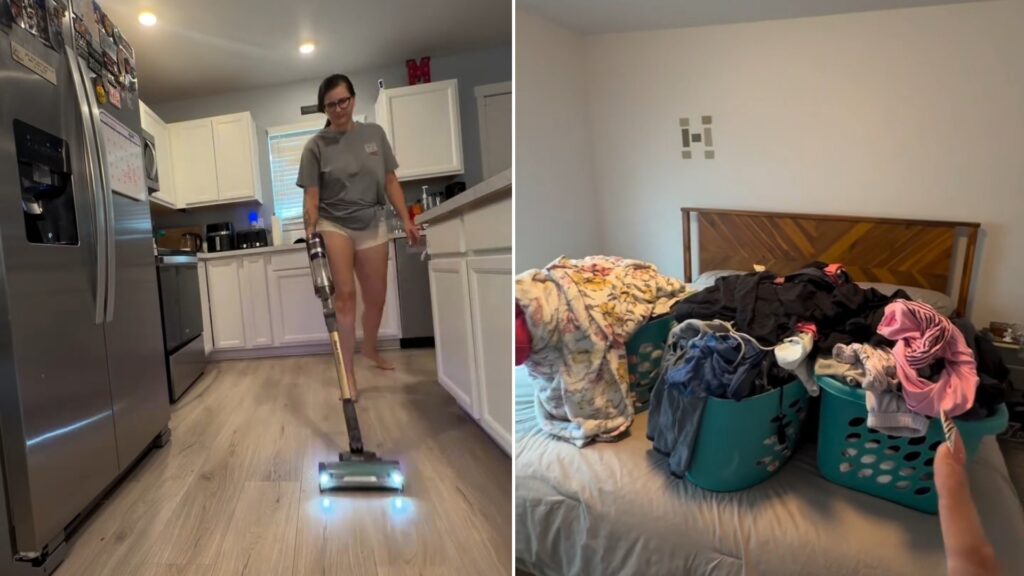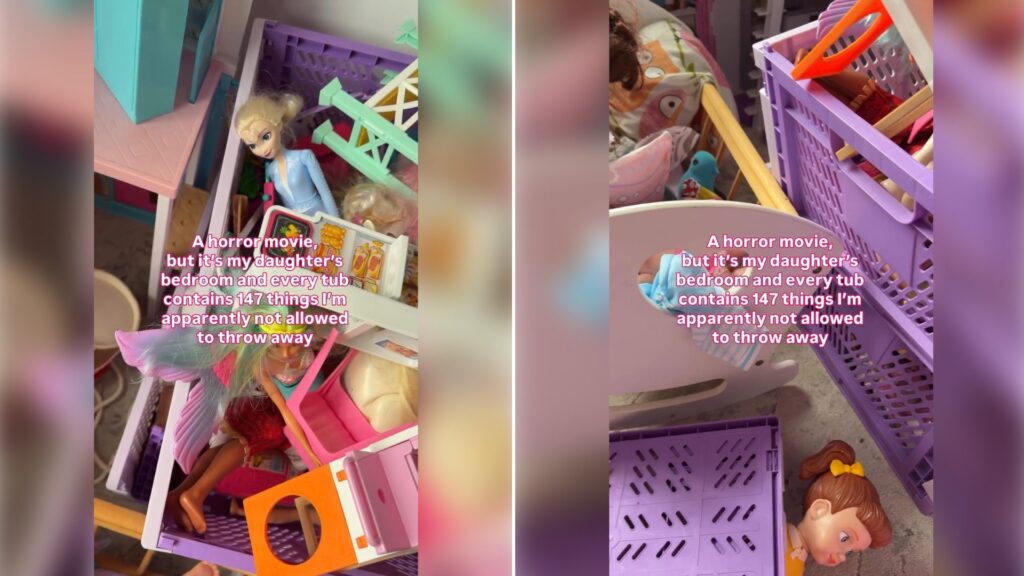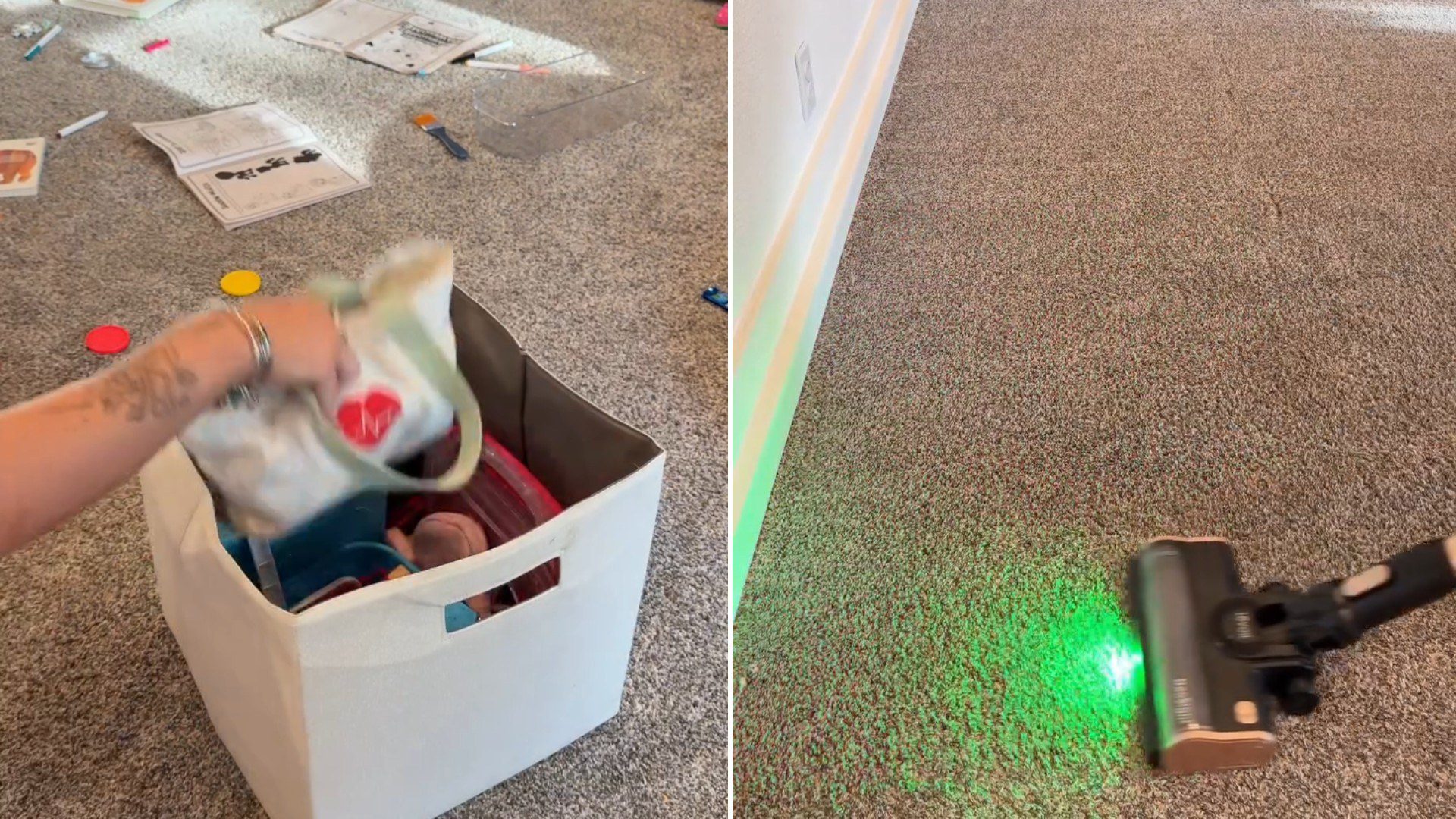
Some weeks simply get away from even the most organized parent, and a mother posting under the handle kimmyruth_ recently offered an honest, unfiltered look at exactly what that looks like in practice. Her video documents the process of restoring order to a playroom that had been completely wrecked after what she describes as a genuinely hard week, tackling the toy piles, scattered clutter, and general disarray that had accumulated while she was simply trying to get through the days.
The footage shows the full restoration process — organizing toys back into their proper places, vacuuming the floor, and gradually transforming a space that had spiraled out of control back into something calm and functional again. Her caption is refreshingly candid about the reason behind the mess, admitting that it’s been a hard week, which is exactly why, as she puts it, this is the worst the playroom has ever looked before a cleanup.
The video clearly resonated with an audience well beyond her regular following, pulling in approximately 2.1 million views from an account with about 83,000 followers — a substantial jump in reach that suggests a huge number of parents recognized their own version of this exact cycle: a genuinely difficult stretch leading directly to a household that visibly reflects the strain.
There’s a strong, often unspoken connection between a parent’s emotional and mental bandwidth and the state of their home, and playrooms in particular tend to be one of the first spaces to show the strain during a difficult week. When energy is being funneled entirely into simply getting through each day, the small, ongoing maintenance tasks — sorting toys, tidying up after each play session, doing a nightly reset — are often the first things to fall away, not because a parent doesn’t care, but because there’s genuinely nothing left over to give them.
What makes this kind of video valuable isn’t the cleaning technique itself, which is fairly standard — it’s the honesty about the cause. Rather than presenting a spotless playroom as a permanent baseline that fell apart through some kind of personal failing, kimmyruth_’s video normalizes the much more accurate reality: that a home’s tidiness naturally ebbs and flows in direct correlation with how much bandwidth a parent has that week, and that a wrecked playroom after a hard week isn’t a red flag, it’s simply cause and effect.
For parents in the middle of their own hard week, watching a home slowly slide into disarray, the most useful reminder from this video isn’t a specific organizing tip — it’s the permission to let that happen without guilt, trusting that a reset, whenever bandwidth returns, is always possible. Starting the actual cleanup with the biggest visual win, like clearing the floor first, tends to make an overwhelming mess feel more manageable faster than trying to perfectly sort every category of toy from the very beginning.
Ultimately, kimmyruth_’s video lands as both a practical cleanup demonstration and something more valuable: quiet reassurance for any parent staring at their own wrecked playroom after a rough stretch, proof that the mess is temporary, ordinary, and entirely fixable once life allows the space for it again.
Family therapists who study household stress often describe the home environment as a kind of mirror for a family’s overall bandwidth, one that tends to reflect strain well before anyone in the household consciously registers just how depleted they’ve become. A wrecked playroom, in that framing, isn’t really a parenting failure — it’s useful information, a visible signal that something in the week required more energy than usual and left less available for ongoing maintenance.
There’s also a quiet but important mental health message embedded in videos like this one: treating household order as something that should remain constant regardless of what else is happening in a family’s life sets an unrealistic and ultimately unsustainable standard. The parents who seem to manage best over the long run tend to be the ones who’ve made peace with that natural ebb and flow, rather than treating every messy stretch as evidence of falling behind.
For anyone facing their own version of a wrecked, overwhelming space after a hard stretch, breaking the reset into short, defined sessions — fifteen minutes at a time rather than one exhausting marathon — tends to make the project feel achievable again, especially when bandwidth is still recovering and a single long cleaning session simply isn’t realistic yet.
It’s also worth noting that documenting the low points as openly as the high points, the way kimmyruth_ did here, tends to build a more resilient sense of self for parents watching along, since it replaces the unattainable standard of constant tidiness with a far more sustainable and honest model: effort that ebbs and flows in direct response to how much a given week has actually demanded, rather than staying artificially constant no matter what else is happening in a family’s life.
There’s also a reminder here that a messy playroom, however overwhelming it looks in the moment, is almost always faster to fix than it appears from the doorway. Most restorations like this one take far less time than the dread leading up to them, which is its own small, reassuring lesson for any parent staring down a similar mess after their own hard week.