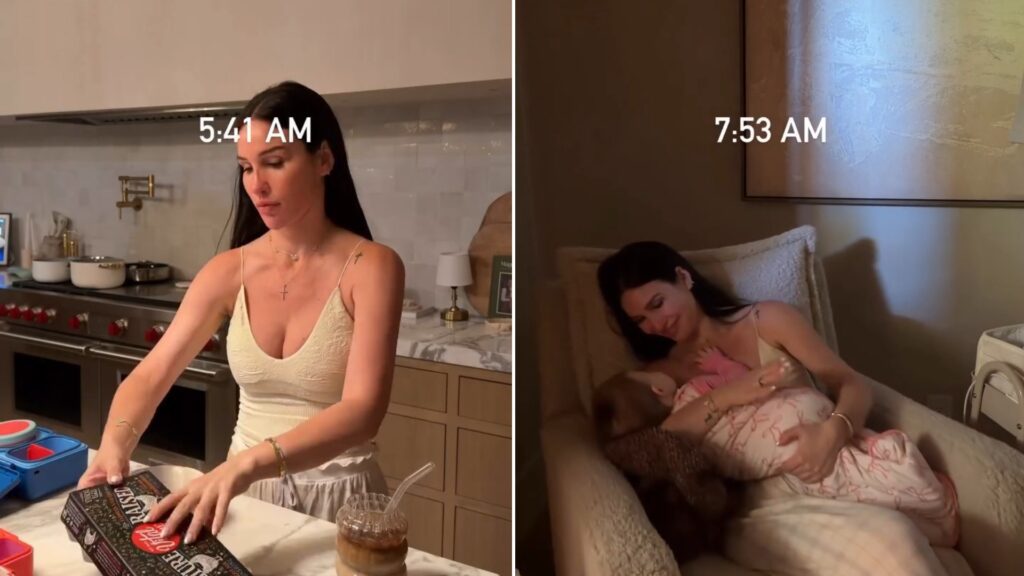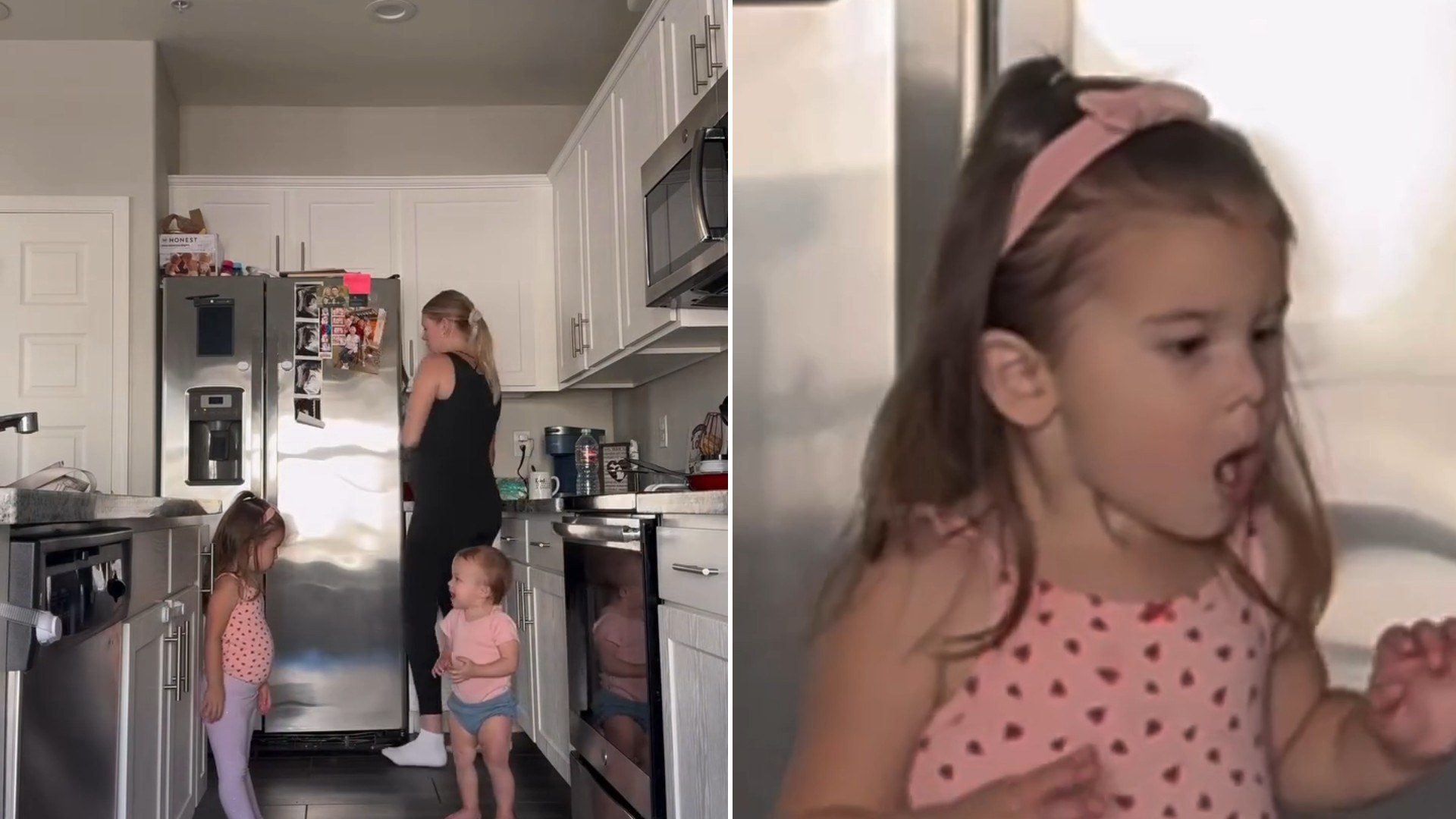
Raising twins comes with its own specific brand of chaos, and a mother posting under the handle miniqueensamirahamirah recently captured a perfect, if slightly alarming, example of it. In a kitchen scene that has since drawn massive attention online, her toddler daughter can be seen accidentally dropping her twin sibling to the floor — a moment that would send most bystanders into a panic, but that the mother handled with a level of calm that has become the real story of the video.
Rather than reacting with the kind of frantic energy the moment might reasonably call for, she stayed composed, continuing to manage the scene in front of her with the practiced steadiness of someone who has clearly learned to expect the unexpected. The caption she posted alongside the clip leaned into the humor of the situation with a simple, knowing confirmation: one twin, she wrote, is definitely the wild one.
The response was enormous relative to her usual reach. The video pulled in roughly 6.1 million views from an account with only about 6,100 followers — a thousand-fold jump in visibility that speaks to just how deeply the clip resonated far outside her existing audience.
Twin parenting occupies a strange niche in the broader parenting conversation, mostly because it multiplies every ordinary challenge of raising small children by two, often simultaneously and unpredictably. Where a parent of a single toddler might deal with one meltdown, one spill, one climbing incident at a time, a parent of twins frequently faces two versions of the same crisis happening at once, sometimes involving each other. That layered chaos is exactly what gives twin-parenting content its instant, visceral relatability, even among people who have never raised multiples themselves.
What made this particular moment strike such a nerve wasn’t the accident itself, but the mother’s reaction to it. Calm under pressure is one of those parenting skills nobody explicitly teaches, and yet it’s the one viewers responded to most strongly — the sense that she had absorbed the shock of the moment, assessed it, and kept moving without spiraling into panic in front of her children. It’s a small but powerful demonstration of the kind of composure that, whether learned or instinctive, ends up shaping how kids themselves learn to handle life’s inevitable stumbles.
For parents managing more than one small child at a time, the video offers a quiet but genuinely useful reminder: children take their emotional cues from the adults around them in moments of chaos. A composed reaction to a scary-looking accident tends to keep a startled toddler from spiraling into a bigger meltdown, while a frantic one can amplify the fear of the moment. That doesn’t mean suppressing real concern — it means channeling it into steady, reassuring action instead of visible panic, which is easier said than done but clearly achievable, as this mother proved in real time.
In the end, the clip works as both comic relief and a small case study in parenting under pressure, a reminder that the wildest moments of raising multiples rarely come with warning, and that staying grounded through them is its own kind of hard-earned skill.
There’s also a broader safety conversation embedded in videos like this one, even when they’re framed with humor. Parents of multiples frequently describe a specific kind of vigilance that never fully switches off, because the margin for a small accident is inherently higher when two children the same age are mobile and curious at the same time. Sharing these near-miss moments publicly, rather than hiding them out of embarrassment, has become an important way twin parents build community and trade practical safety strategies with each other.
Research on parental stress responses has consistently found that a caregiver’s own regulation directly shapes how quickly a startled child recovers from a scary moment. A calm voice and steady hands send a signal of safety that a child’s nervous system picks up on almost instantly, even before words are exchanged, which is part of why this mother’s reaction reads as so instructive rather than merely entertaining.
For any parent managing multiple young children, building that kind of composure often comes down to preparation rather than personality. Walking through likely scenarios in advance — what to do if one child falls, spills something, or gets hurt while another needs attention — can make an in-the-moment calm reaction far more achievable than trying to summon it cold, under pressure, for the first time.
It’s also worth acknowledging how content like this shapes the broader public understanding of what parenting multiples actually looks like day to day, beyond the curated, coordinated-outfit photos that used to dominate depictions of twins online. Real twin parenting is messier, funnier, and more physically demanding than those polished images ever suggested, and creators willing to post the accidental, slightly chaotic moments — rather than only the picture-perfect ones — are gradually replacing an unrealistic ideal with something far more honest and far more useful to the parents actually living it.
For families raising multiples, there’s also a practical planning dimension worth considering: many experienced twin parents recommend deliberately building in small buffers of extra time or extra hands, whether from a partner, relative, or friend, specifically for the highest-risk windows of the day, like feeding or transitions between rooms, when the odds of one small mishap cascading into another go up considerably simply because two children need attention at once.