Ask any new mom how motherhood is going and most will default to “good, tired, but good.” One mom decided to answer the question with footage instead of words: she’s sitting cross-legged on the floor of a living room buried in toys, two young children scrambling over her shoulders and lap at the same time, and she captions the whole scene as going from pain to joy in a matter of seconds. No filter, no narration smoothing it over — just the floor, the mess, and two kids using her as furniture.
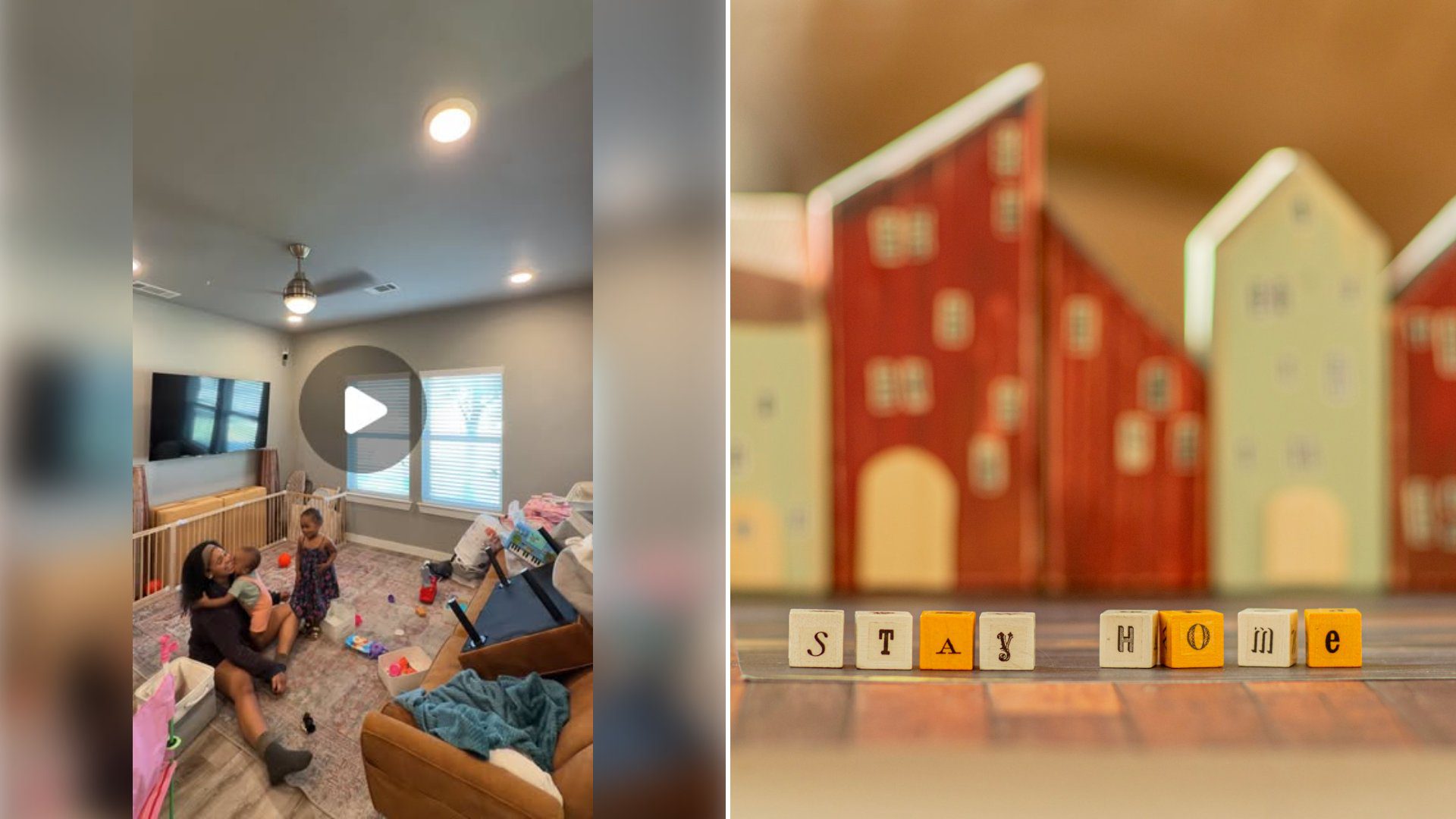
The honesty is the entire point of the clip from @peavy_aysha. There’s no complaint in it, but there’s also no pretending it’s easy. One toddler is mid-climb, the other is grabbing at her, and in the span of a few seconds her expression visibly shifts from something like mild discomfort to real delight, which is exactly the whiplash she’s naming with her caption.
That fast flip between discomfort and joy isn’t just a cute coincidence — it’s one of the most consistently reported experiences of early parenthood. Researchers who study parental emotion describe this as an “ambivalence” built into caregiving: the same moment that physically hurts, overwhelms or annoys a parent can simultaneously be the moment that makes them feel the most connected to their child, sometimes within the same breath. Unlike most adult relationships, where a frustrating interaction and a loving one tend to happen at separate times, parenting toddlers compresses both into the same five seconds, over and over, all day.
Part of why that whiplash feels so disorienting is sheer frequency. Toddlers between roughly one and three years old seek physical closeness almost constantly — climbing, grabbing, wanting to be held — because physical proximity to a caregiver is literally how a toddler’s nervous system regulates itself at that age; they don’t yet have the internal tools to self-soothe the way an older child can, so the body of a trusted adult functions as their main coping mechanism. That means a parent of a toddler, or two, is getting climbed on not out of defiance or lack of boundaries, but because it’s one of the only stress-relief tools available to a child that age. It also means the parent absorbs that need physically, dozens of times a day, which is exhausting in a very literal, bodily sense that has nothing to do with patience or attitude.
Parents navigating that same stage — one or more toddlers who treat them as a jungle gym — often find it helps to build in small physical boundaries that still meet the need for closeness: a designated lap-time a few minutes a day where climbing is fully welcome, versus other moments where a toddler is redirected to a nearby cushion or lovey instead of a parent’s body. It also helps simply to expect the ambivalence rather than treating it as a sign something’s wrong — feeling both overwhelmed and deeply in love within the same thirty seconds isn’t a contradiction in early parenthood, it’s close to the norm, and naming it out loud, the way this video does, tends to make other parents feel less alone in it rather than more alarmed by it.
What makes the clip land isn’t the mess in the background, even though the toy-covered living room is its own familiar visual. It’s the honesty of showing the actual texture of a toddler-heavy day — overstimulating, physically demanding, and genuinely joyful, frequently in the exact same instant. That’s a far more accurate answer to “how’s motherhood going” than any version that leaves either half of that truth out.
More from Decluttering Mom
- Mom Who Says She Has Mastitis Films Her Son Volunteering to Hold His Newborn Sister on the Couch, Asking Her Favorite Color and Telling Her She Could Put Her Whole House Yellow
- Mom Baking With Her 6 Year Old Daughter Who Has Down Syndrome Gets Banana Peel for an Answer, a Face Full of Dry Cake Mix and Giggles That Stop Her Lesson Cold
- Mom Pulls the Oreos Out of Her Son’s Lunchables, Drops Them in a Zipper Bag and Crushes Every Last Cookie With a Rolling Pin So He Knows His Momma Is Petty