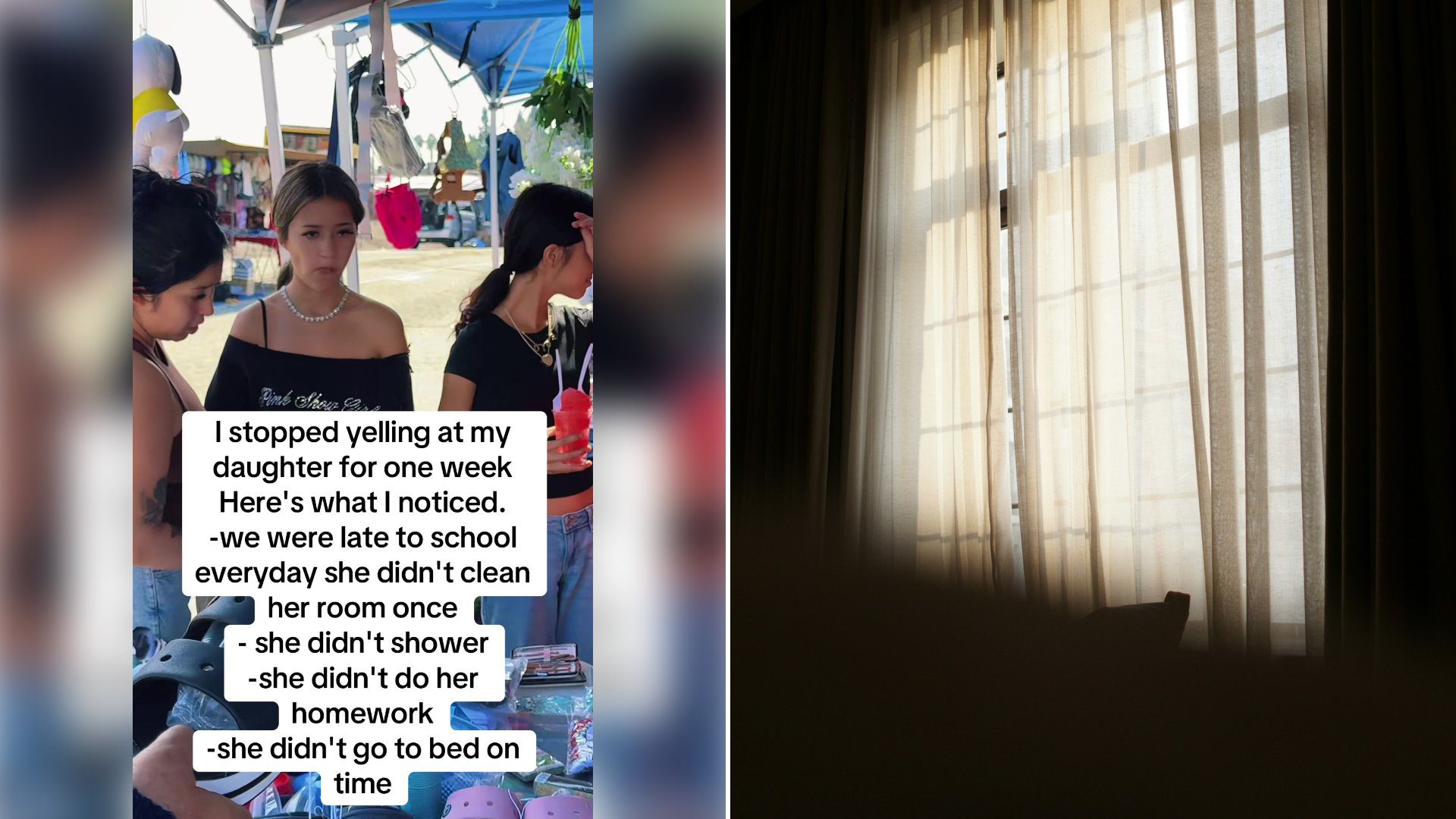
Creator @vincents.duran set a simple, almost deceptively simple, challenge for themselves: one full week without yelling at their daughter, no matter how frustrating a moment got. No elaborate system, no new parenting course, just a single rule held firm for seven consecutive days. The results they describe by the end of the week are what pushed the video into so many parents’ feeds, because the shift they noticed in their daughter’s behavior was not subtle.
vincents.duran
The parent describes their daughter becoming calmer, more cooperative, and quicker to actually listen once yelling was taken off the table as a default response. That lines up with what child psychologists have found when studying the effects of harsh verbal discipline over time. Research on yelling and harsh verbal correction has generally linked frequent exposure to increased anxiety, lower self-esteem, and in some studies, behavior that gets worse rather than better over time, as children become desensitized to raised voices and need escalating intensity to register that a boundary actually matters.
Part of why yelling tends to backfire long term comes down to what it does to a child’s nervous system in the moment. A raised voice can trigger the same fight, flight, or freeze response in a child that any other perceived threat would, which shuts down the parts of the brain responsible for learning and reasoning rather than opening them up. A child who is yelled at is often too flooded with stress hormones to absorb the actual lesson a parent is trying to teach; they register the fear, not the instruction behind it. Calm correction, by contrast, keeps a child’s brain in a state where it can actually process what is being asked of them.
None of this means a calmer approach is easy, and the video does not pretend otherwise. Holding a no-yelling rule for a full week requires real self-regulation on the part of the parent, especially in moments that would normally trigger an automatic raised voice. Parenting researchers who study emotional regulation often point out that a parent’s capacity to stay calm is itself a skill that improves with practice and support, not a fixed personality trait some parents simply have and others do not. Trying it for a defined week, rather than committing to it forever right away, is a format many parents find more achievable than an all-or-nothing resolution.
What made this particular video spread was the specificity of the before and after. It is one thing to be told yelling is not effective. It is another to watch a parent track it for seven real days and come back with an honest account of what changed, without pretending the week was easy or that every moment went perfectly. That kind of specific, lived experiment tends to convince skeptical parents in a way a general parenting tip never quite manages.
More from Decluttering Mom
- Mom Says Toddler Tantrums Calm Down When Parents Say No Once and Stick to It and Explains Why Giving In Teaches Kids To Scream Louder Next Time
- Parenting Expert Shows What To Do When a Child Melts Down in a Public Place and Offers the Phrase She Wants Overwhelmed Parents To Try Next Time
- Mom Says Her 16 Year Old Screamed That She Hated Her Over a Refused Sleepover, and the Calm Answer She Gave Instead of Yelling Is the Night Her Daughter Still Brings Up