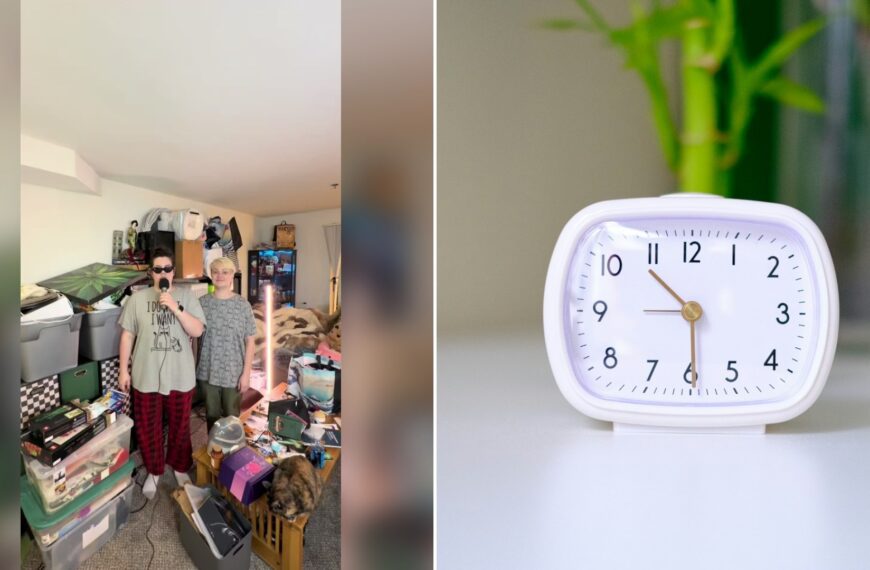
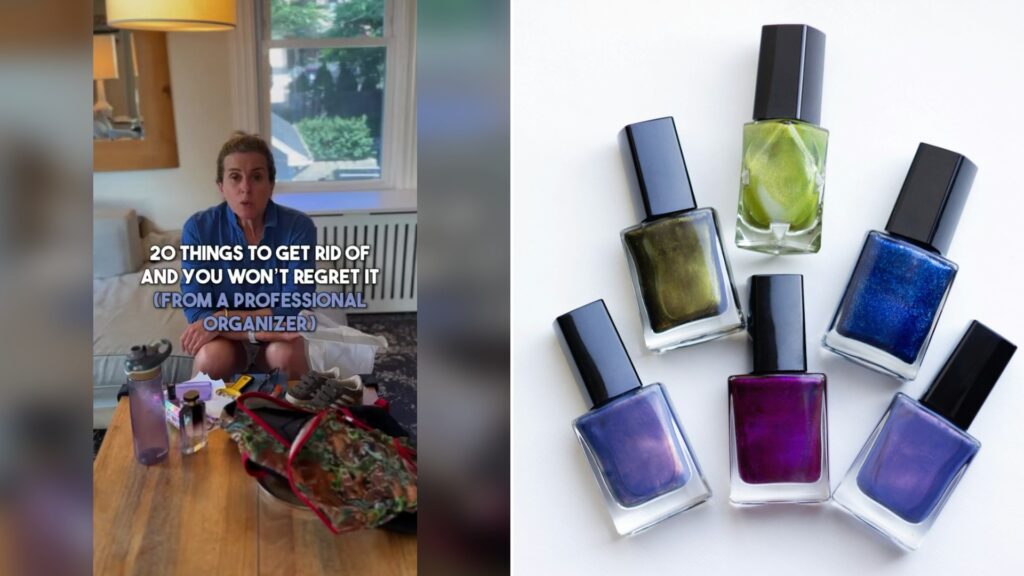
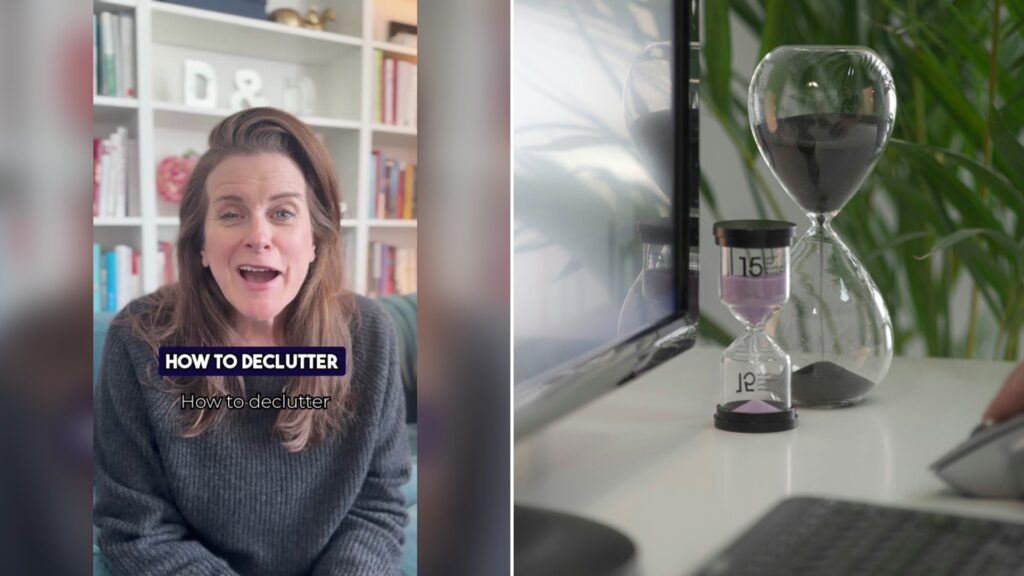
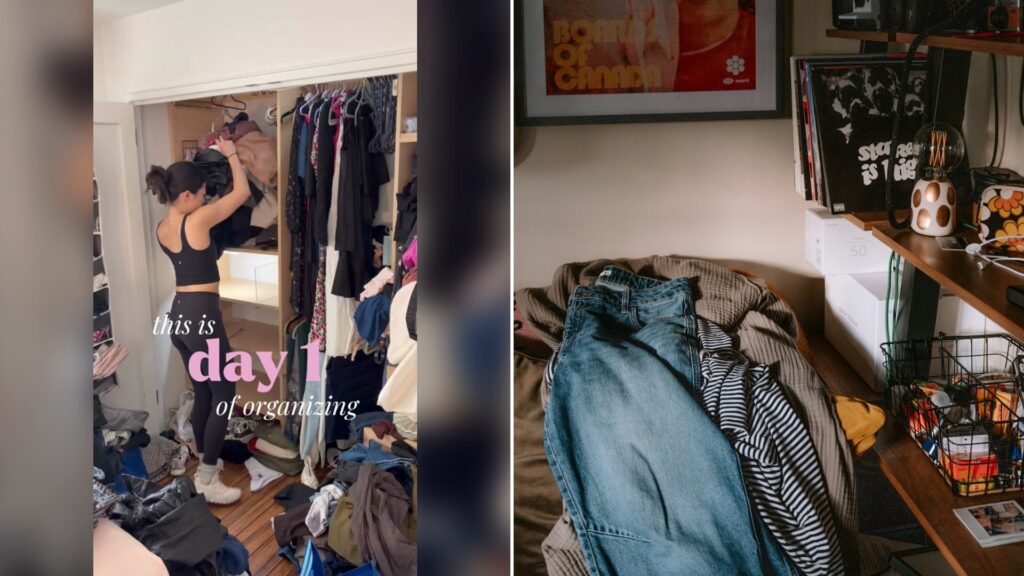
When a home has been overrun by clutter for years, the idea of cleaning it up can feel impossible. That is exactly the kind of job professional organizer @kayleenkellyorganize takes on. She specializes in chronic clutter, and she recently shared how she cleared an overflowing living and dining room, step by step, in about four hours.
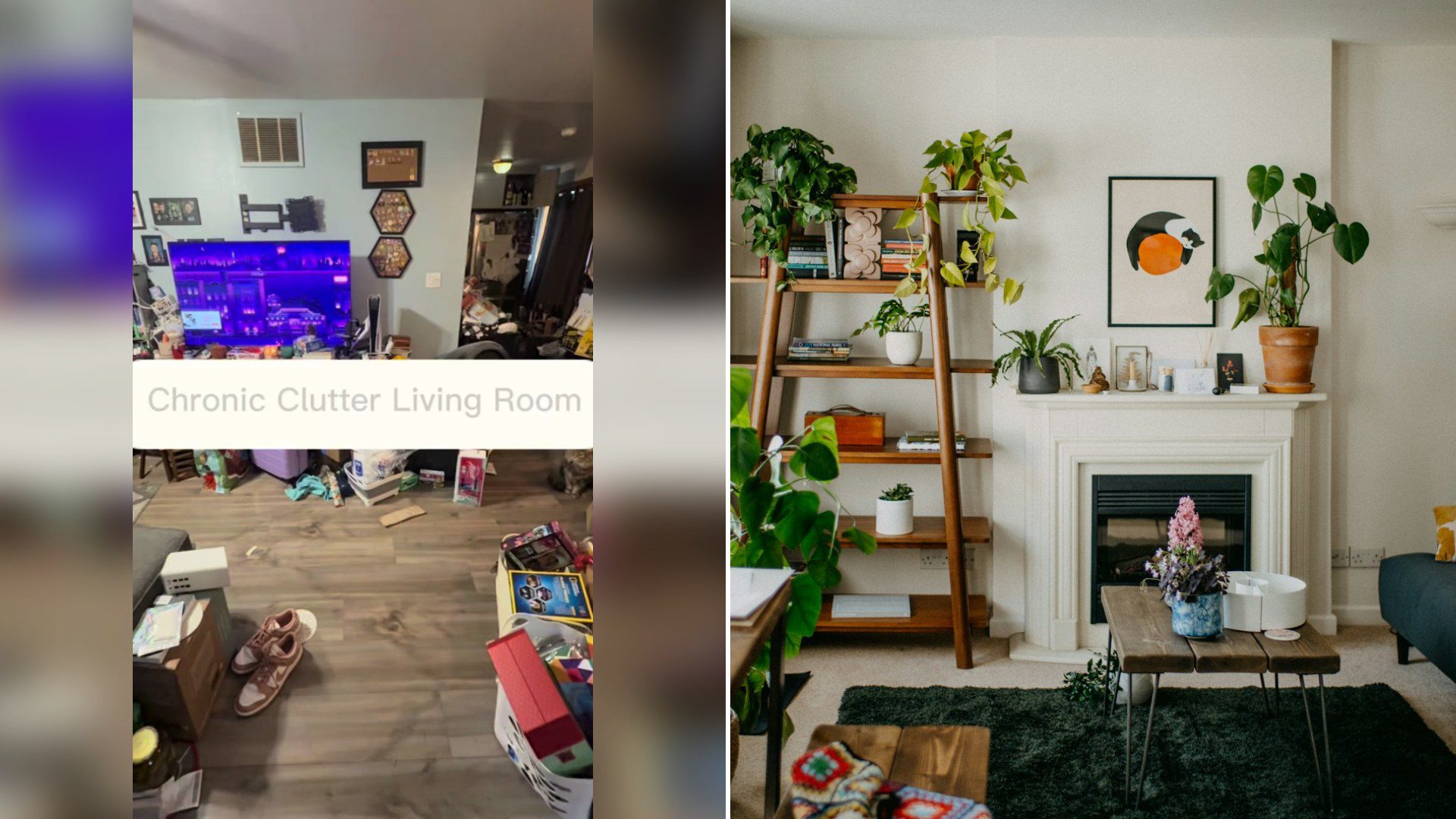
It was part of her ongoing Chronic Clutter series. She had already worked through the bedroom, the bathroom and the laundry room, and this time she moved on to the main living area. What makes her approach worth a look is that she follows the exact same order every time, and anyone can copy it.
@kayleenkellyorganize
Start With the Floor
She says she always begins with the floor. Floors are where the overflow lands, and clearing them gives you room to work and an instant sense of progress. Before she touches anything else, she pulls out her sorting bins and sorts the loose items by the room where they belong. Each bin stands for a different room, so one is for the kitchen, one is for the bedroom, one is for the bathroom, and so on.
This step alone solves a big problem. In a cluttered living room, items from every corner of the house pile up in one place, such as dishes, towels, toys, papers and clothes. Sorting by destination room turns one giant mess into several small, understandable piles.
Let the Homeowner Make the Decisions
Once the bins are filled, the organizer brings her client in. The client looks over what is in each bin and does the decluttering herself. What remains in the bins are the keepers, and everything else is bagged up and carried out for trash and donation.
Then she repeats the process with the miscellaneous items still left in the room, breaking them down by the room they belong to and bringing the client back in. She does multiple rounds of decluttering, and she is clear about the standard for this stage. Because everything in the room is excess, the client has to truly love an item or truly need it, or it goes.
Multiple rounds are a smart idea. Your first pass is usually your gentlest. Once the obvious trash and duplicates are gone, you can see what is left more clearly, and the second and third rounds go faster and feel less painful.
Sweep, Compare, Move On
At one point she does a quick sweep of the floor, laughing that her followers will complain if she skips that part. She also compares where they started to where they are now, which helps keep the client motivated. When the floor was under control, she moved over to the other side of the room and used the same method, pulling out the bins and categorizing again. Her goal is for the client to see everything she owns, compare it and make quick, confident decisions.
Around the four hour mark, she says, they hit what she calls the decision fatigue mark. That is the point at which your brain is simply tired of choosing, and it is a real thing. She showed the space where it started and the space four hours later, calling it nice and under control. A few items were set aside to be given to friends and family. The rest left the house for donation, recycling or the trash. She ended by saying part two is on the way.
How to Copy This Method in Your Own Home
You do not need a professional or a van full of supplies. Here is how to borrow her system.
Gather some bins or boxes. Laundry baskets, grocery bags, cardboard boxes and shopping totes all work. Label each one with a room name, such as kitchen, bedroom, bathroom, office or garage.
Start on the floor. Pick up everything that is not where it belongs and drop it into the right bin. Do not stop to put things away yet. You are only sorting.
Make a trash bag and a donation bag. As you sort, anything that is obviously broken, empty or expired goes straight into the trash bag. Keep the donation bag handy for things that are still good but not needed.
Decide room by room. Go through one bin at a time. Ask yourself whether you love it or need it. If the answer is neither, let it go. Remember, a bin with too many things in it just means you own more than the room can hold.
Do more than one round. After the first pass, take another look at what you kept. You will often find a few more things you are ready to release.
Give friends and family a chance. If a keepsake or a useful item would be loved by someone you know, set it aside to hand off. It often feels easier to let go of something when you know it is going to a person you care about.
Put the keepers away right away. Carry each bin to its room and put things in their homes before you lose steam. This is the step that makes the clean floor last.
Plan for breaks. Four hours is a long stretch. If you do not have that kind of time or energy, work for an hour or two, stop while you still feel good and finish another day. You can bring the bins back out whenever you are ready.
Why This Approach Works for Stubborn Clutter
People who live with chronic clutter often say they do not know where to start, or that they put things down meaning to come back and never do. Sorting by room breaks that cycle because it gives every item a clear destination. Clutter is usually just stuff without a home, and this method works out where each thing’s home is before any decision gets made.
It also takes the pressure off. You are not choosing between thousands of random items. You are looking at one small bin at a time and answering one simple question about each thing in it. By the end of the afternoon, you can see the carpet again, and that is a powerful reward.