

Picture a house with three teenage boys, one of them 21, and a kitchen that is still clear when you wake up in the morning. That is the life Robin of @minimalisthome describes, and she is quick to admit she is “not working under controlled laboratory conditions.” Robin is a retired ER nurse who says she recovered from the craziness of a messy, cluttered house and now helps others solve their organizing and cleaning problems. Her secret starts with a rule that takes about five seconds.

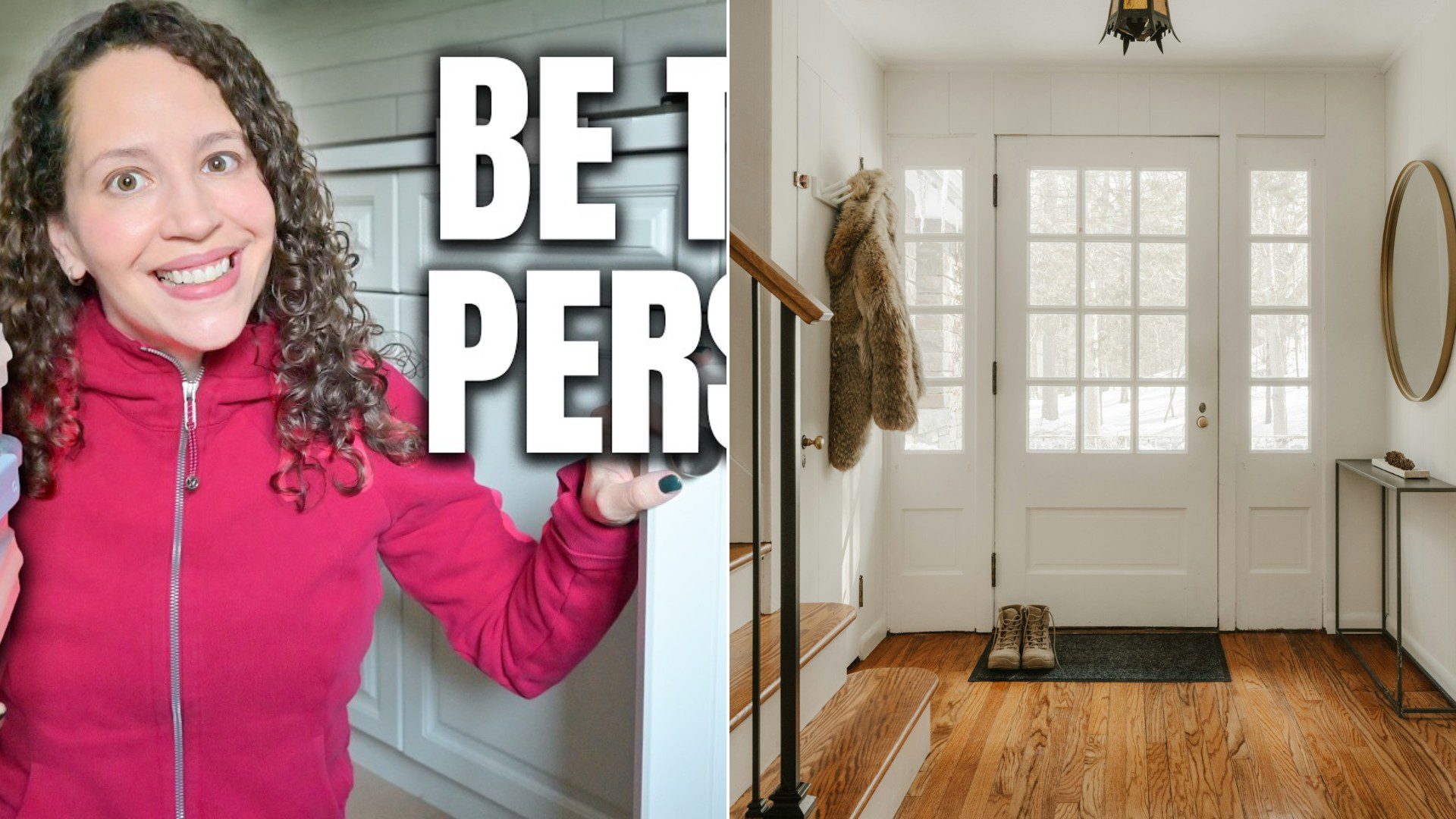
Her main point is that a house almost never gets messy from one enormous event. It gets messy through teeny, tiny actions all day long. You finish your tea and leave the mug beside you. You take off your sweater and drape it over a chair. The mail lands on the counter. None of it feels like a problem in the moment.

The Five Second Rule That Stops 25 Tiny Messes
By bedtime, Robin says, all those small choices add up to at least 25 little unfinished jobs, and she is not joking. Each one would have taken about five seconds when it first happened, but now you must spend half an hour cleaning them all up. She jokes that “future you” has to follow current you around finishing things.
Her fix is simple: deal with the five second thing the moment you see it. Finish a drink and carry the cup with you. If you notice a cup somebody left behind, put it away. Shoes come off and go where shoes belong. Open a parcel and break down the box right then. She is quick to add that you do not need to patrol your house with a clipboard looking for infractions, because your family will resent you for it. The idea is just to notice when you are about to create work for later and ask whether you could finish it now.
Give Everything A Sensible Home
The five second rule fails if you have no idea where an item goes. You open a drawer and it is full. The cupboard has no room. The closet would swallow it. So you set it back on the counter next to the dead batteries, a system she calls elaborate for moving something four inches.
Robin stresses that the home must be sensible, meaning near where you actually use the thing. Scissors might technically belong in the office, but if she uses them in the kitchen about 14 times a week, she says, they have “transferred departments.” Her advice is to notice which clutter keeps returning. If keys always land on the same table, put a dish there. That way you organize around what your family really does instead of what you have decided they should do, which is a much easier battle to win.
She also admits to keeping a tiny square section of her junk drawer for orphan keys, just in case they open a condo somewhere.
Use The Two Minute Gaps
Most of us have more time for small household jobs than we think, she says, just not in one big block. Think of the two minute gaps in your day: boiling water, waiting for something to heat up or waiting on someone to get ready. Instead of reaching for the phone, use a few of those gaps for a three minute job. Put five things away. Empty the dishwasher. Wipe the bathroom counter or the stove. Carry a pile upstairs or start a load of laundry. She calls this the dash method, and the goal is not to finish the house but to stop everything from piling up until Saturday.
She applies the same thinking to dinner. Instead of leaving the kitchen looking abandoned during an emergency evacuation, she cleans as she cooks. Ingredients go away when she is done with them, and she keeps warm soapy water in the sink so pans can soak right away. After dinner, she says, she is finishing the cleanup rather than starting it, and that is a completely different feeling.
You Cannot Organize Clutter
Sometimes the real problem is the amount of stuff. Robin has bought baskets, dividers and a little turntable for a cupboard, only to find it difficult again two months later. Her blunt conclusion is that you can arrange clutter attractively, label it and give it matching containers, but if you own more than your space can hold, the system will eventually lose. Every object creates work, because it has to live somewhere and be maintained, and she says she once thought about decluttering certain items five separate times.
She also warns that decluttering is only half the battle if stuff keeps coming through the front door. Her rules are practical:
- When something new comes in, consider what can leave. A new sweater means asking whether an old one goes. A new mug means saying goodbye to the forgotten “world’s best teacher” mug.
- Before buying, decide exactly where it will live, down to the shelf or drawer. If it will not fit in the store, she says, it will not magically find room at home.
- Be wary of kitchen gadgets, which sell an identity as much as an appliance. She bought a veggie spiralizer years ago and realized she was too busy to use it and did not even like zucchini that much.
- Use a 24 hour cooling off period for non essential purchases. Things she is very interested in at 9:47 p.m. are often forgotten by breakfast.
Zones, A Planner And Closing The House
Robin cleans by zones rather than by whichever room looks worst. Her kitchen gets a small reset every day, while her guest room can be ignored most of the time. Bathrooms and bedrooms get a weekly rhythm, and deeper jobs rotate less often. She would rather clean one annoying thing on Wednesday than save seven for Saturday, because those seven “have now formed a committee.”
She also keeps a paper planner, which she says is not sponsored, so she does not wake up wondering what needs cleaning. Her day has two reset points. In the morning she does a quick reset, clearing breakfast dishes and counters and starting laundry, so she does not face a mess after work. The more important one happens at night: loading and running the dishwasher, clearing counters, resetting the living room and sending anything that belongs upstairs on its way. That is five to ten minutes, and it feels less like cleaning and more like closing the house.
What Organized Really Means
Robin’s definition is refreshingly relaxed. Being organized does not mean a house that is never messy or one full of labels and color coordinated drawers. Her house gets messy because people live there. The difference is that mess does not get a chance to settle in. A jacket on a chair for two hours is fine, she says; a jacket that becomes part of the chair is the problem. She wants recovery: things come out and then go home, dinner happens and the kitchen resets, and a busy week does not derail the house.
Her closing advice is to start by noticing the tiny moments where work is created, not by trying to clean more. The next time you walk away with a coffee mug, think of tomorrow’s you, who already has enough going on, and just take the mug.
More Stories You May Like
- How to Thrift Things That Actually Sell Is Explained by a Reseller Who Says Most People Buy the Wrong Items
- Seven Items That Sell Almost Instantly Are Listed by a Reseller Who Says Most People Do Not Know What They Have
- Minimalism Author Joshua Becker Shares the Powerful Question to Ask When Decluttering That Pushes Past Your Comfort Zone