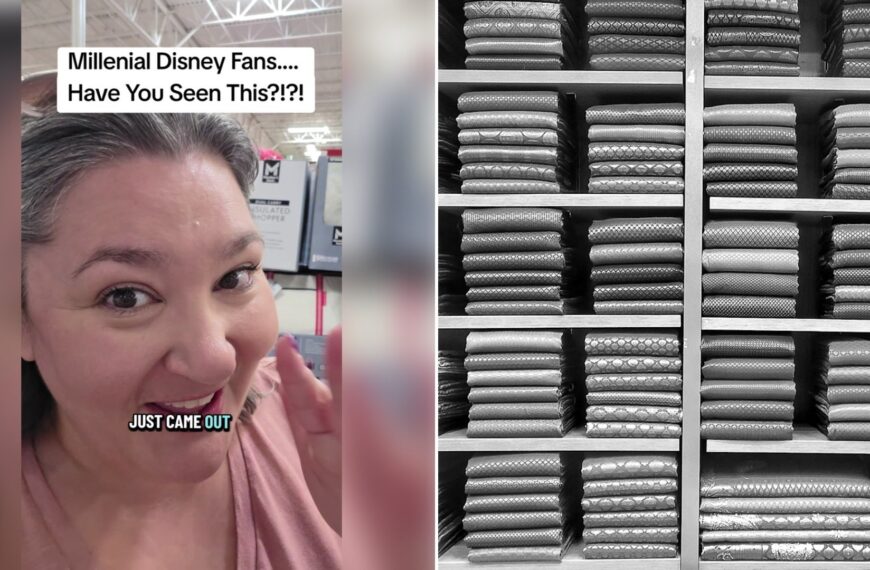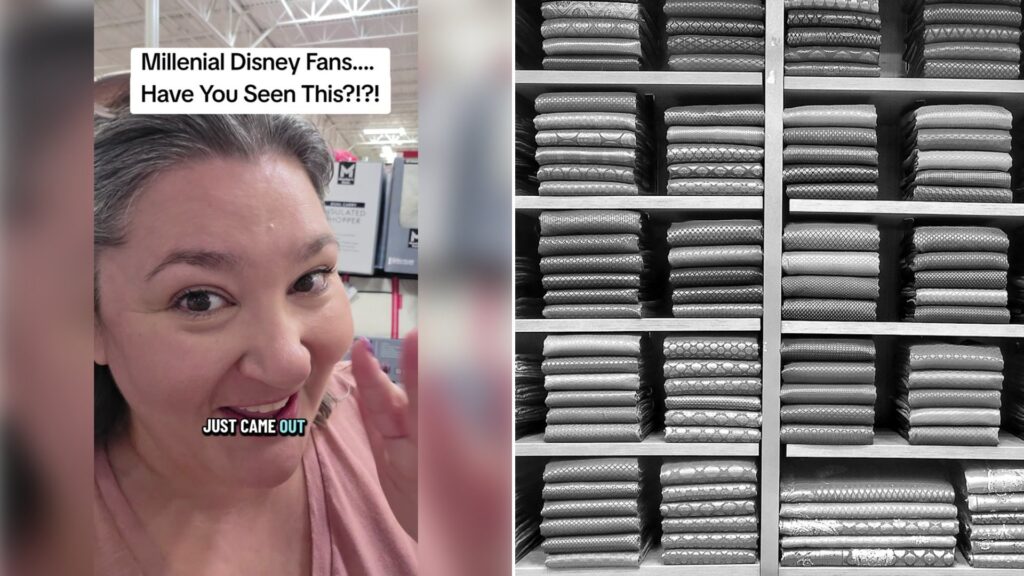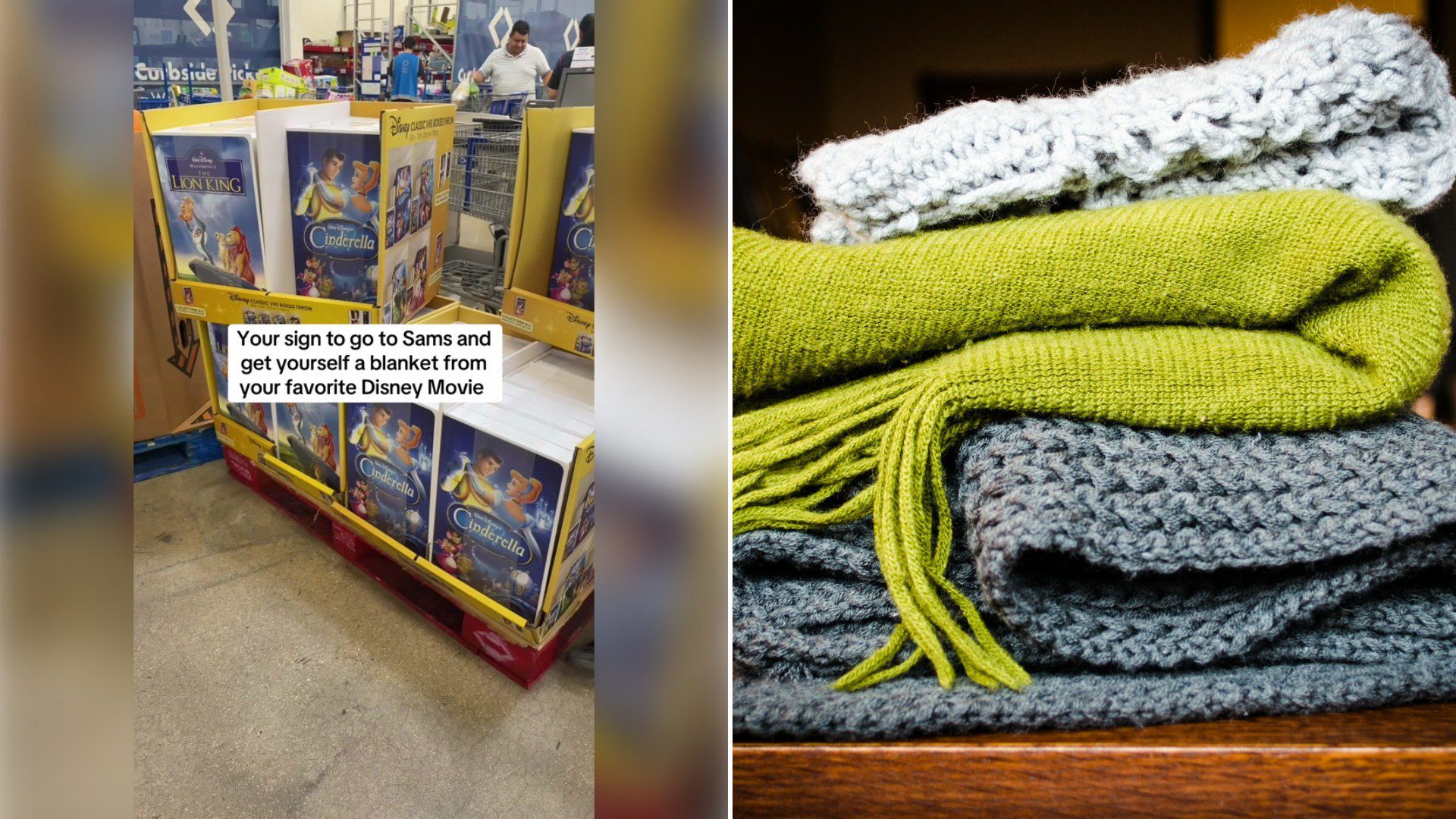
Some retail discoveries move fast enough that by the time you tell a friend about them, the product is already gone. That was the exact situation one shopper found herself describing while panning her camera across a Sam’s Club shelf stocked with a display of Disney-themed blankets, packaged to look just like classic VHS tapes. Rather than simply admiring the display, she made a decision on the spot that plenty of viewers would later say they wished they’d made too: she grabbed two before the shelf had a chance to empty out completely.
The video walks through the display in real time, the camera lingering just long enough on each box to show off the retro tape-case design before she explains, almost breathlessly, why she didn’t hesitate to buy more than one. According to her, the blankets were disappearing off shelves quickly enough that waiting even a day or two felt like a genuine risk. It’s a familiar feeling for anyone who has ever spotted a viral retail item in person, only to talk themselves out of buying it immediately and returned later to find the shelf picked clean.
@dreaqc They are running out so fast we had to get 2 😬 #paratii #foryou #disneyblanket #sams
As @dreaqc explained in her post, the urgency wasn’t manufactured for the camera — it reflected something she’d genuinely witnessed happening in real time at her local store, with fellow shoppers clearly aware of the same product and moving just as quickly to snag their own. That kind of visible, in-person demand tends to be one of the most convincing signals a shopper can encounter, far more persuasive than any marketing campaign, because it comes from watching real people make real purchasing decisions in the moment rather than from an ad trying to manufacture a sense of scarcity.
There’s also a subtle but important distinction in how she framed her own purchase compared to a simple product recommendation. Buying two, rather than one, communicated a level of personal conviction that a passive mention never could, effectively telling viewers that she trusted the product enough to want backups or gift options on hand.
The product itself taps into a well-worn but reliably effective formula: nostalgic packaging wrapped around a genuinely useful household item. Disney’s catalog of beloved animated classics gives the blanket line an almost limitless well of recognizable designs to pull from, and framing them as VHS tapes adds a layer of specific, generational nostalgia that resonates especially strongly with millennial shoppers who grew up renting or owning those exact tapes. It’s the kind of product that appeals on two fronts simultaneously — as a cozy, functional blanket for movie nights, and as a nostalgic collectible that looks charming sitting on a shelf even before it’s ever unwrapped.
What elevated this particular video beyond a simple product mention, though, was the built-in urgency of watching someone describe a near-empty shelf and explain exactly why she doubled up on her purchase. Scarcity has always been a powerful motivator in retail psychology — items perceived as limited or in high demand tend to feel more desirable simply by virtue of being harder to get. A shopper explaining, unprompted and with clear sincerity, that she grabbed two before they disappeared functions almost like a live inventory alert for anyone watching who might want the same item for themselves or as a gift.
For shoppers hoping to catch this kind of viral find before it vanishes from shelves entirely, a few strategies tend to improve the odds. Checking stock at more than one nearby location can make a meaningful difference, since viral products often sell out unevenly depending on how much foot traffic and social media attention a specific store location has already received. Going earlier in the day, particularly right after a store restocks shelves, also tends to improve the odds of finding a fuller selection of designs rather than picking through whatever’s left. And for shoppers who know they want a specific movie design as a gift, buying as soon as it’s spotted rather than waiting for a “better time” tends to be the safer bet, given how quickly these kinds of novelty items have a track record of disappearing.
It’s also worth pointing out how this kind of unscripted urgency differs from the manufactured scarcity so often used in traditional advertising. A retailer telling shoppers an item is “selling fast” carries an obvious commercial motive, and most consumers have grown skeptical of that kind of messaging over time. But a shopper independently reporting the same thing, with no financial incentive to exaggerate, tends to carry far more weight — it reads as a genuine tip passed between peers rather than a sales tactic, which is likely a big part of why videos like this one continue to outperform traditional promotional content.
Beyond the shopping strategy itself, there’s something worth noting about how these kinds of videos function as a modern word-of-mouth network. A single shopper filming a shelf, sharing her reasoning, and encouraging others to act quickly can send a ripple of foot traffic toward stores across an entire region, turning an ordinary product into a genuine retail moment almost overnight. It’s a reminder that in the current shopping landscape, some of the most effective advertising isn’t advertising at all — it’s simply one person, genuinely excited, telling others what she found before it’s too late.