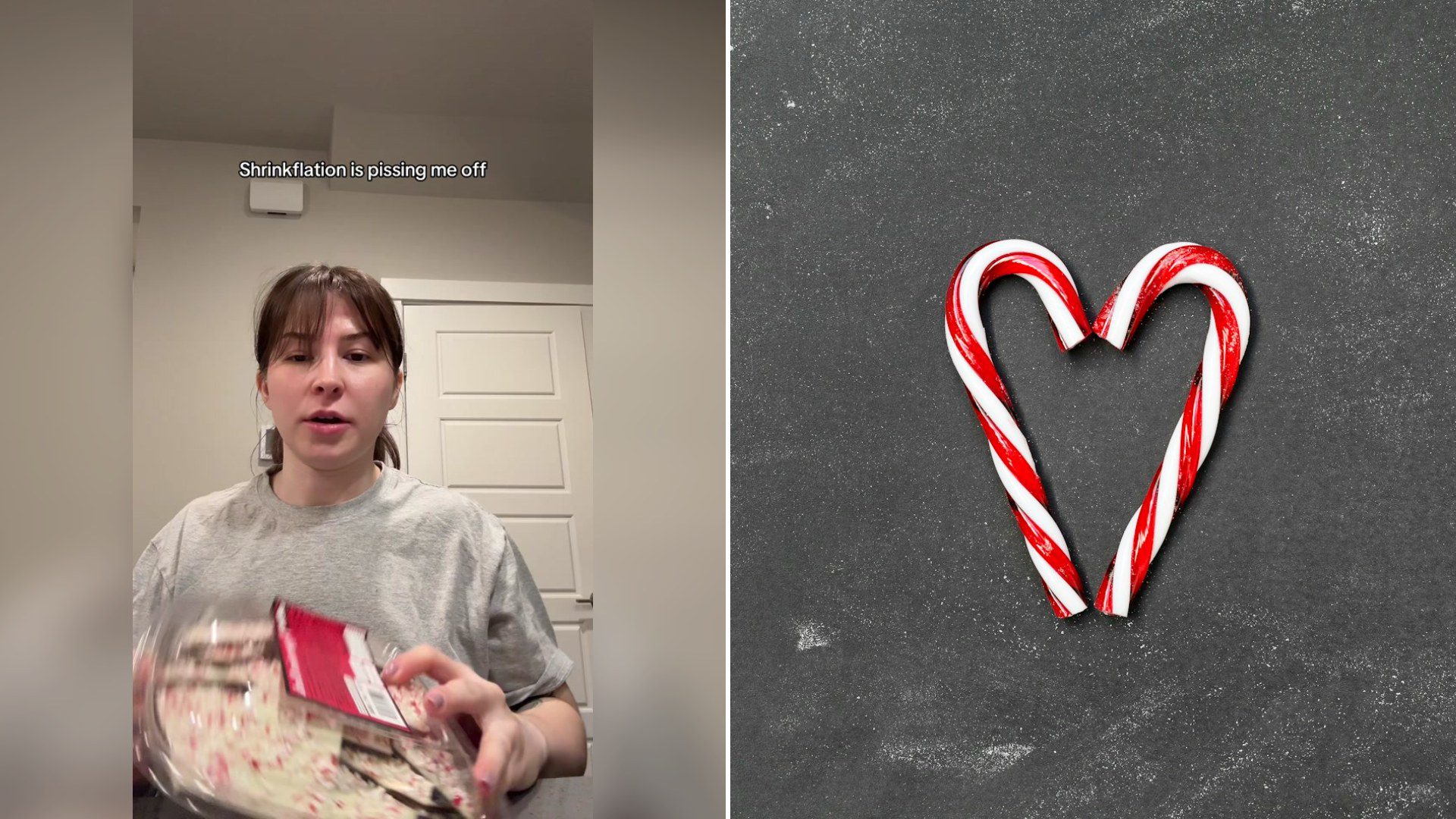
Holiday shopping has a way of revealing exactly how much a favorite treat has changed over the years. This season, a shopper who posts as @infinitely.balanced says she spotted a package of Costco peppermint bark in the store and noticed right away that the pieces looked far thinner than she remembered.
@infinitely.balanced
What She Says Changed
According to her post, this was not her first time buying the seasonal candy. She says she noticed the difference while standing in the store, but the holidays won out and she bought it anyway. Her complaint is not that the candy is bad. She says it is still delicious and that she plans to keep eating it. Her problem is the price tag, which she says was $15.
In her telling, the pieces used to be big, chunky slabs. She describes the older bark as “honkers,” so thick and sturdy that she could barely break a piece apart with her hands. This year’s version, she says, is about half the thickness of the bark Costco has sold before. She tagged the retailer in her post and wrote that she loves the company, but that a thinner product should not be priced the same as the thicker one.
Her bottom line was simple. By her math, bark that is half as thick should cost about $8, not $15. She did not claim to know why the product changed, and she did not say that anyone at the company had explained it to her.
What Other People Said
Plenty of people responded to her post with their own memories. One person said earlier versions of the bark were available at a much better price, and another said that in 2021 it cost only $9.99. A person who said they work in a Costco bakery wrote that the bark is the same recipe as in past years and suggested the higher price comes from the cost of cocoa. None of that has been confirmed in the original post, so it is best treated as one shopper’s opinion and one self described worker’s explanation rather than settled fact.
It is worth knowing that cocoa prices did climb sharply to record levels during 2024, which has pushed up the cost of chocolate products across many brands. Manufacturers sometimes respond to rising ingredient costs by raising prices, shrinking the product, or doing a bit of both. That is the general pattern, though no one outside the company can say exactly what happened with this particular candy.
Why Shrinking Products Frustrate Shoppers
The practice of making a product smaller while keeping the price the same has a name: shrinkflation. It is frustrating because the price on the shelf looks stable, so you may not realize you are getting less until you hold the old and new versions side by side. Shoppers who have bought the same item for decades tend to spot it first, since they know exactly how a favorite treat is supposed to look and feel.
Thickness is a tricky thing to compare, because a thinner piece of bark may still be sold at a similar weight if the pieces are simply broader or more numerous. That is why the number printed on the package matters more than first impressions.
How To Check Whether You Are Getting Less
If a product seems smaller than it used to be, there are a few practical steps you can take before deciding it is a bad deal.
First, read the net weight on the package and compare it with last year’s. If you saved a receipt, a photo of an old package, or an old online listing, you can often find the earlier weight. Second, work out the price per ounce. Divide the price by the ounces in the package, then do the same for the older size or for a competing brand. This turns a feeling into a number you can actually compare.
Third, look at similar seasonal candies at other stores. Peppermint bark is sold by many grocers and candy makers, and the price per ounce can vary a lot. Sometimes a smaller specialty brand is a better value, and sometimes the warehouse price still wins even after a change.
Fourth, take a photo of the product and the price at the shelf. If you decide to raise the issue, a clear picture of what you saw is far more useful than a general complaint.
Speaking Up Politely
If you think a product has changed in a way that does not match its price, you have options. Most stores have a member services desk or a customer feedback form, and polite, specific feedback tends to get further than a broad complaint. Say what you bought, when you bought it, what changed, and what you would like to see. Costco has long been known for a generous return policy, so if you are truly unhappy with a purchase, it is worth checking the current terms and asking at the service desk.
You can also simply vote with your wallet. Buying a smaller amount, making your own bark at home, or choosing a different treat for the holidays are all ways to respond without leaving the store upset. Homemade peppermint bark takes only chocolate, crushed candy canes, and a little patience, and you control the thickness yourself.
The Takeaway
The shopper behind that post was clear that she was not trying to start a fight. She still bought the bark, still thinks it tastes good, and still wanted to point out what she noticed. Whether the change comes from ingredient costs or something else, her post struck a chord with people who feel that familiar favorites are quietly getting smaller. The best defense is a sharp eye, a quick look at the unit price, and the confidence to say something when the numbers do not add up.