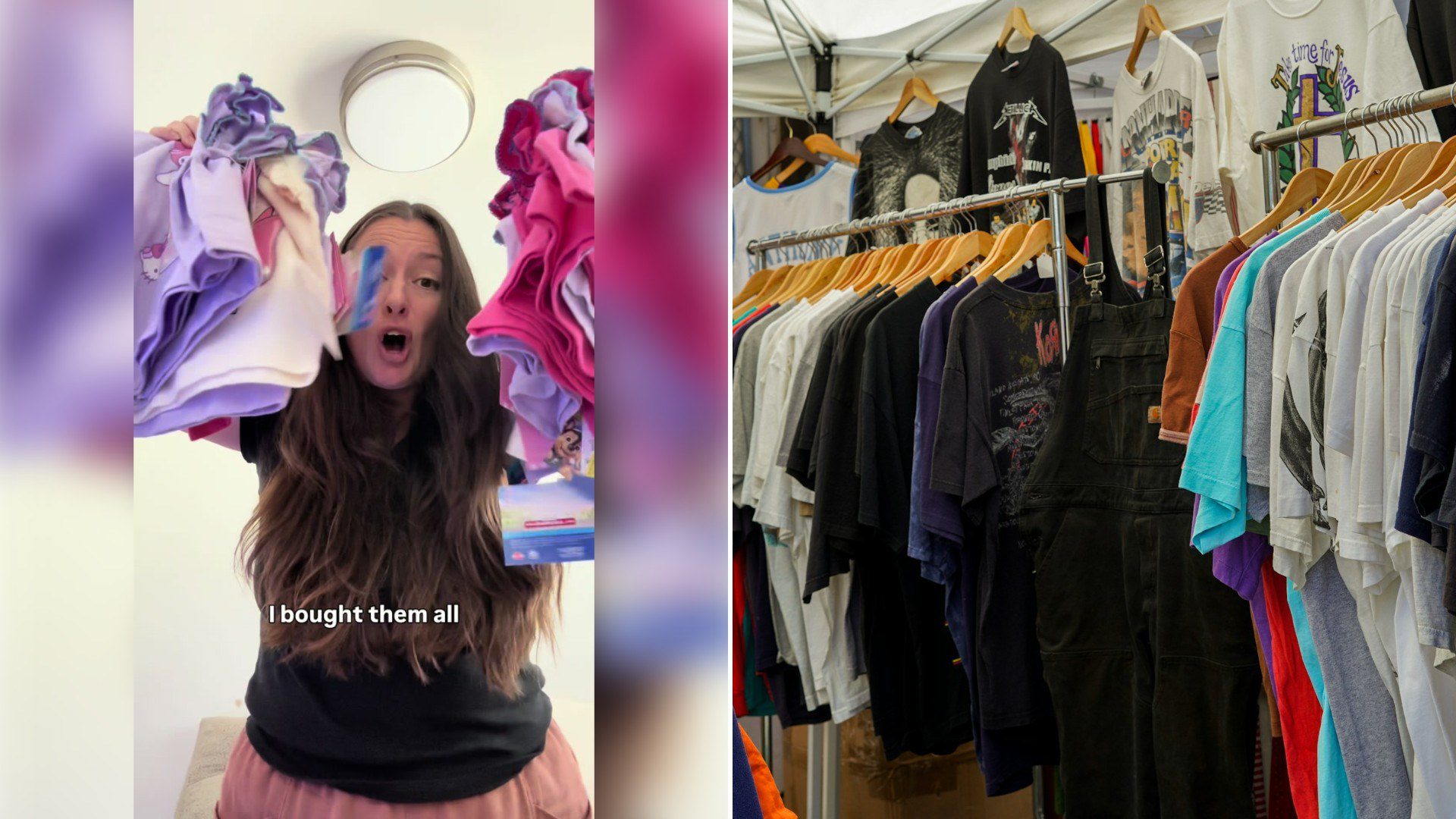
Every parent eventually develops a mental list of items they’d never buy for their own kids, and for one creator posting under the handle hackorwackofficial, clearance-rack graphic shirts she’d previously criticized as potentially inviting unwanted touching were near the top of that list — right up until the moment she changed her mind completely and bought every single one left on the rack.
In her video, she walks viewers through the reasoning behind her reversal with total candor, owning the fact that her position had shifted and framing the purchase as something she felt zero regret about. The caption doubled down on that sense of conviction, describing the move as something crazy that changed everything, and thanking her audience for being part of the moment — all stitched together with hashtags like #momlife, #childsafety, #boymom, and #girlmom that hint at the parenting-safety angle driving her decision.
@hackorwackofficial I did something CRAZY and I have ZERO regrets. This changes EVERYTHING. Thank you for being a part of this ❤️🙏 #momlife #childsafety #boymom #girlmom #kidsoftiktok
The response was substantial: the video drew roughly 5.3 million views from an account with about 14,500 followers, a massive jump in visibility that points to just how many parents found themselves drawn into a debate they didn’t realize they had opinions about until they saw someone else wrestle with it publicly.
Clearance-rack graphic shirts aimed at kids have quietly become a flashpoint in parenting circles for a reason that has nothing to do with fashion. Certain slogans and designs, however playful they’re intended to be, have drawn criticism from parents concerned they send the wrong message to strangers about a child’s boundaries — an issue that sits at the intersection of child safety and everyday clothing choices, and one that doesn’t get discussed nearly as often as it probably should.
What makes this particular story compelling is the public reversal itself. It’s rare to see someone openly admit they’d criticized something and then changed their mind so completely that they went out and bought up the very product they’d previously pushed back against. That kind of visible flexibility — updating a position rather than digging in defensively — is exactly the sort of modeling that tends to resonate with an audience exhausted by influencers who never admit they got something wrong.
For parents navigating similar decisions about clothing, messaging, or products marketed at kids, the broader lesson isn’t really about this specific shirt design. It’s about staying willing to revisit a firmly held opinion when new context or a changed perspective calls for it, rather than treating an initial reaction as permanent. Child safety conversations, in particular, benefit from that kind of ongoing reassessment, since norms around what’s appropriate continue to shift as parents share more of their reasoning openly online.
Whatever side of the clearance-rack debate a given parent lands on, the video is ultimately a reminder that parenting opinions aren’t meant to be fixed in stone. They’re built through trial, error, and the occasional public about-face — and there’s something genuinely admirable about doing that reconsidering out loud, in front of an audience, instead of quietly changing course and pretending the original stance never existed.
The broader debate around clothing marketed to children has intensified in recent years as parents become more vocal online about product design choices that once went largely unquestioned. Slogans, cuts, and even color choices on kids’ clothing are now regularly scrutinized in parenting communities, with creators like this one playing an active role in shaping what counts as acceptable versus concerning.
That scrutiny isn’t limited to any one retailer or price point — it shows up across everything from clearance racks to premium children’s brands, and it reflects a broader cultural moment in which parents are paying closer attention to the subtle messages embedded in everyday products. What might have been dismissed as overthinking a decade ago is now treated as a legitimate, worthwhile conversation about how children are perceived and treated by strangers.
For parents trying to navigate that landscape themselves, the most useful approach tends to be a personal, case-by-case evaluation rather than blanket rules borrowed from someone else’s viral opinion. What feels concerning to one family might feel harmless to another, and the healthiest version of this conversation — the one this creator models by changing her own mind in public — treats it as an evolving judgment call rather than a fixed, universal standard.
It’s also worth noting how quickly these kinds of clothing debates can shift once a large enough audience weighs in, since parenting opinions online rarely stay static for long. A slogan or design that draws widespread criticism one month can quietly disappear from a retailer’s shelves the next, not necessarily because of any single viral post, but because enough parents raised the same concern across enough different platforms that it became difficult to ignore. Creators like hackorwackofficial, willing to publicly revisit their own stance, play a small but real part in that larger, ongoing conversation about what’s actually appropriate for children to wear.
There’s a practical takeaway here for parents shopping secondhand or clearance racks more broadly as well: taking a moment to actually read a graphic or slogan from a child’s perspective, rather than an adult’s, before making a purchase can catch potential concerns before they ever make it into a closet, saving both the money and the later reconsideration this creator had to work through so publicly.