

1973 was the first October Frugal Frannie bought groceries with February on her mind, and she says she has eaten every winter since off what it taught her. Her verdict on the October store is blunt: “The October store is a trap dressed as a bargain.”

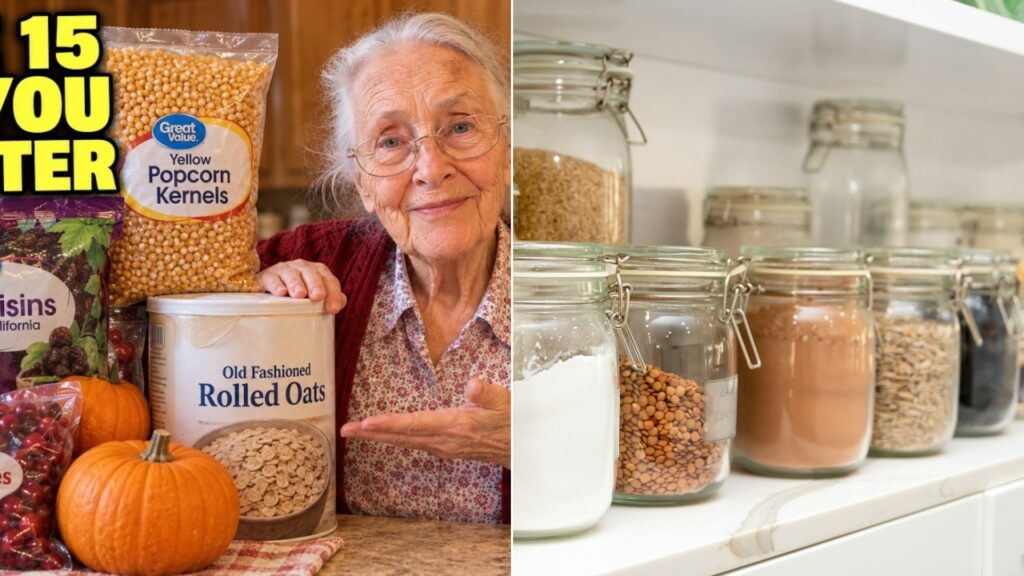
A bag of cranberries looks like a holiday garnish but keeps until spring, she says, while a canister of oats looks boring and carries more mornings than anything else on the shelf. People fill a cart with whatever is cheapest and call it stocking up, and on a fixed income that is how a winter gets hollowed out.
What carries you, in her words, is not the sale tag but “what a dollar holds week after week once it is home and stored right.”

Here is her October list, counted down from 15 in a video from Frugal Frannie and Vintage Lifestyle USA.
Popcorn Kernels Buy The Cheapest Evening A House Can Have
Plain yellow kernels in a jar or a 2-pound bag run about $2 at her store, and they are always the first thing in her October cart. A quarter cup in a lidded pot with a spoonful of oil makes a bowl big enough for two people and a long dark night.
She skips microwave bags, since you pay for the bag, the powder and somebody else’s oil. Kernels kept in a glass jar in a dry cupboard will still be popping in March, though she warns that popcorn “fills a room, not a stomach.”
Plain Baking Cocoa Beats The Little Envelopes Full Of Sugar
She buys two round tins of plain cocoa in October, because once the holiday baking starts the price climbs and the store tucks the tin behind the gift boxes. A sealed tin keeps a year or more in a cool, dry cupboard.
The little drink-mix envelopes are mostly sugar, she says, and you pay by the packet for sugar already in your house. Plain cocoa is bitter, so you must be willing to add your own.
The Big Bag Of Raisins Beats The Little Boxes Every Time
October is when the new crop lands and the big bags get cheap before baking season changes what the store thinks it can charge. Raisins keep for months in a jar with a tight lid and do not need the refrigerator or the freezer.
The little boxes mean paying for cardboard, wax paper and somebody’s idea of a portion. A handful stirred into morning oats or a pot of greens, she says, makes plain food taste like somebody in the house cared, and hard raisins come back after 10 minutes in a warm cup of water.
Pearl Barley Turns A Thin Pot Into A Pot That Stays With You
This is the quietest bag on the shelf, down near the floor and usually under $3. A small handful in a soup or pot of greens swells and softens until the whole pot is hearty.
It keeps for years in a glass jar. It stays cheap, she says, because it is not quick and not pretty, and nobody can sell you a story about either one.
Fresh Cranberries Float Up From Flooded Bogs, Then Go Straight Into Her Freezer
Cranberries grow on low vines in sandy bogs, she explains, and at harvest the growers flood the bogs so the berries float to the top where crews gather them. Fresh bags appear in October, sometimes into November, then vanish until next fall.
She freezes them flat, stacked like books, with no washing first, and they hold their color and snap for a year. The week they appear she brings home four bags, six if the price is kind, and calls it her December insurance that costs less than a store pie.
A Jar Of Sorghum Syrup Tastes Like What Grandmother Knew
This dark syrup made from cane in the fall is the oldest sweet thing in the store, she says. It keeps on the shelf for years and never needs the refrigerator.
It is not honey and not sugar syrup, and folks either love it or they do not. You will usually find it low near the pancake syrup in a plain label, and one jar for a few dollars settles the question.
Beets With The Tops Still On Are Food That Waits
In October the bins are full and the price is low because beets look like work, not supper. She twists the leaves off but leaves an inch of stem, avoids cutting the root so it will not bleed, and packs them in a bucket of damp sand in the coolest corner she has.
The greens are supper too, cooked the day they come home. A cold cellar is perfect, but a garage that freezes and thaws is not, and she says a firm red beet in February “will feel like cheating.”
Turnips That Went Through A Frost Are Sweeter Than Summer Ones
Every October she puts a peck of turnips beside the beets in their own bucket of sand. They keep just as long, and cold turns their starch into sugar.
Two of them in a pot with a piece of ham make the whole house smell like Sunday. If you hated turnips as a child, she says, you were probably handed one out of a can.
A Country Ham Is The Biggest Ticket On Her List And Worth It
It is the one meat that never needs the freezer, the refrigerator or the power company. A whole ham is 10 pounds or more of meat, cured with salt, sometimes smoked, and hung to age in a cool, dry place all winter.
She warns that it is salty, and that one person may want a half or a shank from the butcher. After each slicing she covers the open face with a clean cloth and uses the ham “a little at a time as seasoning that happens to come with a bone.”
Small Sugar Pumpkins Are The Eating Kind, Not The Carving Kind
The big orange ones are grown for a face, she says, and taste like wet rope. October is when the little sugar pumpkins cost least, before the carving rush picks the bins over.
Pick one heavy for its size with the stem attached and no soft spot, and keep it cool and dry off a concrete floor. They sit quietly for a month or two, and she notes that a pumpkin is a bright thing to have in January when everything else has gone brown.
Parsnips Wait For A Frost Before They Turn Sweet
They look like pale carrots and people pass them by, which is why the price stays low. She does not buy them early, because a parsnip after frost is sweet enough to surprise you.
Cut into fingers, rolled in oil and salt and roasted until the edges brown, they disappear fast at her table. Her mother mashed them half and half with potatoes, and not one of her children asked what the sweet thing was.
Sauerkraut Crocks Fill The House With A Working Kitchen Smell
Her mother kept a stoneware crock in the corner every fall with a plate and a clean stone on top, and the house smelled like a working kitchen for three weeks. The trick is salt, patience and keeping the cabbage under the brine.
If you buy kraut, she says, check the package. Bags in the cooler case must live in your refrigerator, while shelf jars are canned and can wait in a cool cellar for years, and mixing them up is how people lose a winter of kraut.
A Bucket Of Lard Is The Cheapest Fat In The Store
She knows what some viewers just thought, and asks them to hold that for a minute. Rendered pork fat in a plain paper bucket keeps a year in a cool cellar and makes a biscuit what it is.
It carries the flavor of whatever it touches and stands up to heat, she says, while the shortening at eye level costs more and was invented to sell what grandmother already kept. A little is all she uses.
Tins Of Sardines Make A Plate That Stands Up When The Cupboard Looks Empty
These are the cheapest real protein in her cart and keep the longest, for years with no refrigerator or freezer. If an ice storm takes the power for three days, “that tin does not notice.”
Tuna sits at eye level priced proud while sardines sit at the bottom for a good deal less. Her late husband ate his straight from the tin with bread and a fork, and she keeps four tins on her shelf, buying plain ones in oil or water rather than fancy sauces.
Plain Rolled Oats Are The Cheapest Pound Of Real Food In The Store
If she could keep only one thing from the list, it would be the big round canister of store-brand oats on a lower shelf. One canister is dozens of warm mornings, while flavored packets cost several times as much for a few spoonfuls of oats and a lot of sugar.
The plain canister holds a year or more in a cool, dark cupboard and needs only a pot and a spoon. Her one condition is that if you will not eat plain oats, do not buy them, because food you will not eat is the most expensive thing in the house.
What she leaves in the store is Halloween candy, which is sugar you pay twice for, big jugs of juice, since an orange is the better buy, and the flavored little packets in every aisle. And one rule matters more than any brand: a cool, dark, dry shelf beats a hot garage, where “good groceries go to die.”
More Stories You May Like
- Thrift Store Prices Keep Creeping Up, So Check What The Item Costs New Before You Pay For A Deal That Is Really A Rip Off At The Register
- Everyday Things That Look Valuable In Your Garage But Almost Never Sell No Matter How Hard You Try To List Them
- Stacking Unlabeled Boxes In A Hot Damp Garage Can Ruin What Is Inside, So Know What Never To Store In A Garage Or Attic And How To Protect The Rest