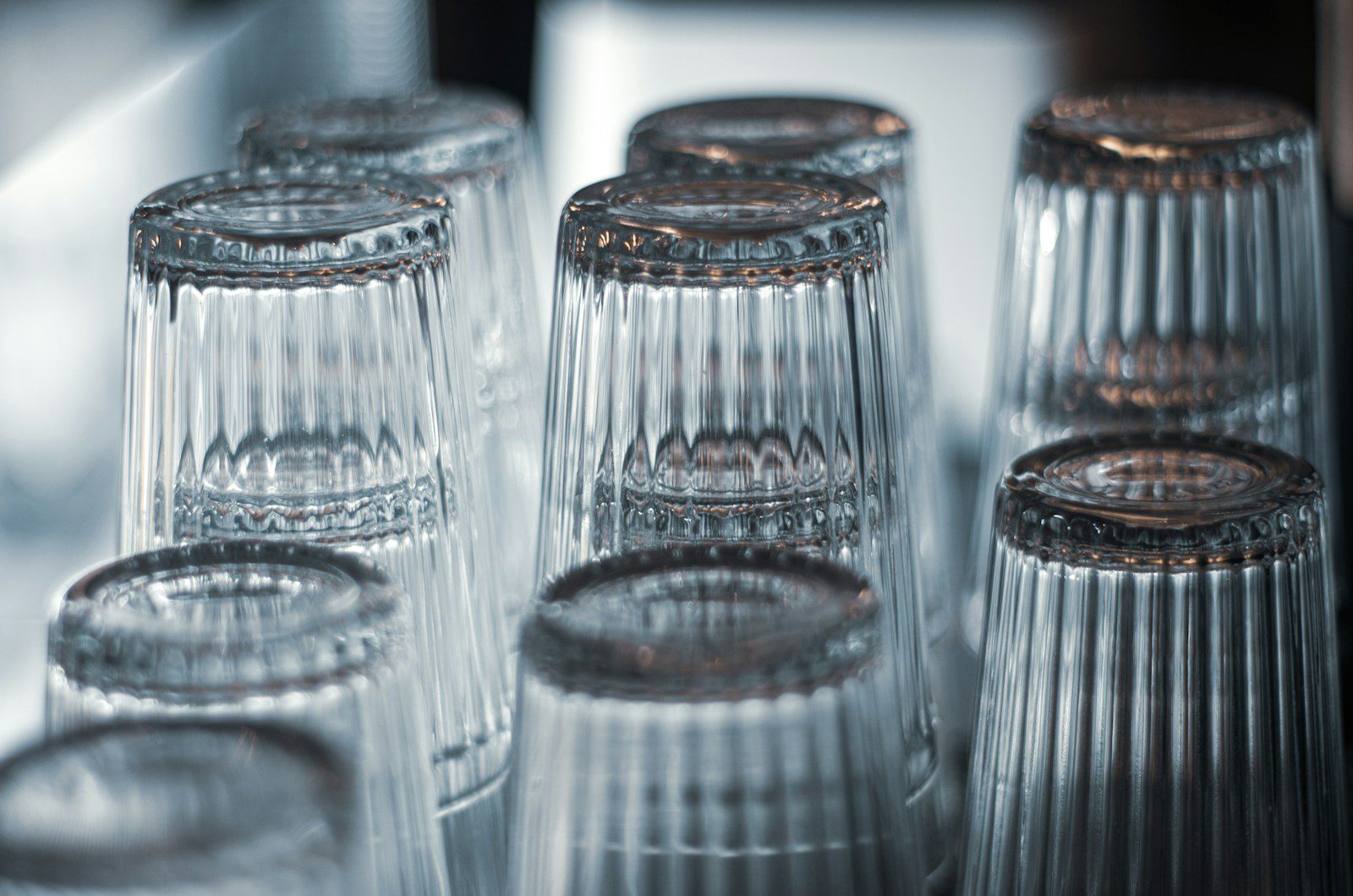
You’ve probably already tried switching detergents. Pods instead of powder, then powder instead of pods, maybe a pricier brand with “crystal clear” on the label, and the glasses still come out of the dishwasher with that filmy, milky haze. That’s because detergent formula was never the variable driving the problem. The U.S. Geological Survey classifies water as “hard” once it crosses 121 milligrams per liter of calcium carbonate, and USGS’s own national well-water assessment found hard water prevalent across broad stretches of the east-central and western United States. Dishwasher manufacturers have been saying the same thing in their own troubleshooting guides for years: cloudy glasses are almost always a mineral problem, not a soap problem.

What’s Actually Causing the Haze
Calcium and magnesium are the two minerals doing the damage, and they’re present in tap water long before it ever meets your detergent. Whirlpool’s own troubleshooting guidance describes the film as calcium and magnesium that “cling to surfaces and create a cloudy, milky coating” during the wash and dry cycle, as the minerals in the water deposit themselves on glass while it dries. Maytag’s guidance says essentially the same thing, describing hard water deposits as mineral residue that builds up independent of which detergent formula is in the dispenser. Neither manufacturer’s troubleshooting page draws any meaningful distinction between pod and powder detergent as a cause of the haze. What both flag instead is water temperature, rinse aid use, and how hard the water coming into the machine actually is. That’s a meaningful shift in where to look, because it means switching brands, upgrading to a “power gel” formula, or paying more per pod is unlikely to change the outcome if the water itself is carrying a heavy mineral load into every single cycle.
The Etching Trap
Here’s where it gets more complicated, and where a lot of people make things worse without realizing it. There’s a second, permanent version of cloudy glass called etching, and it’s caused by the opposite problem: too much detergent combined with water that’s actually soft, run at high temperatures with a light soil load. Whirlpool’s guidance is explicit that etching creates microscopic surface scratches that no amount of vinegar or rewashing will reverse, unlike ordinary mineral film. That distinction matters because if someone with genuinely soft water starts dumping in extra detergent or running sanitize cycles to fight cloudiness they’ve assumed is hard-water film, they can permanently etch glassware that a simple rinse-aid adjustment would have fixed. The two problems look almost identical to the eye and require opposite fixes.
Why Almost Nobody Actually Checks Their Water Hardness
Most homeowners have never seen their household’s hardness number in milligrams per liter or grains per gallon, and municipal water utilities publish it in annual water quality reports that go largely unread. That’s the gap driving this whole cycle of blaming detergent: without knowing whether your water sits in USGS’s “hard” (121 to 180 mg/L) or “very hard” (above 180 mg/L) range, there’s no way to know whether you’re dealing with mineral film, potential etching risk, or both. A water utility’s consumer confidence report, which every public system is required to publish annually, will list hardness directly, and a simple at-home test strip confirms it in under a minute for anyone on a private well. It’s a five-minute check that most people skip entirely, usually because cloudy glassware reads as a kitchen problem rather than a plumbing one, when it’s really the second thing more often than the first.
What Actually Fixes It
For straightforward mineral film, both manufacturers point to the same low-cost fix: soaking affected glasses in white vinegar for about fifteen minutes, then hand-drying with a microfiber cloth, dissolves the mineral coating without touching detergent choice at all. Longer term, both guides recommend using a rinse aid every cycle, since it helps water sheet off glass instead of beading and drying into mineral spots, and keeping wash temperatures below 140°F rather than defaulting to a sanitize setting. For households confirmed to have hard water above the USGS’s “hard” threshold, a water softener addresses the mineral supply at the source rather than treating the symptom load after load. None of those fixes involve picking a different detergent aisle.
The detergent aisle was never where this problem lived. It’s sitting in the pipes feeding the machine, and the fix starts with finding out what’s actually in your water rather than what’s in the box under the sink.