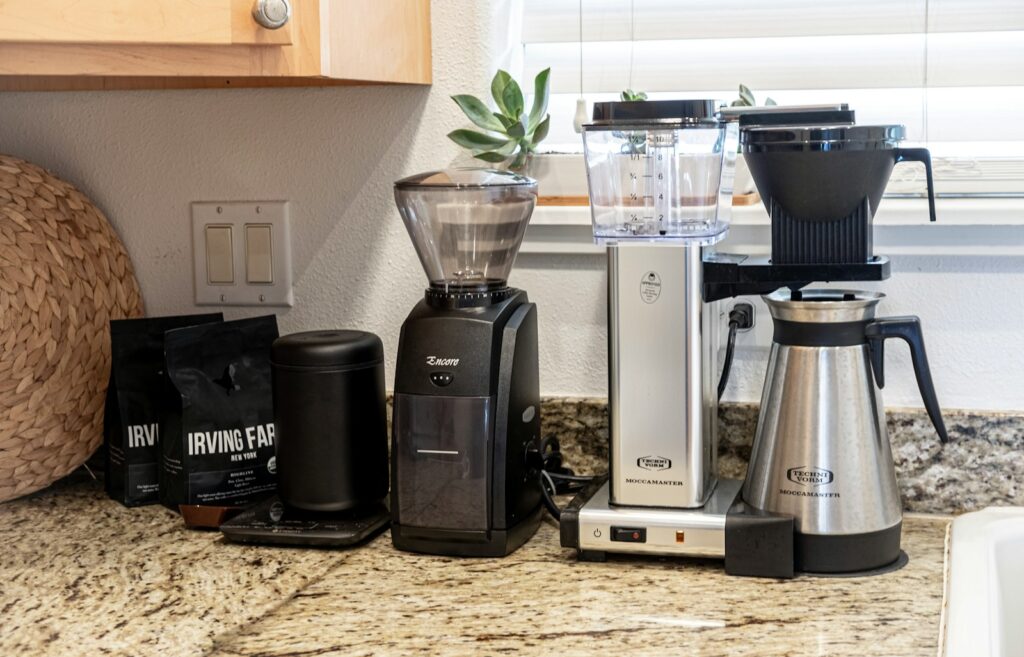
Most coffee makers in America are quietly filling up with limescale, and most owners have no idea it’s happening. Hard water, meaning water carrying higher levels of dissolved calcium and magnesium, covers a large share of U.S. households, and every time that water heats up inside a coffee maker’s internal tank, some of those minerals drop out of solution and cling to the heating element and tubing, according to water-treatment industry explainers from the Water Quality Association. You blamed the beans. The machine itself was the actual problem, slowly coating itself in the same mineral buildup that leaves a white ring around a bathtub faucet.
How Scale Actually Changes What’s in Your Cup
Limescale doesn’t just sit passively inside the machine. As it builds up on heating elements and inside narrow tubing, it insulates the heater, forcing the machine to work harder and often run at a lower, less consistent water temperature than it’s designed for. Coffee brewed below its ideal temperature range extracts unevenly, pulling out more bitter and sour compounds relative to the balanced flavor a properly heated brew produces. Mineral deposits can also flake loose over time and pass directly into your cup, which is part of why a gritty texture or an odd metallic aftertaste often shows up right around the same time a machine has gone unmaintained for months. None of that points back to the beans at all, no matter how fresh or expensive they were.
The Descaling Interval Almost Nobody Follows
Manufacturer guidance is more specific than most owners realize. Cuisinart’s own care instructions tell owners to descale “every 1–3 months depending on your water hardness,” and add that a machine needing unusually frequent cleaning is itself a sign worth testing your local water hardness over. That interval assumes regular daily brewing, and appliance-industry guidance generally scales the recommendation up in hard-water regions and down slightly for lighter, less frequent use. In practice, most owners run a descaling cycle only after the machine visibly slows down, starts making odd noises during the brew cycle, or stops working altogether, well past the point manufacturers actually intend. By the time performance visibly suffers, scale has typically had months or years to accumulate rather than the single quarter it was supposed to be cleared out.
Why Skipping It Shortens the Machine’s Life
Scale buildup doesn’t just affect taste. It raises the energy and time needed to heat water to brewing temperature, which puts additional strain on internal components not designed to run hot for extended periods. Left unaddressed long enough, mineral deposits can clog narrow water lines entirely, leading to the slow brew cycles, incomplete carafe fills, or total shutdowns that send a lot of otherwise-functional coffee makers to the curb years earlier than necessary. A machine that could have lasted five or six years with basic quarterly maintenance often gets replaced at two or three instead, not because the underlying components failed, but because nobody ever flushed out what had been quietly accumulating inside them the whole time.
What an Actual Descaling Routine Looks Like
A standard descaling cycle involves running a mixture of water and either a manufacturer-approved descaling solution or plain white vinegar through a full brew cycle with no coffee grounds, followed by one or two rinse cycles of plain water to clear out any residue and lingering odor. Most manufacturer manuals include the exact ratio and cycle count for the specific model, and following that guidance rather than eyeballing it protects internal seals that vinegar’s acidity can degrade if it’s used too concentrated or too often. Setting a recurring phone reminder for once every three months, tied to a date you’ll actually remember like the first of a new season, is a simpler fix than any water filter or specialty descaling gadget on the market. Machines with a built-in charcoal filter cut down on mineral buildup somewhat, but manufacturer guidance still calls for swapping or rinsing those filters roughly every 60 days, so a filter alone isn’t a substitute for the descaling cycle itself, just a way to stretch the interval slightly longer.
The machine was never the problem you thought it was. What accumulated quietly inside it, unnoticed for months at a time, was.