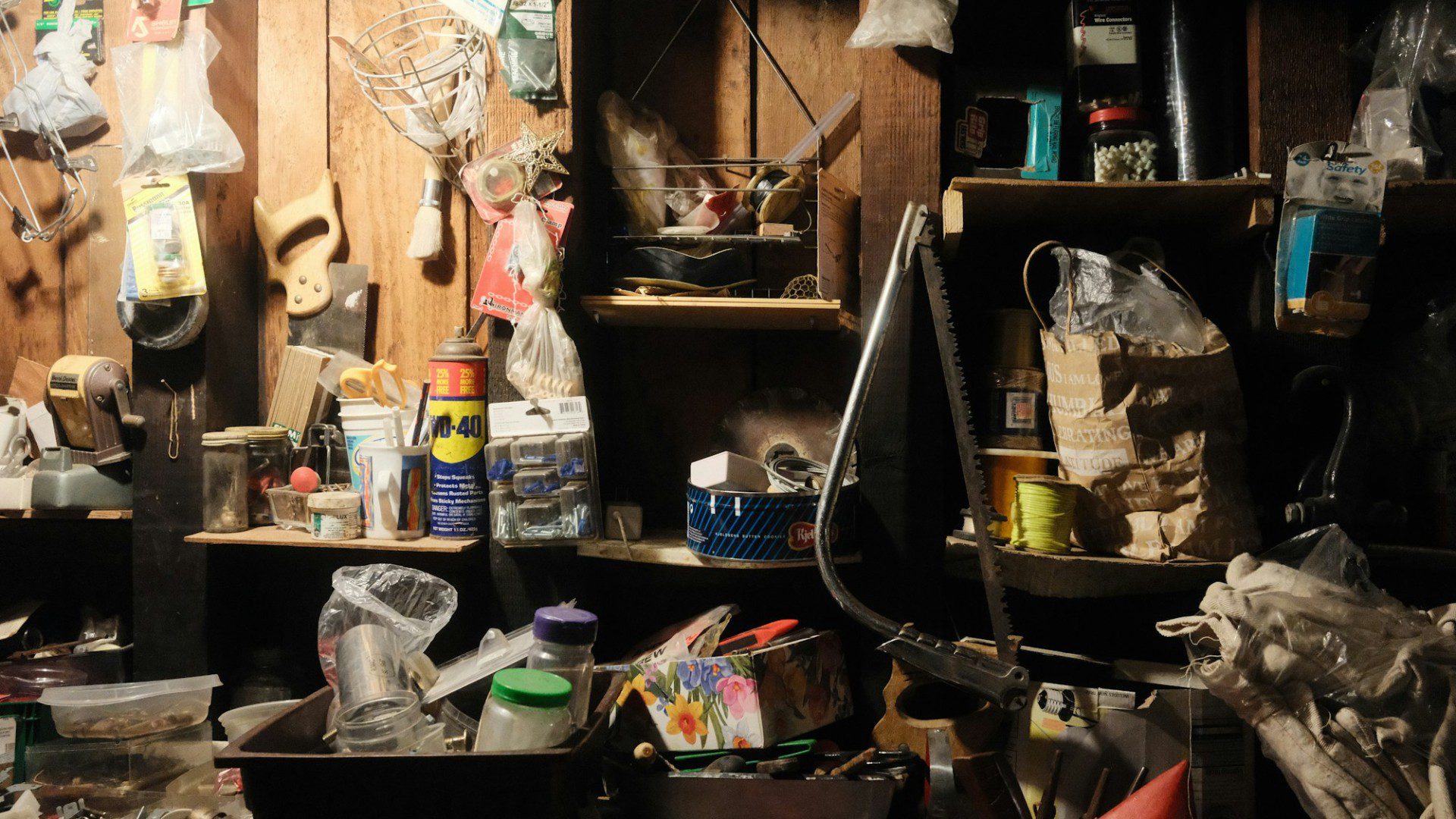
Garages have a way of becoming a graveyard for good intentions. The leftover tile from a bathroom remodel, the wood scraps for a shelf you never built, the half-used can of stain — it all gets saved for “someday,” and someday rarely arrives before the pile does real damage to how usable the space is.
Here are eight garage categories worth an honest reassessment, so your garage can go back to holding your car instead of your unfinished plans.
Old Paint Cans With Dried-Up Contents
A shelf of paint cans from past projects often includes several that have dried out completely or separated beyond any usable consistency. Give each can a shake and a check — if the paint’s solidified, it’s not salvageable. Read the label next, because disposal depends on the type. Lowe’s paint disposal guide says latex paint can go out with regular trash once it’s dry, and that liquid leftovers can be hardened first by mixing in an equal amount of cat litter or a commercial paint hardener. Oil-based paint is different: Lowe’s says it is considered hazardous waste and must go to a drop-off site. Check your own city’s rules, since some are stricter. For liquid leftovers, look into a local hazardous waste collection day or a program like PaintCare, which lists more than 1,800 free drop-off sites in the states where it operates and takes up to five gallons per visit. Keep only cans of colors you’d actually use again for touch-ups.
Leftover Building Materials From Finished Projects
Extra tile, leftover lumber, or spare flooring from a completed renovation often gets kept “just in case,” even when the project it belonged to is long finished. There’s a sensible middle ground. Keep a small repair kit for finishes that are still installed in your house: a handful of matching tiles, one unopened box of flooring, a labeled offcut of trim. Styles get discontinued, so a few spares can save a repair later. Everything beyond that, and anything from a finish you’ve since replaced, can go. If you don’t have a specific future use in mind, these materials are better donated to a building materials reuse center than stored indefinitely. Habitat for Humanity ReStores accept new and gently used building materials, and many offer free pickup of large items. What each store takes varies, so call before loading the car. Full boxes and full-length boards are the easiest to place. Short scraps, warped boards, and hardened bags of grout are trash, not donations.
Broken Tools You Meant to Fix
A drill with a dead battery pack that’s no longer made, or a saw with a broken guard, often sits in a corner labeled mentally as “to repair” for years without action. Give each one a quick triage. Look up the model number and see whether the part or battery is still sold and what it costs. If repair costs approach replacement costs, or you simply haven’t gotten to it after a long stretch, it’s more honest to recycle the tool and replace it when needed. A tool with a missing or broken safety guard shouldn’t be used or passed along as it is. For anything you decide to fix, order the part this week and put a date on the calendar. If the date passes, the tool goes. Before recycling, remove the battery pack and take it to a battery drop-off instead of putting it in the trash. Corded tools and metal hand tools can go to a scrap metal or electronics recycler.
Empty Boxes Being Saved for Returns
Boxes kept in case a product needs to be returned make sense for a limited window, but many return periods close within thirty to ninety days. Write the purchase date on the flap in marker when the box goes on the shelf, and the decision later takes seconds. Check the retailer’s policy too, since some will take a return without the original packaging. Once you’re well past any possible return or warranty claim, the box is just taking up space and should go in the recycling bin. Break it down flat, and pull out foam inserts and plastic bags, then check whether your curbside program takes those. A few boxes are worth keeping longer: the fitted packaging for a TV or monitor if you expect to move soon, and boxes for things you plan to resell. Store those flat or nested inside each other on a single shelf. Before any box leaves, look inside for manuals, spare parts, and cables that never got unpacked.
Sports Equipment No One Uses Anymore
Bikes with flat tires nobody’s ridden in years, a golf bag from a hobby that didn’t stick, or gear for a sport your kids outgrew all tend to accumulate along garage walls. Go item by item and ask who used it last and when. Sell or donate equipment that’s just sitting, and keep only what your household is actively using this season. Outgrown kids’ gear is most useful when it moves on quickly: cleats, skates, and small bikes fit another child now and won’t fit yours next year. Pump the tires, wipe things down, and bundle sets together, such as clubs with the bag or a glove with a bat and balls, before listing or donating. Youth leagues, school teams, and secondhand sports stores are good places to ask. Be careful with safety gear. Helmets with cracks or crushed foam, and anything with frayed straps, should be thrown out, not handed down. What stays should hang on wall hooks or sit in one bin per sport.
Old Gasoline in Deteriorating Containers
Gasoline degrades over time and becomes less effective in small engines, and storing it in an aging or improper container is a genuine safety concern. The timeline is shorter than most people expect. Engine maker Briggs & Stratton’s fuel recommendations say fuel can begin to deteriorate in as little as 30 days and advise buying only what you’ll use in that time, or adding a fuel stabilizer to the can for longer storage. A can left over from last summer’s mowing is suspect. Look at the container as well: cracks, a missing cap, or a makeshift jug all need attention. Fuel should be stored in an approved, sealed container away from ignition sources, and old or degraded gasoline should be taken to a household hazardous waste facility rather than poured out or left indefinitely. The EPA’s page on household hazardous waste warns against pouring such products down drains, onto the ground, or into storm sewers, and against mixing them with anything else.
Extra Extension Cords in a Tangle
Multiple extension cords, some frayed and some perfectly fine, tend to pile into a tangled knot that makes it hard to grab the right one when you actually need it. Untangle the whole pile and lay each cord out straight. With the cord unplugged, run your hand along its length and look for cuts, cracked or stiff insulation, crushed spots, loose or bent prongs, and a missing ground pin. Test each cord, discard any with visible fraying or exposed wire, and coil the rest neatly so they’re actually usable in a pinch. The Electrical Safety Foundation International’s extension cord safety tips say never to use a cord that is damaged in any way, and put the number of home fires that start in extension cords at roughly 3,300 a year. ESFI also says to make sure a cord is marked for indoor or outdoor use, so sort the keepers that way and tag each one with its length. Hang every coil on its own hook.
Camping Gear You Haven’t Used in Years
A tent, sleeping bags, and camp chairs bought for one trip years ago can take up a surprising amount of garage real estate if camping never became a regular habit. Before deciding, open everything up. Pitch the tent in the yard and check for mildew, a sticky or flaking coating on the fabric, broken poles, torn mesh, and missing stakes. Unroll the sleeping bags and air mattresses, test the zippers and valves, and switch on the lanterns. Gear stored for years in a hot garage doesn’t always survive, and it’s better to learn that now than at a campsite. If it hasn’t been used in a couple of years and there’s no trip planned, consider selling the set to someone who’ll actually get outdoors with it. Complete, clean sets sell best, so list the tent with its poles, stakes, rainfly, and bag together. Scout troops and outdoor programs may take gear in good condition. Leave fuel canisters out of any donation box and ask your hazardous waste site about them.