

“Guys, so much is gone.” That is how @LarryReads describes where things stand in the middle of a big declutter. In this video, episode two of a series about getting ready for a move, the creator admits something many of us can relate to: six years ago, they bought way too much stuff when they moved into their current home, mostly the cheapest things they could find, and now everything is coming out before the big move.

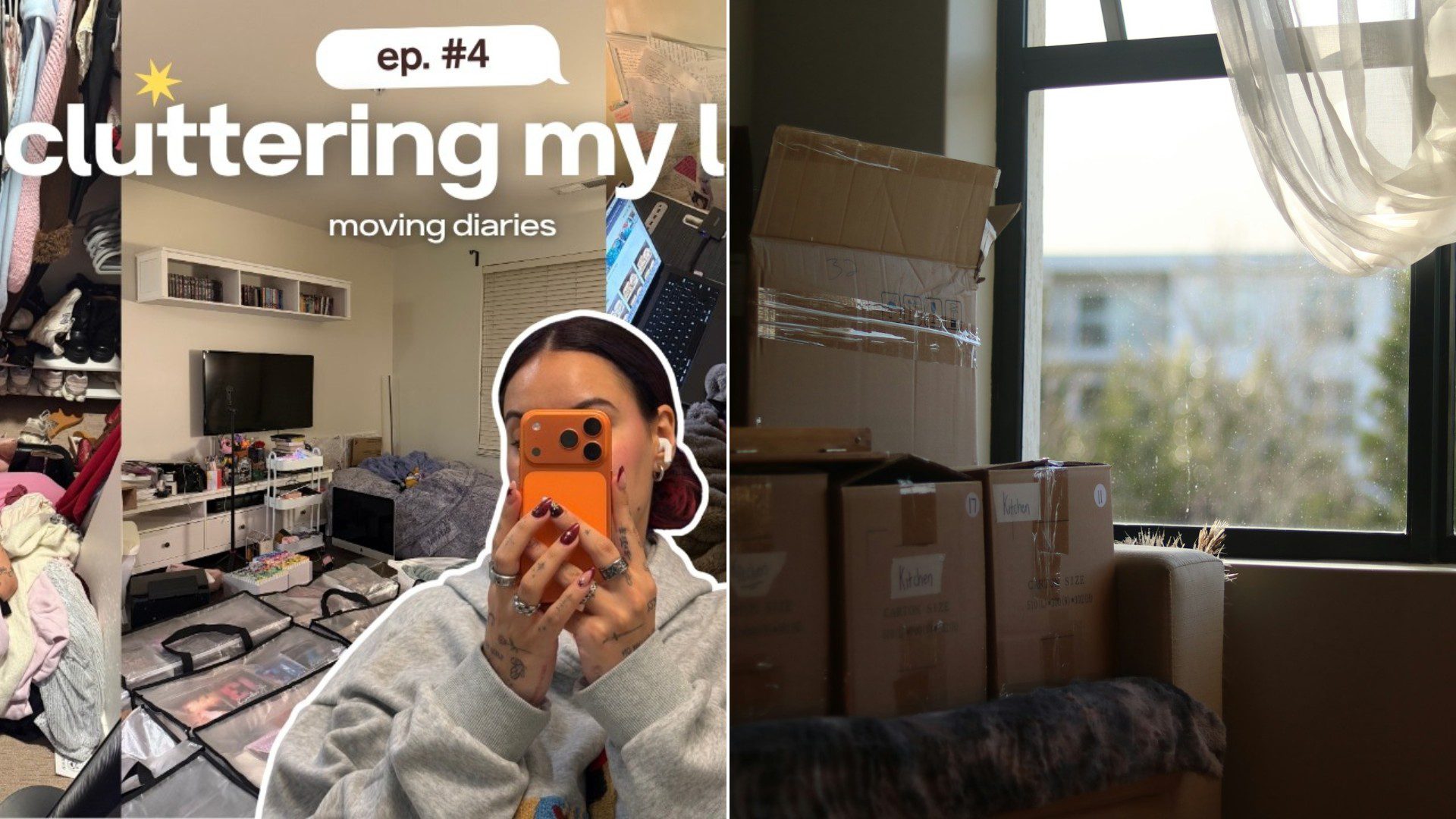
The video opens with the honest line “things are kind of everywhere,” standing in a very full apartment. The plan is simple. Throw things out, donate what is usable, and go through clothes, makeup and skincare, because so many things in the space are simply not coming to the next home. The book purge gets its own video, so this episode covers everything else.

Start By Taking Things Out
The creator’s reasoning is practical. Before putting books or boxes away, stuff has to leave, because starting to pack with everything still everywhere would only make the mess worse. So the kitchen goes first, with a friend helping and debating almost every item.
The kitchen is where the decisions come fast. Mugs that are too small are gone, and a set that cannot go in the dishwasher is questioned. A few favorites are kept for the new coffee routine, and the rest of the cups and glasses are cut down. Decorations for every holiday ever, from the top shelves to the bottom cabinets, make up a large share of the pile, including a whole bin of Easter items.
The Six-Year Pile
After finishing the top and bottom cabinets, the creator takes stock. So much is gone, they explain, because the household bought so much stuff when they moved in six years ago, and it was the cheapest things they could find. Going downstairs with eight trash bags, there were still more bags to fill.
There is a lesson in that timeline. Many people buy heavily right after a move to fill rooms, solve problems and make the new place feel like home. Storage bins, small appliances and decor come in quickly. A few years later, many of those purchases are still in boxes or on shelves, hardly used. A move is a natural deadline that forces us to take stock.
The Coffee Maker Reality Check
One of the funniest moments comes when the creator counts the coffee gear in the household: two Nespresso machines, two cold brew makers, a regular pot coffee maker, a French press and a manual milk frother. The reasoning for owning all of it was being prepared in case of a coffee emergency, like a guest suddenly craving French press coffee.
It is a classic example of buying for an imaginary scenario. A duplicate gadget feels harmless in a cupboard, but with a move coming, each one has to be packed, carried and unpacked. Asking which tool you actually reach for every morning is a quick way to thin out a kitchen.
Bathroom, Makeup And Closet
Next is the bathroom, where the shower holds a million different shampoos and other things nobody needs. The creator sorts the bathroom items and the makeup, and fills two entire garbage bags in one sitting. Not everything gets finished that day, since another drawer of makeup waits for later. One step at a time, they remind viewers.
Then comes the closet. The new place will have a smaller closet, so a lot of clothing has to leave, though there is a third room that will hold the books. A huge pile comes out of the drawers alone, and then the closet follows. By the end there are nine bags of donations, with one more outside, plus a shoe rack to give away.
Making The Move Easier
Professional movers charge by weight, volume or hours, depending on the company, and if you move yourself, every box has to be packed, lifted, loaded and unloaded. Every unneeded item you take along costs you time and money twice, once to pack and again to unpack. Decluttering before you move is one of the smartest ways to cut costs.
It also helps with the emotional side of moving. Starting fresh with only the things you use and like is much easier than opening dozens of boxes of items you do not remember packing.
A Simple Pre-Move Plan
If you are facing a move of your own, here is an approach that mirrors what this creator is doing. Start early, since decluttering takes more time than packing. Go room by room, beginning with spaces that carry the least emotional weight, such as the kitchen cabinets and the bathroom. Make four piles: keep, donate, sell and trash, and give the maybe pile a deadline.
Ask the moving question for every item: if I were buying this today for the new home, would I? Measure the new closets so you know what will fit, and donate as you go, because a bag that leaves on Tuesday does not have to be handled again on Friday. Keep a first-week box with essentials, labeled clearly.
Where The Extras Can Go
The creator’s focus on donating is a good reminder that there are more options than the trash can. Thrift stores, charity shops, shelters, schools and churches often welcome items in good condition, though many have limits, so call first. Some charities offer free pickup for larger donations.
Worn-out items such as cracked plastic bins, stained linens and broken small appliances are better off in local recycling than in a donation bag, since charities cannot sell broken items. As for the new home, waiting a few weeks before buying non-essentials, setting a spot for each item before buying it, and following a one-in, one-out rule can keep the six-year pile from growing back.
There is something encouraging in hearing someone say, openly, that they bought way too much. It makes the process feel less shameful and more like a normal result of living in one place for a few years. The goal is not perfection but arriving at the next home with fewer boxes, a lighter load and a clear idea of what you want in your life.
More Stories You May Like
- Organizer Says Decluttering Has To Become Your Hobby For The Next Twelve Months Because Decision Fatigue Means You Cannot Purge A Lifetime Of Stuff In One Weekend
- Mom Paid a Local Baker in Advance for Two Birthday Cakes and Even the Baker’s Own Dad Could Not Get Her to Deliver Before the Party
- Mom Shares Three Things She Wishes She Had Known Before Becoming a Mother Including Why Toddlers Are Harder Than Newborns and Sleep Progressions Feel Like a Scam