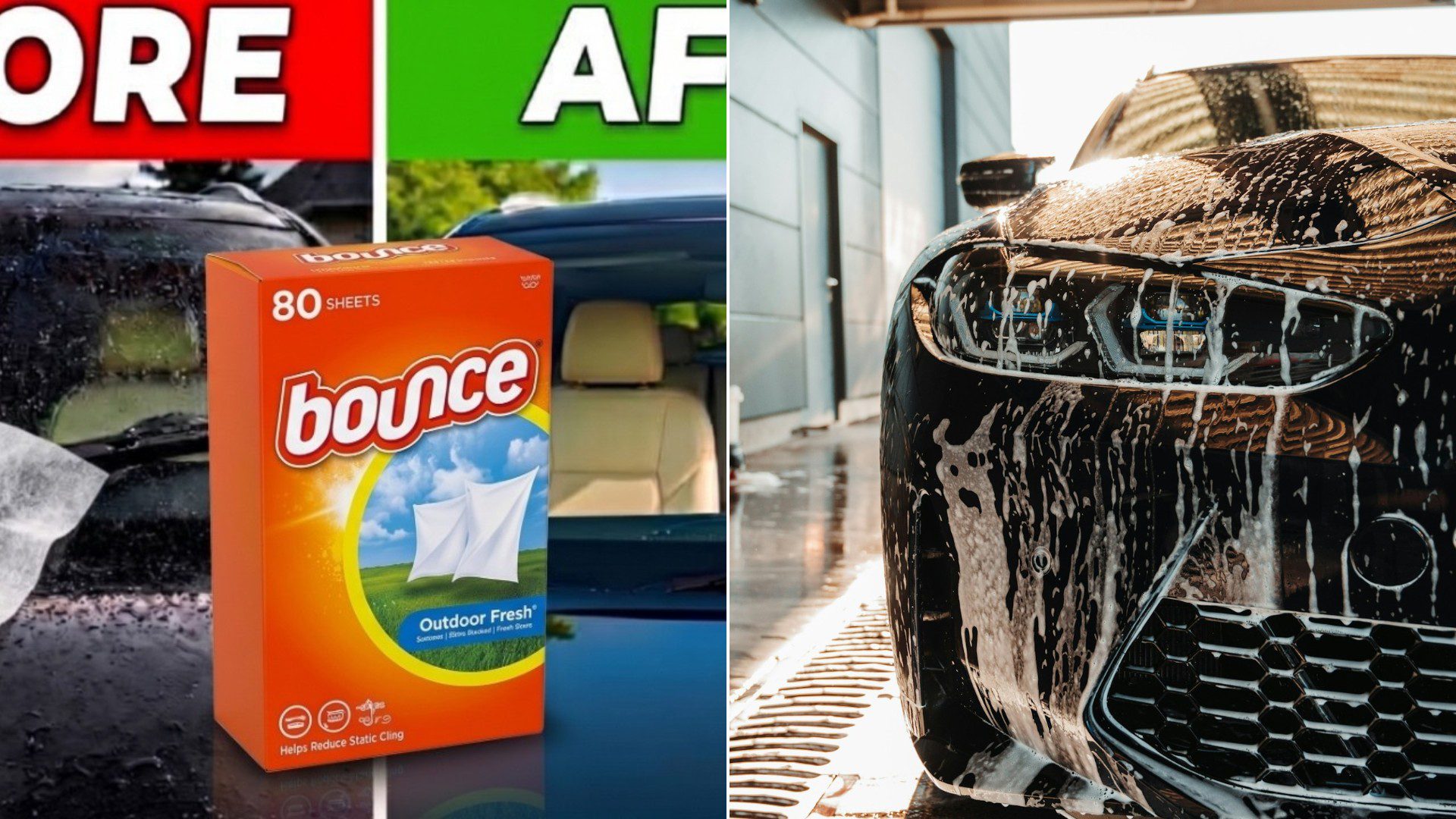
Detail shops charge $45 to blast bug splatter off a front bumper with specialty dissolvers. The car-care channel @JapaneseCarHacks says a laundry-room staple that costs about 2¢ a sheet does the same job.
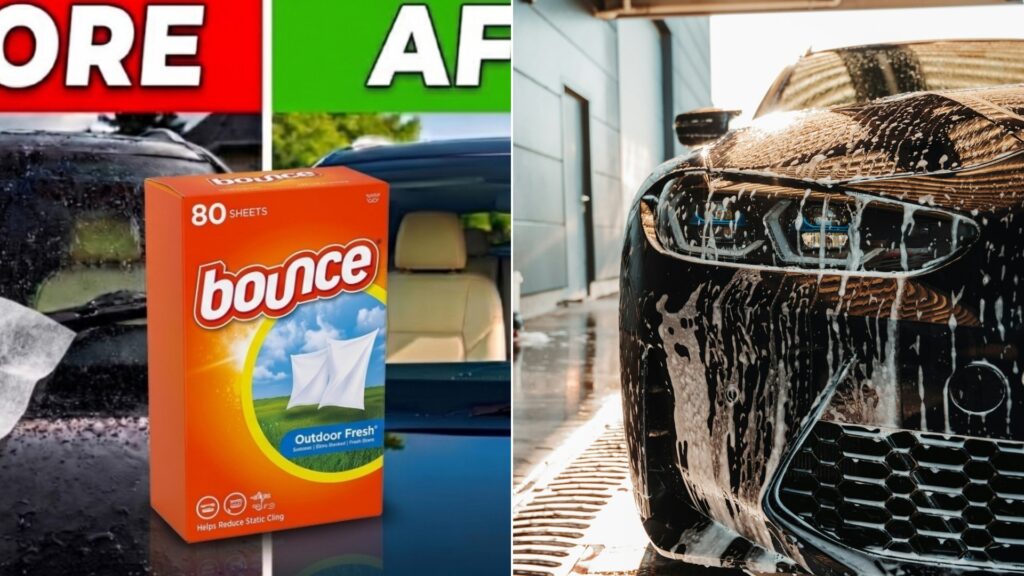
That staple is the humble fabric softener dryer sheet. The host says most drivers think of them only as a way to make towels smell like fresh linen, but he calls them a Swiss Army knife for your vehicle.
His explanation is simple. A dryer sheet is a non-woven polyester mesh with mild surfactants and antistatic compounds, which he says gives it a gentle scrubbing texture and a slick, cleaning touch at the same time.
Why A 2¢ Dryer Sheet Beats The $45 Bug Treatment On Your Bumper
Dried insects are harder to remove than most people realize. The host says bug remains are acidic, with a pH between 3.5 and 5.0, and that the proteins in them can bake into your clear coat in under 48 hours of direct sun.
Detailers, he says, often charge $45 to hit the mess with high-pH specialty bug dissolvers. His version costs about 2 cents per sheet, or 2¢, and he walks through it step by step.
First, park in the shade and let the paint cool, because cleaning products dry too fast on a hot surface and leave marks. Fill a bucket with warm tap water, around 100 to 110 degrees, and add a capful of car wash soap for extra slip.
Drop a plain, unscented dryer sheet in and let it soak for 30 seconds until it is fully pliable. Rinse the bumper with plenty of clean water to wash away loose dust and grit.
The Extra Step That Keeps The Bumper From Looking Streaky
Now comes the cleaning. Lay the wet sheet flat against your palm and glide it over the bumper in light, overlapping horizontal sweeps with almost no downward pressure.
The host says the organic matter liquefies while the open weave traps the insect shells without scratching the paint.
The step he stresses most is the finish. Hose the panel off immediately with clean water, then dry it with a plush microfiber towel so surfactant residue cannot dry on the finish and leave film behind.
Sticky Tree Sap Lifts Off Like Warm Jelly
Tree sap is another headache for drivers, and scrubbing it dry drags sharp grit across the paint. The host soaks a dryer sheet in hot tap water for 20 seconds, folds it into a neat four-inch square, and lays it right over the hardened droplet.
Then he lets it sit untouched for three to four minutes. When he picks up the edge and wipes downward in one smooth motion, he says the sap lifts off like warm jelly.
A quick spray of quick detailer or clean water and a wipe with a microfiber towel removes any leftover surfactant. He says this one can save you more than $50 in repairs.
Road Tar Washes Away In A Milky Runoff
Fresh road work kicks up liquid bitumen that bakes onto the rocker panels. The host says detailers often charge over $55 to remove it, usually with harsh petroleum naphtha products that strip away your protective wax.
His method starts with a hose-down to knock off loose sand, then a mist of car wash soap and warm water to make a slick film. He dunks a fresh dryer sheet in warm, soapy water, folds it flat, and glides it in small circles with light two-finger pressure.
He says the fatty acids in the sheet break down the tar binder without stripping the clear coat. A blast of water finishes the job, and the tar rinses off in a milky runoff.
Pet Hair, Static And Dusty Dashboards Disappear Too
For dog and cat owners, the host has a dry-sheet trick for trunk carpet. Put on a rubber dish glove, hold a dry sheet in your hand, and sweep in one direction. He says the sheet breaks the static bond holding the hair to the fibers and balls it up into neat piles, clearing a trunk or back seat in under two minutes.
Dusty dashboards get their own fix. He says wiping plastic with a dry microfiber can build up a static charge that pulls dust and dead skin out of the cabin air, and that detailers charge up to $40 for antistatic dressings.
His tip is to buff the dashboard, gauge cluster trim and center console with a used sheet that has already been through the dryer. A spent sheet has less wax, he says, and keeps the interior dust-free two to three times longer than standard wipes.
Wipers, Windshields, Wheels And A Fresher Trunk
The list goes on. A damp dryer sheet folded along the edge of a wiper blade and pinched down the rubber three times pulls off the black grime that makes blades skip and chatter. He says that can save a $40 to $60 pair of blades.
A slightly damp sheet scrubbed in tight circles on the inside of the windshield, followed by a quick buff with a clean microfiber towel, cuts the milky film that glass cleaner only smears around. Wrapped around a cold exhaust tip with a few drops of dish soap, a wet sheet scours off baked-on soot, and he says the soft polyester will not scratch the chrome.
After washing and drying the wheels, he buffs the faces and spokes with a spent sheet to leave a slick antistatic barrier. He says up to 90% of the brake dust then rinses away with a garden hose. A sheet tucked under each front floor mat and in the trunk helps fight musty odors.
Two Rules To Remember Before You Raid The Laundry Room
The host sums up his advice in two takeaways. Keep the dryer sheet wet when working on exterior paint, and use spent sheets on the interior to avoid extra residue.
He also suggests a fresh sheet laid flat on the upstream side of the cabin air filter to circulate a light scent through the vents for over a month. Always keep it to one side of the filter, he says, never wrapped around both.
It is sensible to test any new cleaning method on a small, hidden patch first, and to work only on cool surfaces in the shade. Stop if you see any dulling or marks, and keep the microfiber towel handy to dry everything quickly.
His count of all the dryer sheet tricks comes to 11, and he says together they can save more than $500 in detailing shop fees. Even if you only try the bumper trick this weekend, a 2¢ sheet is a cheap experiment compared with a $45 bill.
More Stories You May Like
- Consignment Shops Take A Cut And Your Items May Pay Pennies, So Ask About The Split And Payout Before You Drop Off A Single Bag Of Clothes
- Designer Says A $70 Pair Of Properly Altered Trousers Can Look More Elegant Than A $400 Pair And Names Nine Wardrobe Items Women Should Remove After 60
- Everyday Things That Look Valuable In Your Garage But Almost Never Sell No Matter How Hard You Try To List Them