Almost everyone has a project they keep putting off. For a woman named Neva, it was the clutter in her living room, which she had been avoiding for about a year, ever since she moved. So her friend @christinewrutzen stepped in with a fun little series called “How long does it actually take?” and set a clock to find out.
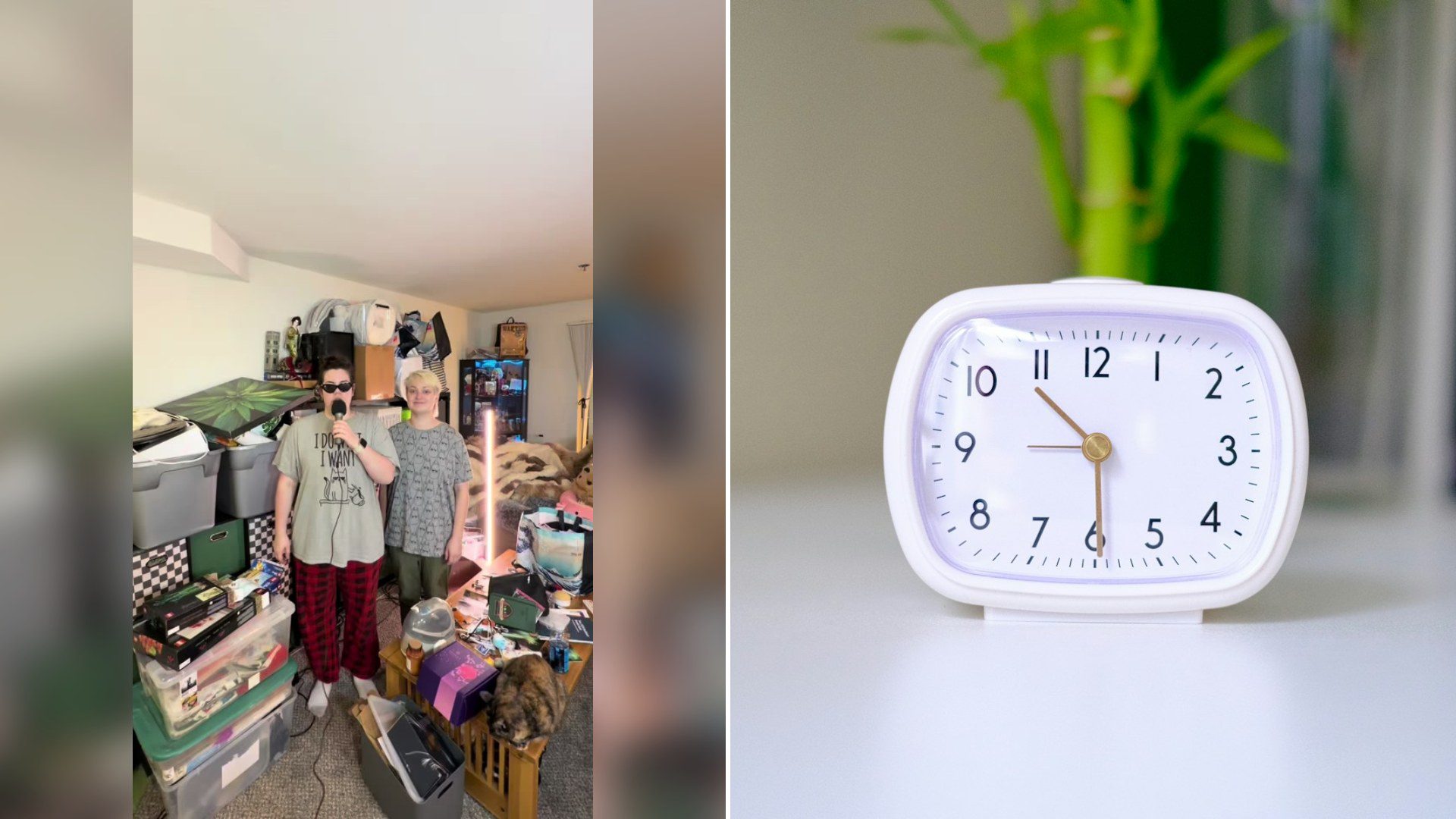
Before the timer started, Neva was honest about why this job had been so hard. She said she has a strong emotional attachment to physical objects. If that sounds familiar, you are in good company, and what happened next may make your own to-do list feel a lot less scary.
@christinewrutzen
The Answer: Two Hours and 26 Minutes
When the timer stopped, the total time to clear out Neva’s living room was two hours and 26 minutes. That is it. A project that hung over her head for a full year took less time than a long movie.
In her caption, the friend said Neva has come a long way over the years, and that the amount of clutter and trinkets used to be much worse. They got rid of a few things and organized a bit, but she admitted they mostly shuffled the clutter into bins. They did not even touch the cubbies, and the bins were still somewhat cluttered, but much better than before. She summed it up with a line worth remembering: one small step at a time.
She also shared a telling detail. About two to three hours is usually the maximum before most people tap out and are done with the project. By the end she could tell she was getting a little delirious. Even so, the result was a fully functioning living room again, with space for a TV in the entertainment center and room for activities. Her word for it was a huge win.
What This Teaches Us About Procrastination
The most interesting part of this story is not the room. It is the year of dread. We tend to imagine a big job as many times larger than it really is, and the longer we wait, the larger the job seems in our minds. Putting a clock on it, as this friend did, makes the work something we can measure. Two and a half hours is a Saturday morning, not a month of misery.
It also helps to have company. Neva did not do this alone, and having a friend in the room made it easier to start and keep going. If you are someone who gets attached to things, a helper can be a gentle voice that keeps the pace moving.
Tips for Tackling a Job You Have Been Avoiding
Time yourself. Set a timer on your phone, or better yet, ask a friend to time you. Knowing the clock is running keeps you focused and shows you how much you can finish in a short window.
Ask a friend to join you. Pick someone patient who will not rush you or judge your things. They can carry bags, hold items up for decisions and keep the conversation fun.
Expect to hit a wall. The friend in this story said two to three hours is about the limit for most people. Plan for that. Schedule a stopping point, and do not expect to do everything in one go.
Settle for progress. Not every cubby or shelf has to be done. In Neva’s case, getting the living room working again was the win. A room that you can use is more valuable than a perfect one.
Be kind about sentimental things. If you are attached to your belongings, do not start with the hardest items. Begin with trash, duplicates and things that are obviously broken. Save the keepsakes for later, or put them in one box to look at when you have more energy.
Containers can be a first step. Moving clutter into bins is not the final answer, but it can clear the floors and surfaces so you can use the room again. You can sort through the bins later, one at a time, when you are ready.
Pick a reward. Plan something nice for when the timer ends, like a cup of coffee, a walk or dinner with the friend who helped.
A Simple Order of Attack for a Living Room
If you want to try your own two-hour reset, a simple order helps. First, walk through with a trash bag and collect anything that is plainly garbage, such as old mail, empty boxes and broken items. Next, gather the things that belong in other rooms and carry them away so they stop cluttering the space. Then look at the surfaces, like the coffee table, the shelves and the entertainment center, and clear them one at a time. Finally, give whatever is left a home, even if that home is a labeled bin for now. When the timer goes off, stop, step back and enjoy what you got done.
Choose One Room and Start the Clock
If you recently moved, or if you have been meaning to deal with a closet, a garage or a spare room, take heart from Neva. Her year of procrastination ended in a single afternoon, and it did not require a perfect plan or a fancy system. It just needed a start time, a friend and a willingness to keep going until the clock said it was enough. Which room in your home would you pick, and how long do you think it would really take?