Most people know @me_seeking_me on TikTok as what he calls an “unhinged single dad.” But in one heartfelt video, he set the jokes aside to talk about the other big part of his life. He has taught kindergarten for 19 years, and he says he has never been more burnt out.
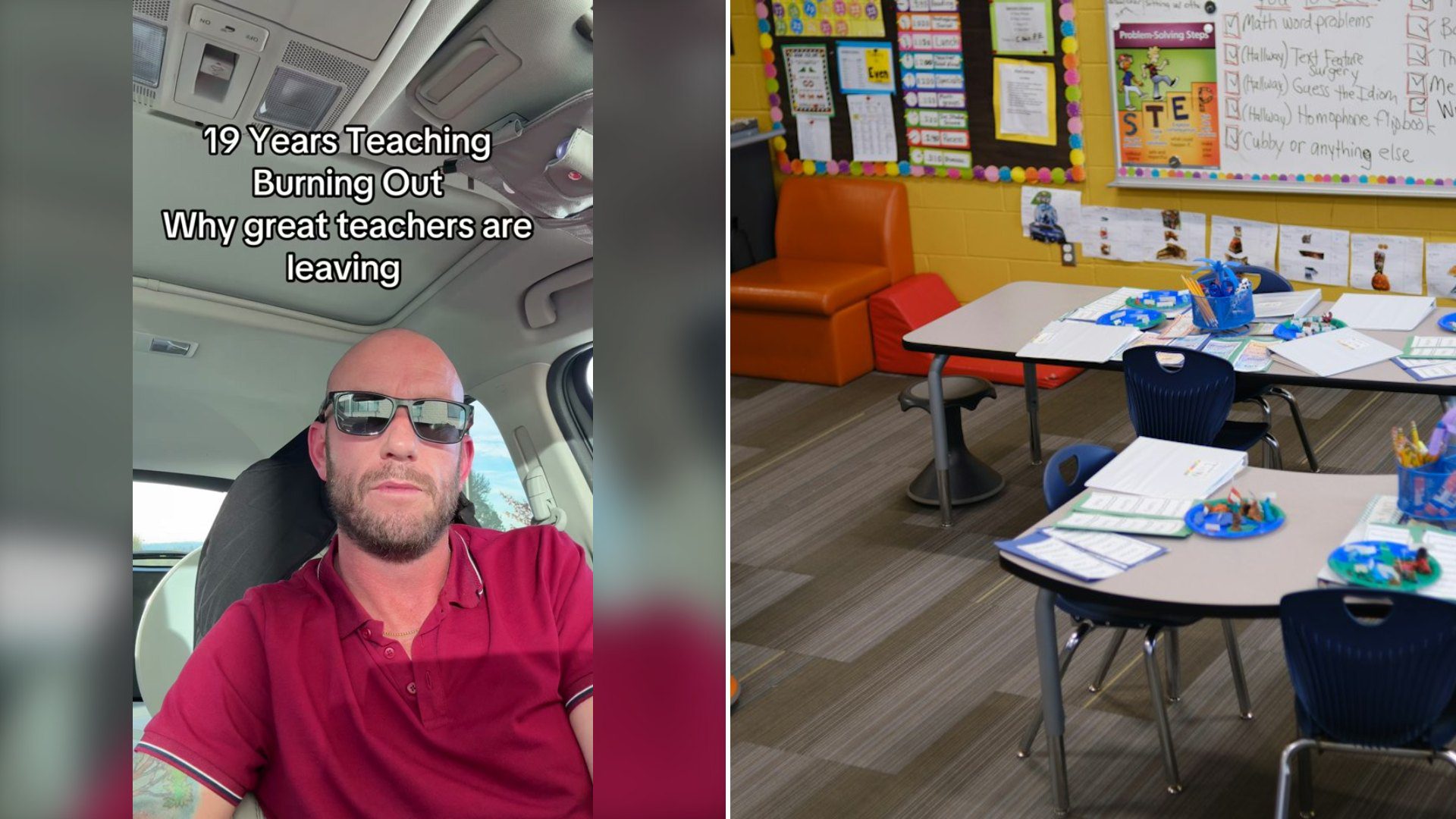
“I want to paint you a picture of what teaching kindergarten looks like right now,” he begins. He has 27 children in his class. For comparison, he says, the latest national data puts self-contained public kindergarten classes at about 19 students.
There is no general education assistant and no co-teacher. “It’s just me,” he says.
Inclusion Needs Support
He is quick to say he believes in inclusion, the practice of teaching students with significant support needs alongside their classmates in a general education room whenever that is appropriate. But he adds, “Inclusion requires support.”
Several children in his room have significant needs and detailed IEPs, the individualized education programs that spell out the services a student with a disability must receive. There is a paraprofessional in his classroom, he explains, but that aide is assigned to those specific students, not to the class as a whole. Sometimes one aide is covering two or three children with very high needs at the same time. “Trust me, that’s not enough,” he says.
Then there are the needs spread throughout the rest of the room: speech, communication, behavior, emotional regulation and academics. Right now, he says, three students use AAC devices to communicate. AAC stands for augmentative and alternative communication, and in his class those are iPads. Each one runs a different program, and as the general education teacher, he is expected to learn all three.
On top of that, he creates visuals, builds schedules, implements accommodations and provides specialized instruction, while teaching kindergarten to 27 children essentially by himself. He points out that he is not a special education teacher, has not had that extensive specialized training, and receives no additional pay for taking on that expertise. “There simply isn’t enough adults,” he says.
His Classroom Works, and That Is the Point
Here is the part he calls crazy. “My classroom works. The kids are learning. They’re loved. They’re supported. We laugh. We have fun.” Every day he gives those children everything he has.
He is burnt out, he says, not because he does not love kids and not because he opposes inclusion, but because schools keep adding needs, responsibilities and expectations to classrooms without adding the staffing, training or resources to meet them.
@me_seeking_me
His message to parents is direct. If you are frustrated with your child’s teacher, consider what that teacher might be walking into every morning. Before assuming teachers are not doing enough, he suggests, ask the people who make decisions about class size, staffing, training and funding why teachers are being asked to do so much with so little.
“Sometimes it’s an excellent teacher in a functioning classroom quietly wondering how much longer they can do this,” he says. In his caption, he adds that this is not about blaming children or families, and not an argument against inclusion. “Making it work shouldn’t cost us our teachers.”
How Parents and Grandparents Can Help
Many readers raised children when a kindergarten class had one teacher, a reading corner and a lot of glue sticks. Today’s classrooms often look very different. If this teacher’s words hit home, here are practical ways to make a difference:
Ask about class size. Find out how many students are in your child’s or grandchild’s class and whether there is an aide for the whole room. Class size policies vary widely by state and district.
Go to school board meetings. Board members set budgets and staffing levels. Public comment periods exist for exactly this kind of concern, and a few calm, informed voices can carry weight. Many districts also stream meetings or accept written comments.
Volunteer if you can. Retirees are often welcome to read with students, prepare materials or help with events. Most schools require a background check, so ask the front office how to start.
Talk to the teacher before you complain. A short, friendly note asking how things are going will usually get a more honest answer than a frustrated email.
Send supplies. Teachers commonly spend their own money on classroom basics. A pack of tissues, sanitizer, crayons or a gift card for supplies is always appreciated, and many teachers keep a wish list they will gladly share if you ask.
Contact elected officials. State legislators decide much of public school funding. Letters and calls about staffing and special education support do get logged.
Understanding the Terms
If your grandchild has an IEP, you may hear about “service minutes,” the amount of time each week a student is entitled to specific help. When one aide covers several students, schools can struggle to deliver those minutes. Parents have the right to request an IEP meeting at any time to review whether their child is truly getting what the plan promises.
This teacher ended his video simply. “This is what teacher burnout looks like.” Not a failing classroom, but a good one held together by one tired adult who still shows up every morning.
More From Decluttering Mom
- School Tells a Parent to Stop Making Their Kid Good Lunches Because Other Kids Are Jealous and Parents Are Furious
- Mom sets up star decorations the night before her kindergartner’s first day and walks the kids into school only to be told they are 20 minutes early because she mixed up the time
- Mom tells her son they are going for donuts but pulls into a phone store instead and lets him pick out his first phone for starting middle school and his unboxing reaction is everything