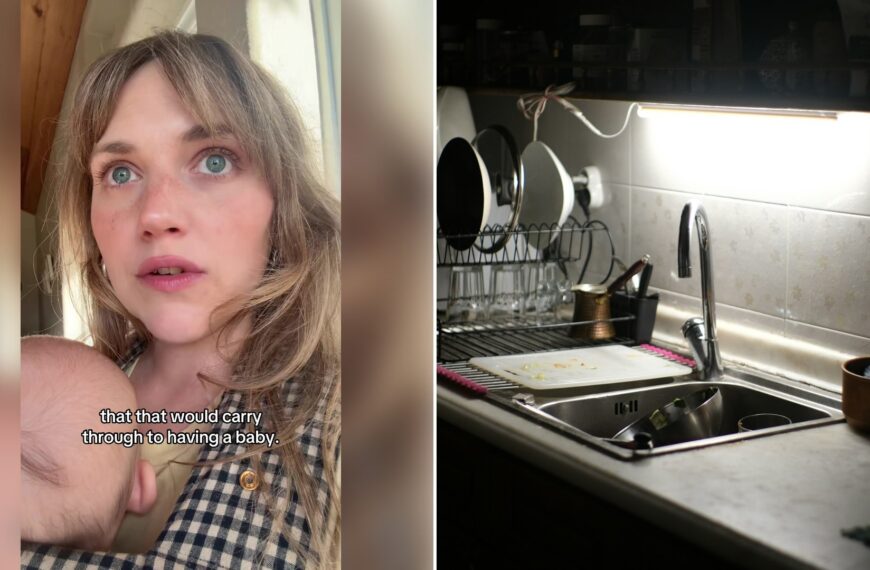
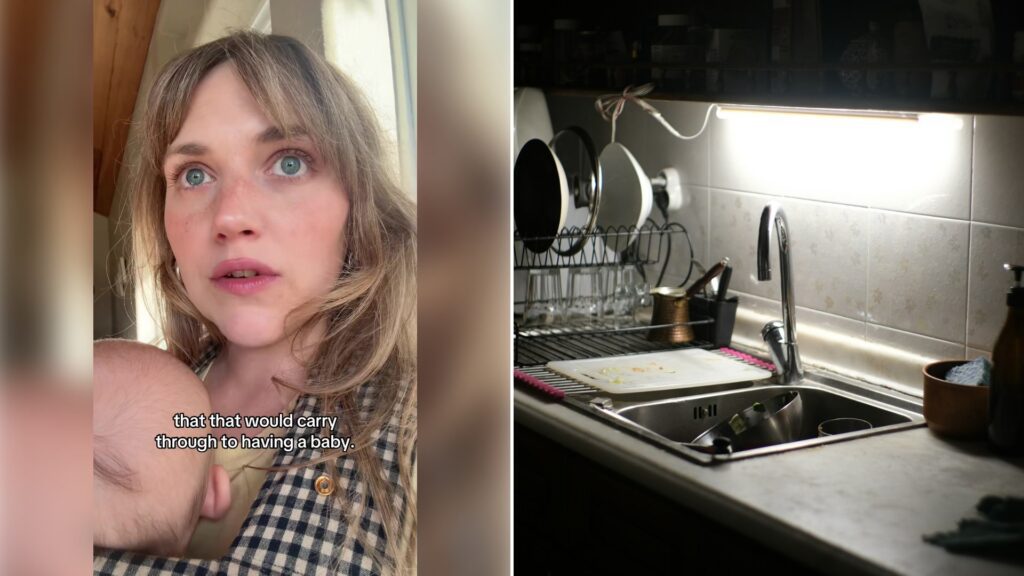
Creator @jessandmissamelia shares a coping mechanism that sounds like pure silliness on the surface but is doing real work underneath: throughout the day, she renames herself a nonsense phrase, something along the lines of hot dog hot diggity dog, and plays along with her toddler as though that is simply her name now. It is goofy, it is repetitive, and by her own admission it is the kind of thing she might be too embarrassed to actually say out loud in public. It is also, she explains, how she survives feeling completely overstimulated as a parent.

jessandmissamelia
What makes the game effective is not really about the toddler’s amusement, though that is a nice side effect. It is about giving the mom herself a reset button she can use mid-day, something playful enough to interrupt the buildup of sensory and emotional overload before it turns into a snapped response she regrets. Parental sensory overload, sometimes called mom rage or caregiver burnout in less clinical terms, is increasingly discussed by therapists as a real and common experience, not a character flaw.
Parents, and mothers of young children in particular, are frequently on the receiving end of a near-constant stream of sensory input: a baby or toddler’s crying, touching, climbing, and talking, layered on top of noise, mess, and the mental load of tracking everyone’s needs at once. Occupational therapists who study sensory processing note that this kind of nonstop, low-control sensory exposure can push even a calm, well-regulated adult toward overwhelm, irritability, or a short fuse, especially without built-in breaks. The body experiences it similarly to any other form of chronic overstimulation, triggering stress responses that build cumulatively across a day rather than resetting between demands.
Therapists who work with overstimulated parents commonly recommend exactly this kind of small, built-in interruption, something low effort and genuinely enjoyable that breaks the tension before it peaks. A silly recurring bit like a fake name game works because it requires almost no planning, it makes the parent laugh instead of grit their teeth, and it reframes an overwhelming moment as something lighter, even if only for a few seconds. Those small resets, repeated enough times across a day, are often what keeps a stressful stretch of parenting from tipping into a blowup.
The honesty in admitting she might be too embarrassed to say the name outside her own house is part of what makes the video land. She is not presenting the game as a polished parenting hack designed to look good on camera. She is showing the slightly ridiculous, entirely unglamorous thing she actually does to get through an ordinary day, which is exactly the kind of coping strategy most parents have and rarely say out loud.
More from Decluttering Mom
- Mom Explains Why She Puts Her Marriage Ahead of Her Kids and Describes What That Looks Like in an Ordinary Week Inside Her Busy Family Home and Why It Matters
- Mom Says She Called Her Husband Crashing Out After Waking Up Soaked, Then Held Up a Screw She Found on the Sheets and Reset the Whole House on Day 2 of 17
- Mom Doing Her Makeup at 5 in the Morning Realizes She Mixed Up One of Her Five Alarms and Woke Her Daughter Half an Hour Early, Then Apologizes and Sends Her Back to Bed