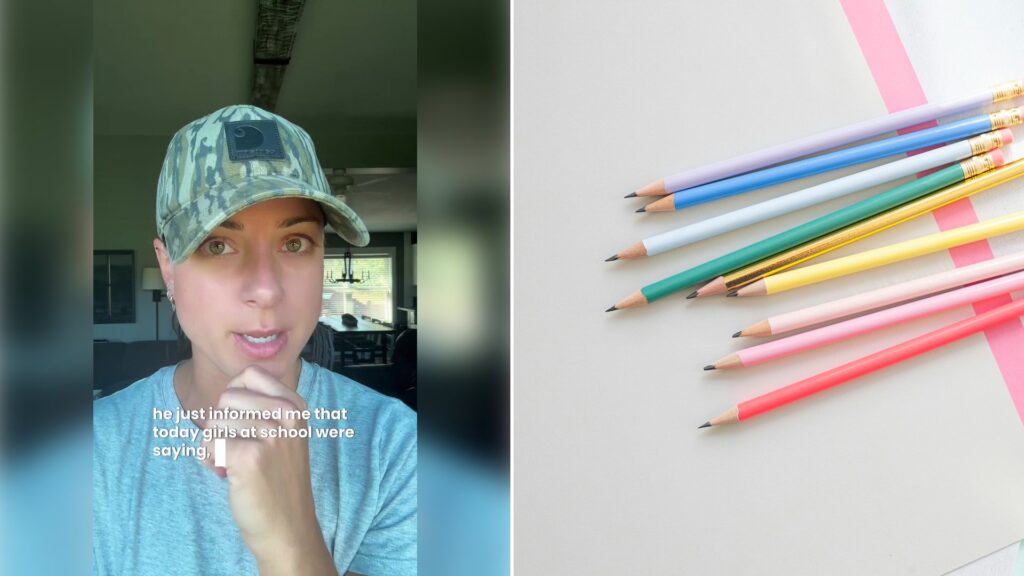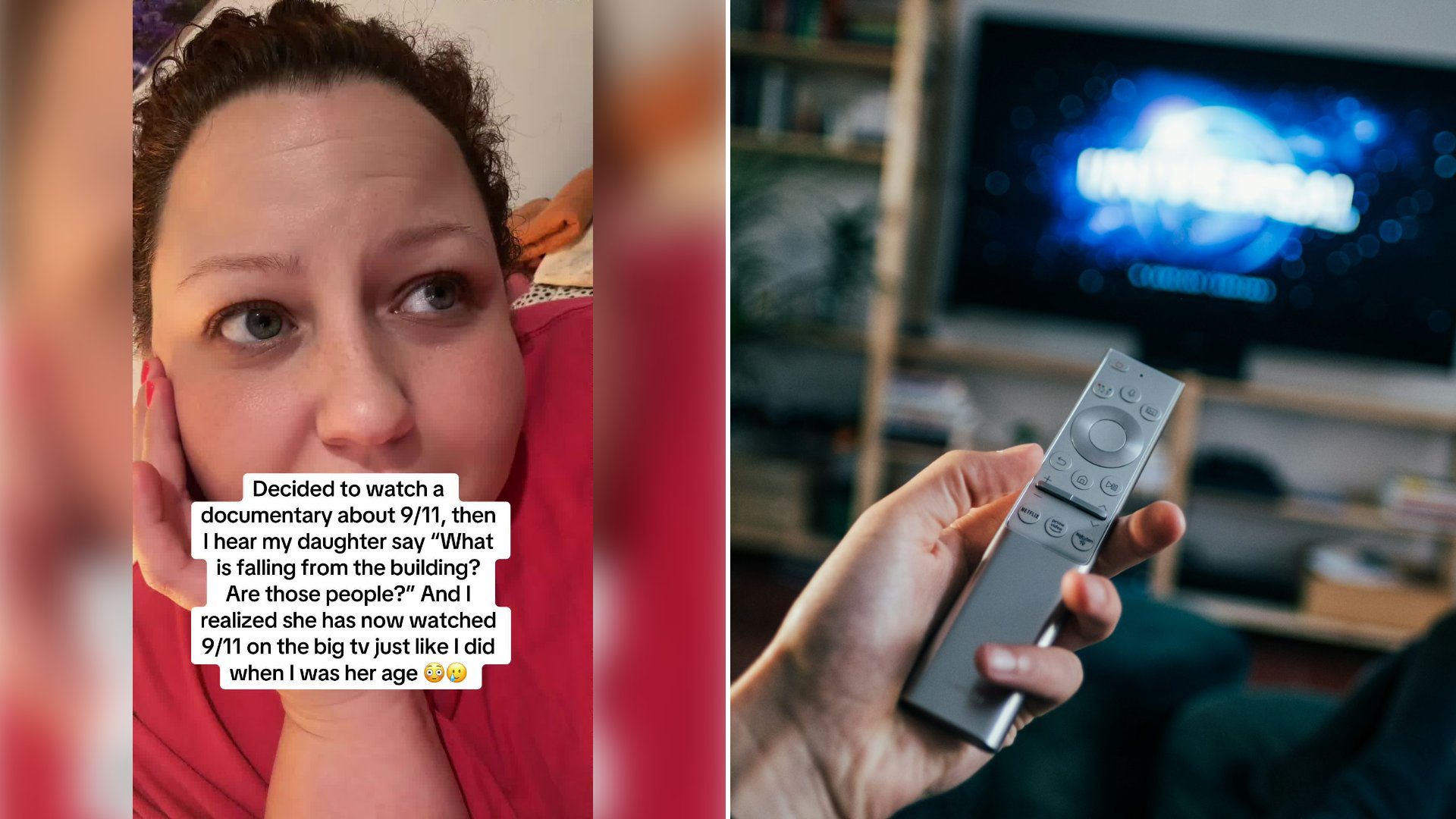
“What is falling from the building? Are those people?” That is the question @soltsahar says she heard from her daughter after she “decided to watch a documentary about 9/11,” according to the text on her short TikTok. She had not realized the girl was paying attention. “I didn’t think she was watching,” she wrote in her caption.
The video itself is eight seconds of her face as the words sit on screen. She rests her cheek on her hand, then covers her mouth and nose with both hands, her eyes wide. The text finishes the thought that hit her: she realized her daughter “has now watched 9/11 on the big tv just like I did when I was her age.”
Her caption makes the post a request. “Any advice on how to explain what happened, to children, I’ll take,” she wrote, “because when I tried to explain it to her, she was terrified.” She posted it on September 12, 2026, the day after the 25th anniversary of the attacks, adding that she could not believe it had been 25 years and closing with “rest in peace to all the victims.”
According to the National September 11 Memorial and Museum, the attacks killed 2,977 people from 90 nations: 2,753 in New York, 184 at the Pentagon and 40 on Flight 93.
What the 9/11 Memorial Tells Parents
The museum publishes guidance for families on talking to children about terrorism, and it starts where this mom ended up: with what the child saw. It warns that media “may include footage of scenes that are not appropriate for children to view at all or without supervision,” and tells parents to “monitor the television and Internet.”
Its next steps are about listening before explaining. The museum suggests open ended questions such as “What would you like to know?” and “How does this make you feel?” and tells parents to ask children about their concerns and “provide appropriate, realistic reassurance.” It advises answering “with basic facts and age-appropriate language” rather than sharing everything an adult knows, and it notes that children’s responses vary widely depending on their age.
The guidance also tells parents to “reassure children of their safety” and to share what is being done to keep them, their family and their friends safe. To make the event human rather than only frightening, it suggests highlighting specific stories of survivors, victims or first responders, and helping children find ways they can help others.
If Your Child Already Saw the Footage
Turn it off and stay with them. Do not leave the documentary running in the background while you talk; the museum’s warning about unsupervised footage applies to the rest of the program too.
Ask what they saw and what they think it means before you explain anything. A child who asks “Are those people?” may be stuck on one image. Answer that one question honestly and briefly, then ask what else they are wondering about.
Lead with safety, in the present tense. Say plainly that it happened a long time ago, before they were born, and that you and the adults around them work to keep them safe now.
Give them a helper to hold onto. Pick one first responder or survivor story, as the museum suggests, and tell it in a few sentences. Then offer something they can do, such as drawing a thank you card for a local fire station.
Check back at bedtime and over the next few days. A child who was terrified in the moment may have new questions later. Keep the door open and answer each one with the same short, calm facts.
More from Decluttering Mom
- She Caught the Moment She Told Her Toddler About Her Adoption on Camera
- Girl Mom Admits Having a Daughter Means She Has to Catch Herself, Says She Will Still Call Her Beauty Girl but Wants Her to Know She Is So Much More Than What She Looks Like
- Mom Says She Feels Like Her Two and a Half Year Old Daughter Hates Her Because She Pulls Away at the Shops, Tells Her to Go Away and Only Ever Asks for Her Other Mom