For weeks, this new mother had help in the house: an extra set of hands for diaper changes, someone to hold the baby during a shower, a built-in source of reassurance during the hardest stretch of early motherhood. Then her own mother had to go home, and the goodbye hit harder than she expected.
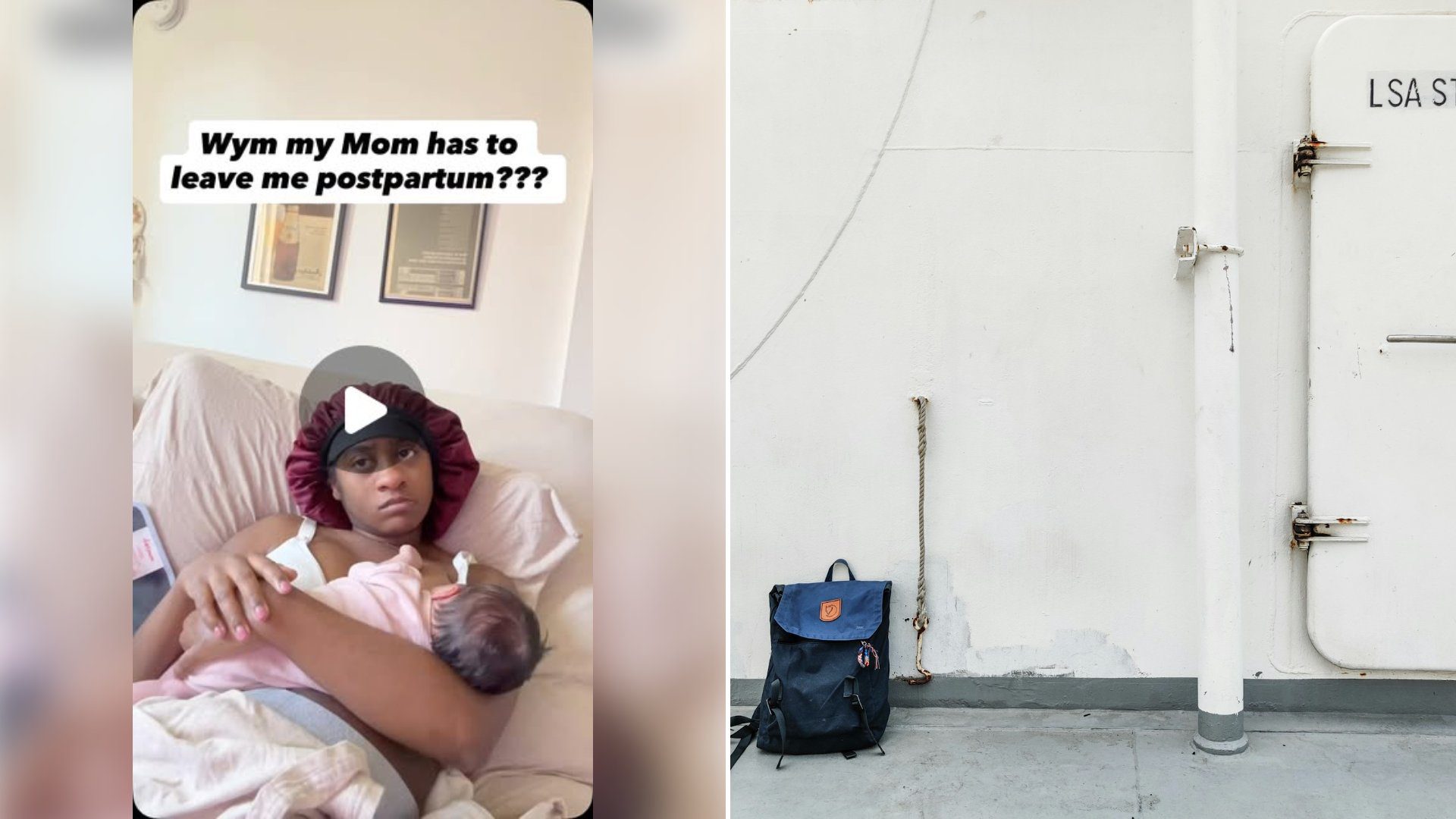
In the video from @curlykjamess, the young mother shares the emotional moment her mom leaves after staying through the first weeks postpartum. She says plainly that nothing prepares you for that specific kind of goodbye, and that going through postpartum has made her appreciate her own mother in a completely new way, now that she understands firsthand what it takes to keep a newborn and an exhausted new parent alive and functioning.
The moment resonates because it captures a very specific and underdiscussed part of the postpartum timeline: the drop-off that happens once the initial wave of help ends. Family members and friends often show up in force for the first one to three weeks after a birth, bringing meals, taking night shifts, and handling errands. Then, almost all at once, that support disappears right as the new parent is still deep in recovery and the baby is nowhere near sleeping through the night.
Historically and across many cultures, new mothers were surrounded by an extended network, often multiple generations of women living nearby or even in the same household, who shared the physical labor of caring for a newborn for weeks or months. That kind of built-in, sustained support is far less common in contemporary life, where extended family frequently lives hours or states away and can typically only stay for a short, defined visit. The result is a support system that is front-loaded into the first couple of weeks and then vanishes just as the novelty wears off for everyone except the parents still living it around the clock.
Maternal health researchers who study the postpartum period describe this exact gap as one of the most under-recognized risk points for new parents. The six-week postpartum checkup, which is often the only formal medical touchpoint after discharge in many healthcare systems, frequently falls right in the middle of this gap, after the helpers have gone and before a parent has fully adjusted to managing alone. Isolation during this window is one of several factors mental health professionals link to higher rates of postpartum anxiety and depression, since a parent who was getting regular adult interaction, physical breaks, and encouragement suddenly has none of it just as sleep debt and hormonal shifts are still peaking.
This is also why the moment this mother captured is landing so widely with other new parents. The goodbye isn’t just about missing a loved one, it’s about watching a safety net get pulled away in real time, with full awareness of how much harder the days ahead are about to get. Her comment about appreciating her own mother differently now reflects something else maternal health experts point to often: that the experience of caring for a newborn gives new mothers a visceral, specific understanding of the sacrifices their own parents made that simply can’t be absorbed secondhand until they are living it themselves.
For other new parents approaching this same stretch, the video is also functioning as something like advance warning and permission at once. It tells them the dip in support is coming, that the sadness of it is normal rather than a sign something is wrong with them, and that leaning on whatever community, partner, or professional support remains available after the helpers leave is not optional extra credit, it’s a real and necessary part of recovering well.
More from Decluttering Mom
- Mom Who Says She Has Mastitis Films Her Son Volunteering to Hold His Newborn Sister on the Couch, Asking Her Favorite Color and Telling Her She Could Put Her Whole House Yellow
- Mom Says She Was Already in Early Labor While Filming Herself Caring for Her Baby Chicks and Did Not Realize It Until Hours Later, Then Shares How Her Unmedicated Midwife Birth Went
- Military Mom of a 2 Year Old and a 10 Month Old Says Her Toddler Choked on Bacon on Her First Morning of Solo Parenting With No Family Nearby to Call