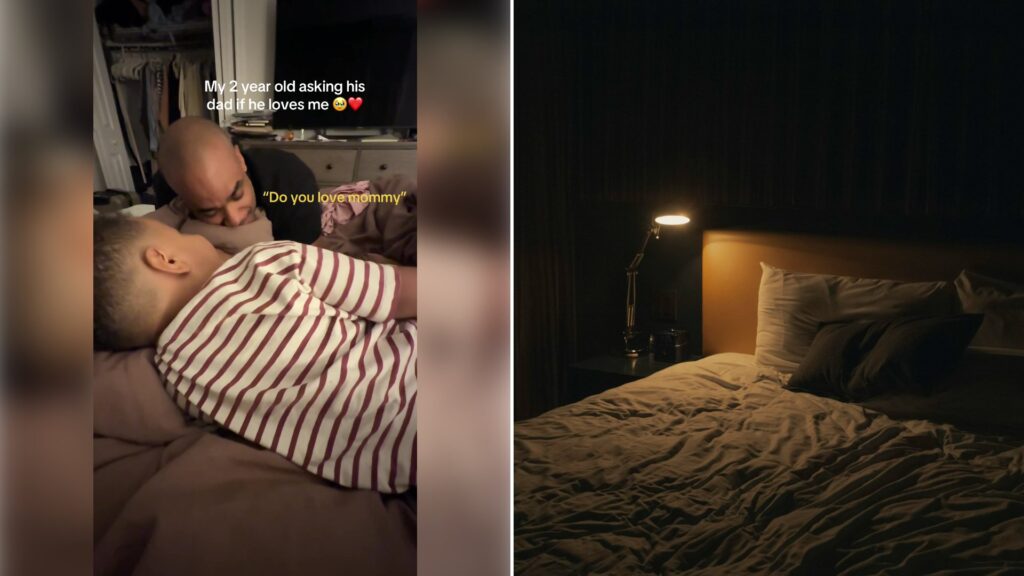
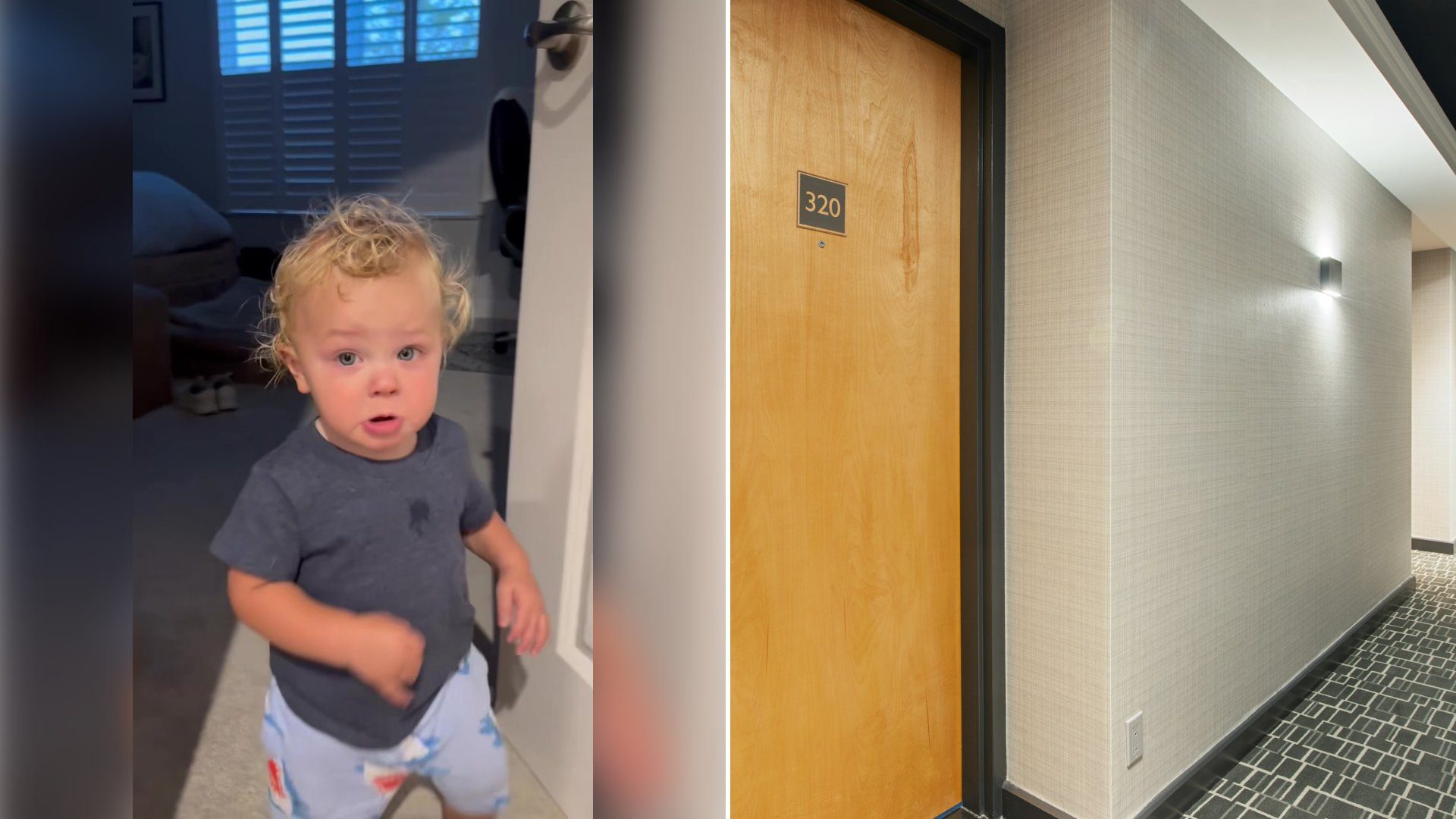
Creator @marinfelsoci has captured the same scene playing out again and again: a toddler shuts himself inside a room, seemingly on purpose, only to be immediately spooked by the fact that he just did it, and comes stumbling back out in tears looking for his parent. It happens once. Then it happens again. Then it happens again after that, each time with the same startled, slightly betrayed expression, as if the door closing was somehow not his own doing.
marinfelsoci
Parents watching immediately recognized the pattern, because almost every toddler goes through a phase of repeating an action that gets a strong reaction, even when that reaction is fear rather than fun. It is the same impulse behind dropping a spoon off a high chair fifty times in a row or flipping a light switch on and off until an adult begs them to stop. The repetition is not random. It is how toddlers run their own experiments on how the world works.
Developmental psychologists describe this stage as cause and effect learning, and it is considered a core part of healthy cognitive development in toddlers roughly between one and three years old. A child closing a door, hearing it click, and then feeling briefly unsettled by the sudden change in their surroundings is testing a genuine hypothesis: does this happen the same way every time? The surprise on his face each time is real, because object permanence, the understanding that people and things still exist even when out of sight, is still being actively built during this age range, and a closed door can momentarily feel like it has made a parent disappear rather than simply stepped out of view.
That is also why the fear does not stop him from doing it again. Child development researchers note that toddlers at this stage are driven by curiosity more than caution, and a scary outcome does not carry the same weight it would for an older child who can reason ahead about consequences. He is not ignoring the fear; he genuinely has not built the mental bridge yet between what happened last time and what will happen this time, so each repetition gets investigated fresh.
For parents watching their own toddler run the exact same experiment at home, the behavior typically resolves on its own as object permanence and memory solidify over the following months. In the meantime, it remains one of the more reliably funny toddler phases, precisely because the child is so earnestly surprised by a problem he keeps causing for himself.
More from Decluttering Mom
- Mom Jumps Into Her Son’s Roblox Shooting Game and Takes Him Out First Thing, Then Gets a Text Asking Why Did You Shoot Me and Answers With Sorry Baby
- Boy Mom Looks Out the Window to Find Her Boys Swinging Flaming Sticks Around the Backyard Fire Pit and Wonders if It Is Time to Step In or a Character Building Moment
- Mom Working From Home Gets a Spontaneous Metal Concert When Her 12 Year Old Son Walks In Shredding a Purple Bullseye Guitar and the Family Dog Climbs Up Beside Her