


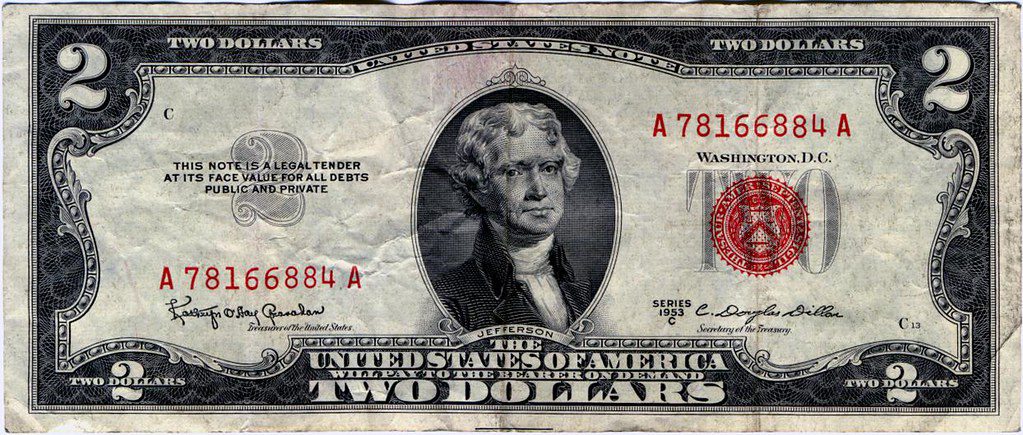
You probably tuck $2 bills into your wallet without thinking much about them, but some of those notes can be quietly valuable. A few $2 bills can be worth thousands depending on their age and serial-number clues, and this article will show what to look for and why those details matter.
Keep this handy as a simple guide to spotting potential gems among ordinary currency. You’ll learn which series, seals, and serial patterns often catch collectors’ attention and where to look on the bill to spot those clues.
1928 Red Seal $2 Bill

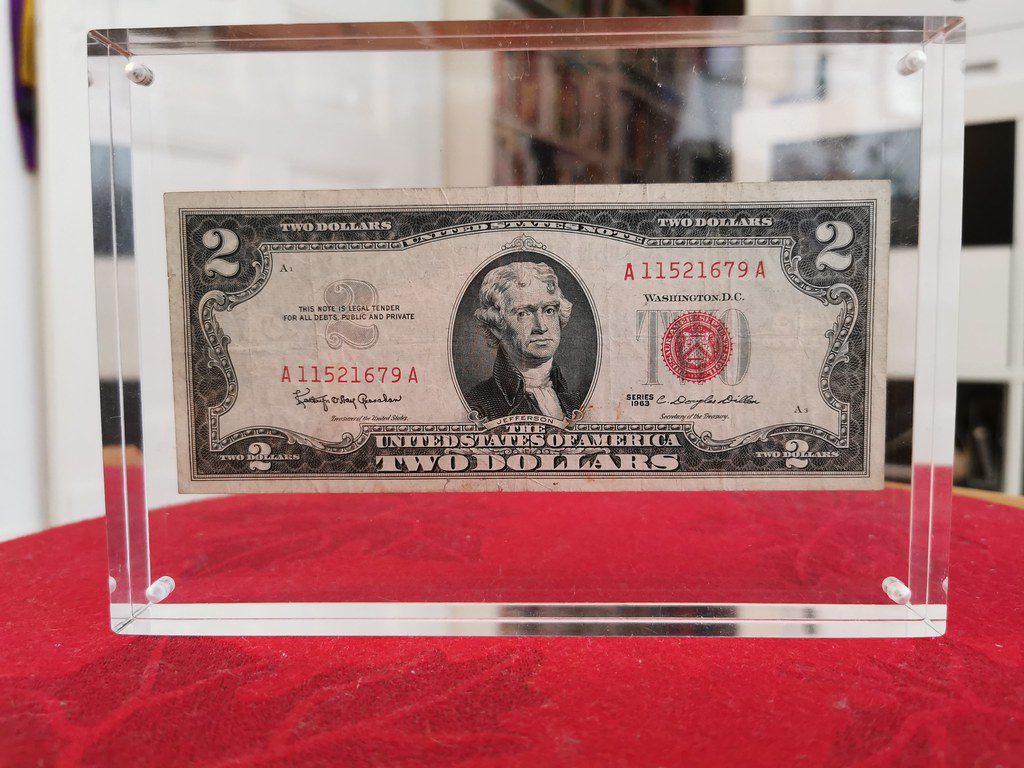
If you find a 1928 $2 bill with a red Treasury seal, check condition first — that’s the main value driver.
This design introduced the small-size two-dollar note and features Thomas Jefferson at center, with several series variants that collectors watch for.
High-grade examples, star replacements, or unusual serial numbers can push prices well above face value; most common circulated notes sell for only a few dollars.
Learn specifics about varieties and pricing from a detailed value guide for Red Seal $2 bills.
Star Notes with Low Serial Numbers
If you find a $2 star note with a low serial — especially single- or double-digit — you might have a bill that collectors pay extra for. Condition matters: a crisp, uncirculated note commands higher prices than a worn one.
Check production totals and verify the serial against databases before assuming high value. Use a trusted lookup tool like the Star Note Lookup to start.
1928 $2 Bill in Crisp Condition
If you find a 1928 $2 bill that’s crisp and uncirculated, you hold something collectors pay attention to. Condition drives value more than the series letter, and a flawless note can command hundreds or more.
Look closely for sharp corners, bright ink, and no folds or staining. Fancy serials or star replacements on a high-grade note increase interest and price.
2003 Federal Reserve Star Note
If you find a 2003 $2 star note, check its issuing district and serial number closely. Some uncirculated examples, especially with low serials, can sell for significantly more than face value.
Star notes from 2003A were printed for specific districts; values vary by grade and rarity. For a quick production detail lookup, see this 2003 $2 Federal Reserve Notes value guide.
$2 Bills with Unique Serial Patterns
You can find $2 bills that attract collectors because of their serial numbers.
Patterns like ladders (12345678), repeats (44444444), or very low numbers often increase interest and value.
Look for star notes and sequential runs; these details matter more when the bill is in crisp condition.
Use a serial-number guide or an online checklist to compare your note to known prized patterns like those listed on collectible bill sites (for example, a comprehensive $2 bill value guide).
1886 $2 Silver Certificate
If you own an 1886 $2 Silver Certificate, check the seal color, signatures, and overall condition carefully. Notes from that year can be common in low grades but become collectible when well preserved or when they show rare serial or star-note traits.
Look up detailed valuations and varieties before selling. A trusted reference for these notes is the PCGS guide to Series of 1886 $2 Silver Certificates.
$2 Bills with Fancy Serial Numbers
You can spot a fancy serial number by looking for patterns like repeating digits, ladders, or solid runs.
Collectors pay extra for low numbers (00000001–00000010), repeating pairs (12121212), and radials like 12345678.
Condition matters alongside the pattern; a crisp note with a spectacular serial fetches more.
Check guides that list serial-value examples to compare your bill against recent sales, and consider having high-value notes graded.
$2 Star Notes from 1976
If you find a 1976 $2 bill with a star at the end of its serial number, you’re holding a replacement note that collectors watch for.
Star notes were printed to replace damaged sheets, so they’re scarcer than regular issues and can command a premium in uncirculated condition.
Most sell for modest amounts, but crisp, low-serial or otherwise “fancy” star notes can reach higher prices.
Check grading, paper quality, and serial patterns before you decide what your note might be worth.
See a value guide for typical ranges and notable sales.
$2 Bills with Red Seals
If you find a $2 bill with a red Treasury seal, check the series year; many were printed 1928–1963 and can attract collectors. Condition matters—uncirculated examples and rare serials can push value well above face.
Look for star notes, low serial numbers, or unusual printing; these details raise interest. For a quick guide to typical values and identifying features, visit the Red Seal $2 Bill Value Guide (1928-1963 Series).
Early Series $2 Notes from 1890s
If you have a $2 note from the 1890s, check the series year and seal color first. Those details often drive collector interest and value.
Notes in excellent condition can command much higher prices than worn examples. Some specific varieties, like red-seal United States Notes, are especially sought after by collectors.
Look for rare serial numbers or star replacements; they can multiply value. For a quick reference on typical values and variants, consult a dedicated pricing guide.
More from Decluttering Mom: