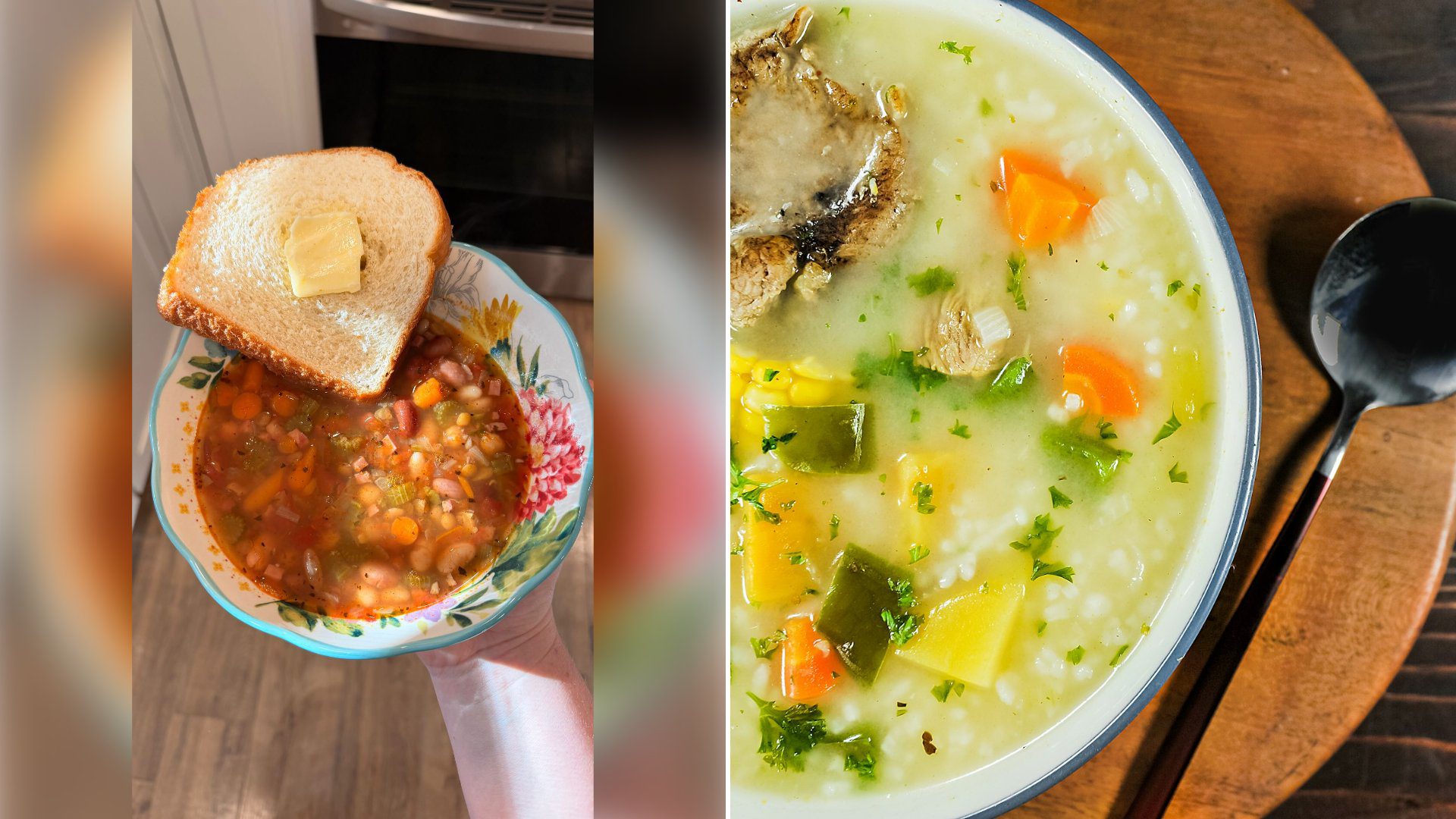
A video from the account thehannahbriggs shows a full pot of 15 bean soup coming together for a family dinner, captioned “Tonight we are bean-maxing. This was really good and surprisingly even my kid that doesn’t like beans enjoyed it.” The post includes the complete recipe: a 20-ounce bag of 15 bean soup mix (spice packet discarded), onion, celery, carrots, garlic, diced ham, a blend of smoked paprika and chili powder, canned diced tomatoes, and 8 cups of chicken broth, all built around beans soaked overnight and cooked on high in a slow cooker for 6 to 8 hours. Tagged #slowcookerrecipe, #EasyRecipe, and #dinnerideas, the video pulled in 34.2K likes, 610 comments, and 289 saves.
One line buried in the recipe’s instructions is doing more food safety work than it might appear to at a glance: a note that the beans “need to get to a rolling boil at the end for at least 30 minutes to prevent stomach upset.” That instruction isn’t a stylistic preference, it reflects a real and well-documented risk specific to multi-bean mixes like the 15 bean blend used here, nearly all of which include red kidney beans. Raw and undercooked kidney beans contain a natural toxin called phytohaemagglutinin, also known as kidney bean lectin, at levels far higher than most other common beans. Eating as few as four or five undercooked kidney beans can cause intense nausea, vomiting, and diarrhea, with symptoms typically appearing within one to three hours.
The reason this matters specifically for a slow cooker is that low, steady heat is exactly the wrong environment for neutralizing this toxin. University extension food safety guidance, including from Ohio State’s Chow Line and Utah State University Extension, has documented cases, and case studies published in food safety journals, where slow cooker temperatures, often sitting well under 200°F for hours, actually increased the toxin’s potency compared to raw beans, rather than destroying it the way a hard boil does. The standard safety recommendation is that dried kidney beans, whether cooked alone or as part of a mixed bean blend, should be boiled hard for at least 10 minutes before finishing the cook, since that temperature is what actually breaks the toxin down; a slow cooker’s gentle simmer alone generally isn’t hot enough to do that reliably over any length of cooking time.
The overnight soak this recipe calls for is also a meaningful part of the safety picture, not just a step for texture. Soaking dried beans for at least several hours before cooking helps leach out some of the lectin content before heat is ever applied, and food safety researchers specifically recommend discarding the soaking water rather than cooking the beans in it, since the toxin leaches into that water during the soak. Rinsing and draining the beans before they go into the slow cooker, exactly as this recipe instructs, is a small step that does real work alongside the later boiling.
None of this is a reason to avoid slow cooker bean recipes, which remain one of the most practical ways to feed a family affordably with minimal hands-on time. It’s a reason to treat the boiling step as non-negotiable rather than optional, particularly with a 15 bean mix where kidney beans are typically one of the blend’s largest components. A recipe that explicitly builds in that final rolling boil, the way this one does, is following food safety guidance that a lot of slow cooker bean recipes online simply leave out.
More from Decluttering Mom
- Mom of Two Opens Her Three Car Garage on a Doom Pile of Boxes, Finds Diapers From a Subscription Still Running and a Sauna Boxed for a Year, Then Clears Enough to Park Inside
- Woman Says She Came Home From a Cleaning Service Visit to a Gas Burner Left On With No Flame, Then Found Her Purse, Tax Documents and Real Silverware in Two Garbage Bags Downstairs
- Homeowner Whose Husband Said He Could Not See the Garage Floor Hauls Out Four Years of Stuff, Patches and Paints One Wall White, Then Hangs Bikes, Helmets and a Vacuum on Rails