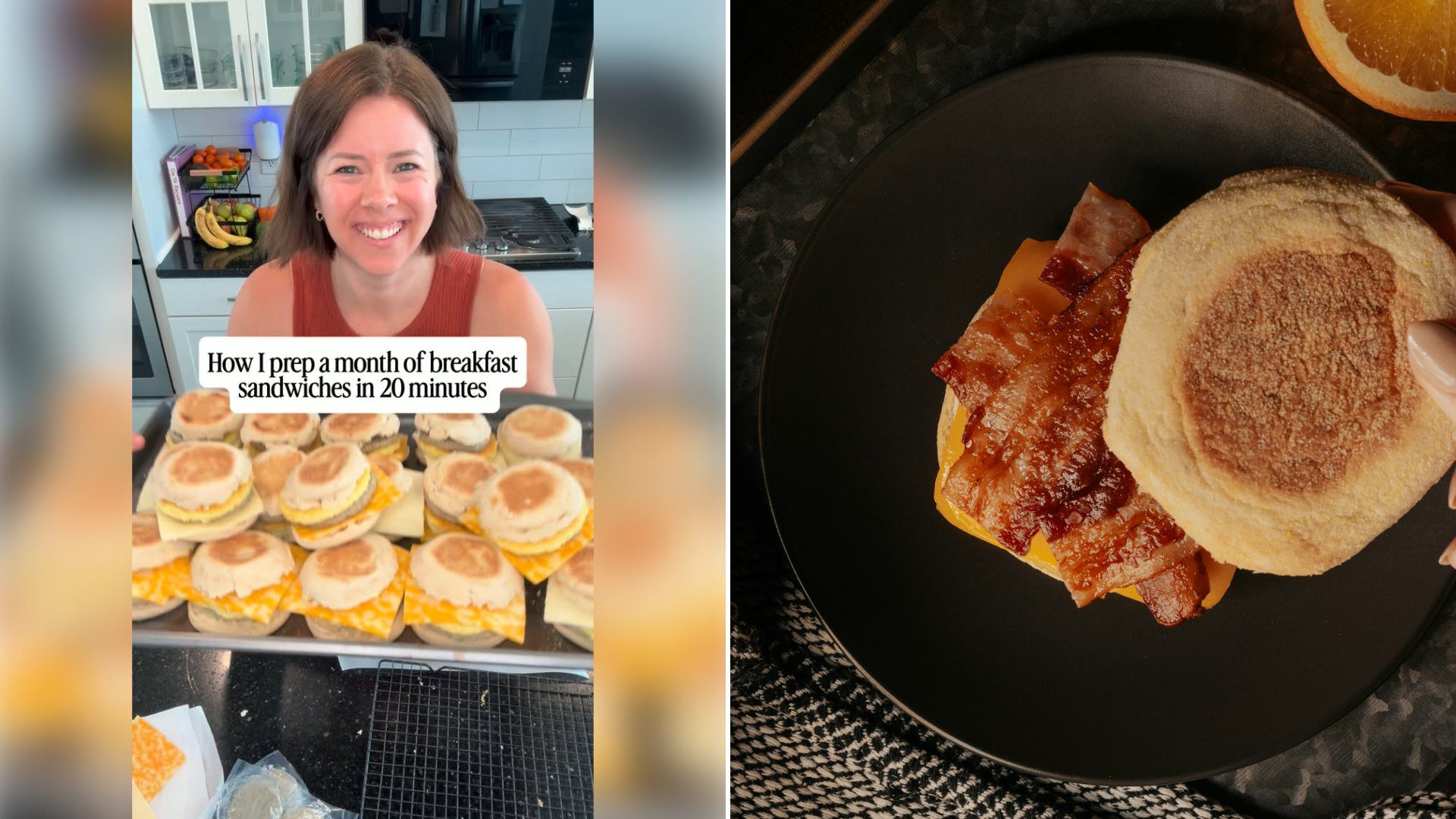
A video from the account the.robin.audi breaks down how $35 of a $105 Costco haul turned into a full month of freezer breakfast sandwiches, captioned with the complete assembly process: eggs blended with milk and seasoning, baked on a parchment-lined sheet pan while English muffins toast, then cut into neat rounds with a drinking glass before being stacked with cheese and a cooked sausage patty between toasted muffin halves. Each sandwich gets wrapped in parchment paper and stacked into a freezer bag for “grab and go weekday mornings on complete autopilot.” Tagged #freezermeals, #mealprep, and #costcohaul, the video pulled in 34,000 likes, 894 comments, and 54 shares.
A full month’s worth of breakfast sandwiches sitting in one freezer bag raises a practical question beyond the assembly itself: how long is that batch actually good for? Federal cold storage guidance, compiled by the USDA and FoodSafety.gov, puts baked egg dishes at two to three months in the freezer while maintaining best quality, and cooked sausage links or patties at one to two months. A sandwich that combines both components is realistically governed by whichever ingredient has the shorter window, which means a batch built for “the month” ahead, as this video frames it, lines up almost exactly with how long the sausage portion holds its quality best, even though the egg and the assembled sandwich as a whole could technically last a bit longer in the freezer without becoming unsafe.
That distinction matters because freezer storage time charts are about quality, not a hard safety cutoff. Food kept consistently frozen at 0°F stays safe to eat indefinitely, but texture and flavor decline the longer it sits, which is why USDA guidance frames these numbers as “best used within” rather than absolute expiration points. For a grab-and-go sandwich reheated straight from frozen on a rushed morning, quality loss shows up fast, rubbery eggs or a dried-out muffin are the more likely outcome of waiting too long, rather than any food safety concern, as long as the freezer itself has stayed at a consistent temperature the whole time.
Reheating is where the real food safety line sits, and it’s worth getting right given how often a frozen breakfast sandwich gets microwaved for a matter of seconds on the way out the door. USDA guidance calls for reheating leftovers, including frozen egg and meat combinations like this one, to an internal temperature of 165°F, checked with a food thermometer rather than estimated by how hot the sandwich feels on the outside. A microwave’s uneven heating pattern makes this especially relevant for a layered sandwich like this one: the center, where the egg and sausage sit sandwiched between insulating bread, often lags well behind the surface temperature, so a sandwich that feels warm to the touch can still have a cold spot in the middle that hasn’t reached a safe temperature.
None of this undercuts the appeal of a batch-prepped breakfast system built around $35 of ingredients stretching across a full month of mornings. It’s a reason to treat the one- to two-month window as the practical target for this specific combination, labeling the freezer bag with a date is a small step that turns a vague “the month” plan into one that’s easy to track, and to make sure whatever’s grabbed on the way out the door gets heated all the way through rather than just until it looks ready.
More from Decluttering Mom
- Mom of Two Opens Her Three Car Garage on a Doom Pile of Boxes, Finds Diapers From a Subscription Still Running and a Sauna Boxed for a Year, Then Clears Enough to Park Inside
- Woman Says She Came Home From a Cleaning Service Visit to a Gas Burner Left On With No Flame, Then Found Her Purse, Tax Documents and Real Silverware in Two Garbage Bags Downstairs
- Homeowner Whose Husband Said He Could Not See the Garage Floor Hauls Out Four Years of Stuff, Patches and Paints One Wall White, Then Hangs Bikes, Helmets and a Vacuum on Rails