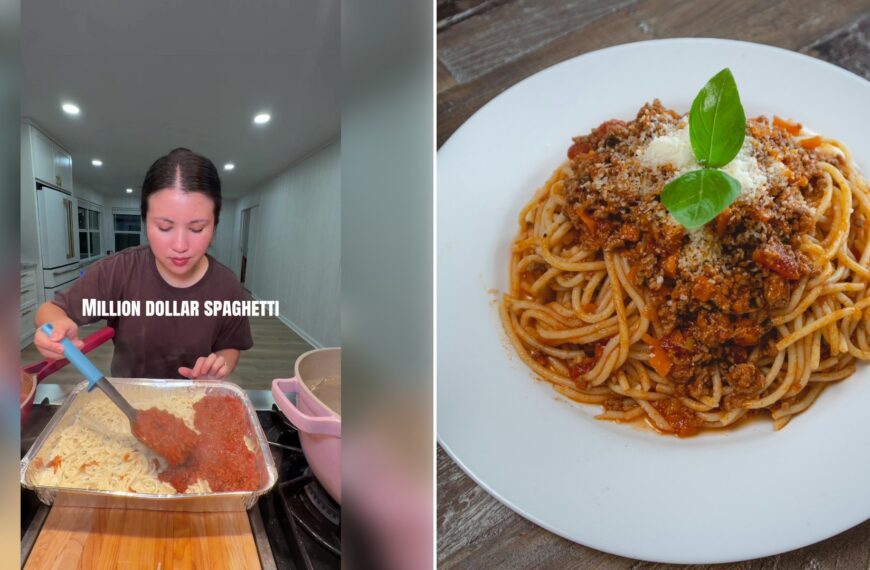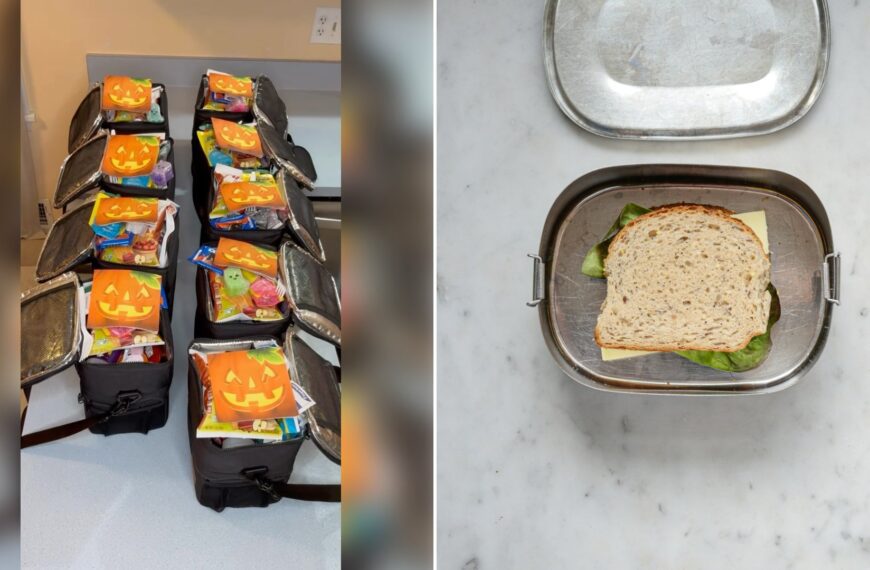
A video from the account megbradyhouse opens with a confession: “They told me whatever you do as a parent, don’t underestimate this one thing… It took me a while to get it and I honestly pushed back on it when I first heard someone say this.” The advice that changed her mind: “everything kids do is caught, not taught, so instead of telling your kids the things you want them to believe about themselves, say those things about yourself in front of them instead.” Two kids later, she says it works, sharing ten phrases she now says about herself out loud daily, from “I know I can do hard things” to “I’m a great problem solver, everything is figure-out-able,” and noting that her six-year-old has started repeating them unprompted. The post pulled in 14,100 likes, 661 comments, and 51 shares.
“Caught, not taught” is a plain-language version of something psychologist Albert Bandura spent decades researching and formalized as social learning theory. Bandura’s core finding, built on study after study, is that children learn an enormous amount simply by watching the people around them, especially parents, and imitating what they see, often without being directly instructed or even rewarded for it. His famous Bobo doll experiments in the early 1960s demonstrated this starkly: children who watched an adult behave aggressively toward an inflatable doll went on to imitate that aggression themselves, both physically and verbally, while children who saw a calm adult, or no model at all, did not. The behavior transferred through observation alone.
Bandura’s theory extends well past physical actions into attitudes, values, and beliefs, which is exactly the territory this video is working in. Children are more likely to imitate models they identify with and feel close to, and a parent is typically the single most identified-with model a young child has. That means a parent’s visible self-talk, confident or self-critical, calm or anxious, isn’t just background noise to a child, it’s a live demonstration of how a person is supposed to relate to themselves, which a child absorbs the same way they absorb a parent’s tone of voice or table manners.
This is part of why researchers studying parental modeling generally recommend demonstrating a trait directly rather than only instructing a child to adopt it. Telling a child “believe in yourself” is an instruction aimed at a behavior the child cannot see happening anywhere; a parent saying “I know I can do hard things” out loud in an ordinary moment gives the child an actual example of that belief being lived out, which is a fundamentally different, and by Bandura’s research, more effective kind of teaching.
The creator’s own description of the process, feeling cringy and awkward saying these phrases out loud at first, is a fair account of what changing a modeled behavior as an adult actually involves, since it runs against how most people are used to talking about themselves. The payoff she describes, a six-year-old independently repeating the same self-affirming language, is precisely the kind of outcome social learning theory would predict: the child didn’t memorize a lesson, she copied a pattern she’d seen enough times to make her own.
More from Decluttering Mom
- Mom of Two Opens Her Three Car Garage on a Doom Pile of Boxes, Finds Diapers From a Subscription Still Running and a Sauna Boxed for a Year, Then Clears Enough to Park Inside
- Homeowner Whose Husband Said He Could Not See the Garage Floor Hauls Out Four Years of Stuff, Patches and Paints One Wall White, Then Hangs Bikes, Helmets and a Vacuum on Rails
- Woman Who Does Free Cleans of Badly Cluttered Homes Says Cleaning Does Not Cure Depression and Asks Viewers to Swap How Could Someone Live Like This for What Might Have Happened