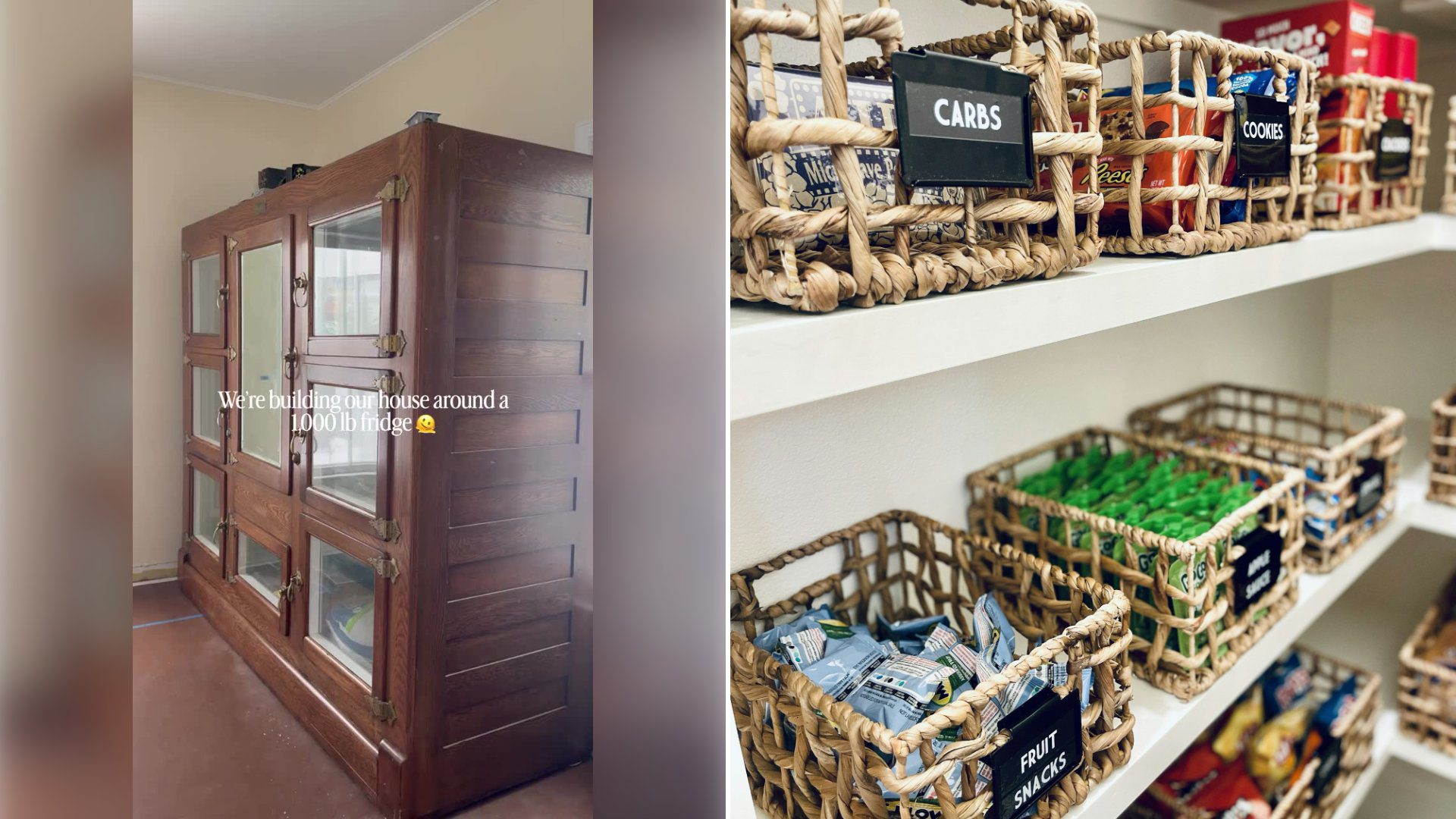
A video from the account Boogesmom opens with on-screen text reading “We’re building our house around a 1,000 lb fridge,” showing a massive antique oak icebox with glass-paneled doors and ornate brass hardware standing in a stripped-down room. The caption, “Frederick is BACK! This is Pantry Reno PT 1,” confirms the antique appliance, affectionately named Frederick, is the centerpiece of a multi-week pantry renovation built specifically to accommodate it. The video pulled in 98,600 likes, 920 comments, 5,487 saves, and 4,894 shares.
@boogesmom Frederick is BACK! 🗄️🔥 This is Pantry Reno PT 1.
Building a room around a 1,000-pound fixture isn’t just a design choice, it’s a structural one that most homeowners never have to think about with ordinary furniture. Standard residential floors are typically engineered to carry a live load of only 40 to 50 pounds per square foot, a figure meant to cover the combined weight of people, furniture, and everyday appliances spread across the whole room. A 1,000-pound icebox concentrates all of that weight into the relatively small footprint of its base, which means the actual load on the floor directly beneath it can run far higher per square foot than the room’s overall design limit, even though the home as a whole is nowhere near overloaded.
That kind of concentrated weight is generally referred to as a point load, and it’s the reason safes, gun cabinets, and antique appliances of comparable weight are routinely flagged in home renovation guidance as needing more than just a sturdy-looking spot on the floor. The usual fixes are straightforward: spreading the weight across a wider base with a reinforced platform or distribution pad, confirming what’s underneath the finished floor, since a concrete slab generally handles concentrated weight far better than a wood subfloor over joists, and in borderline cases, having the specific floor assembly checked before the piece is moved into its permanent spot rather than after.
There’s a second practical consideration specific to antique iceboxes and early refrigerators like this one, beyond the floor itself: the materials inside the cabinet walls. Many ice-cooled cabinets and early mechanical refrigerators from this general era relied on insulation materials, such as mineral wool or other fibrous packing, that modern renovation guidance recommends having inspected before any cutting, drilling, or interior restoration work begins, simply because materials common in that period aren’t always identifiable from the outside. For a piece being built into a permanent fixture of a home rather than kept as a standalone collectible, that inspection is a small step worth taking before the walls around it are closed up for good.
None of this is a reason to skip restoring a piece with this much character, a 1,000-pound antique icebox built into a pantry is exactly the kind of detail that makes a renovation memorable. It’s a reason to treat the floor underneath it, and what’s inside its walls, as part of the planning phase rather than an afterthought discovered once Frederick is already home.
More from Decluttering Mom
- Mom of Two Opens Her Three Car Garage on a Doom Pile of Boxes, Finds Diapers From a Subscription Still Running and a Sauna Boxed for a Year, Then Clears Enough to Park Inside
- Woman Says She Came Home From a Cleaning Service Visit to a Gas Burner Left On With No Flame, Then Found Her Purse, Tax Documents and Real Silverware in Two Garbage Bags Downstairs
- Homeowner Whose Husband Said He Could Not See the Garage Floor Hauls Out Four Years of Stuff, Patches and Paints One Wall White, Then Hangs Bikes, Helmets and a Vacuum on Rails