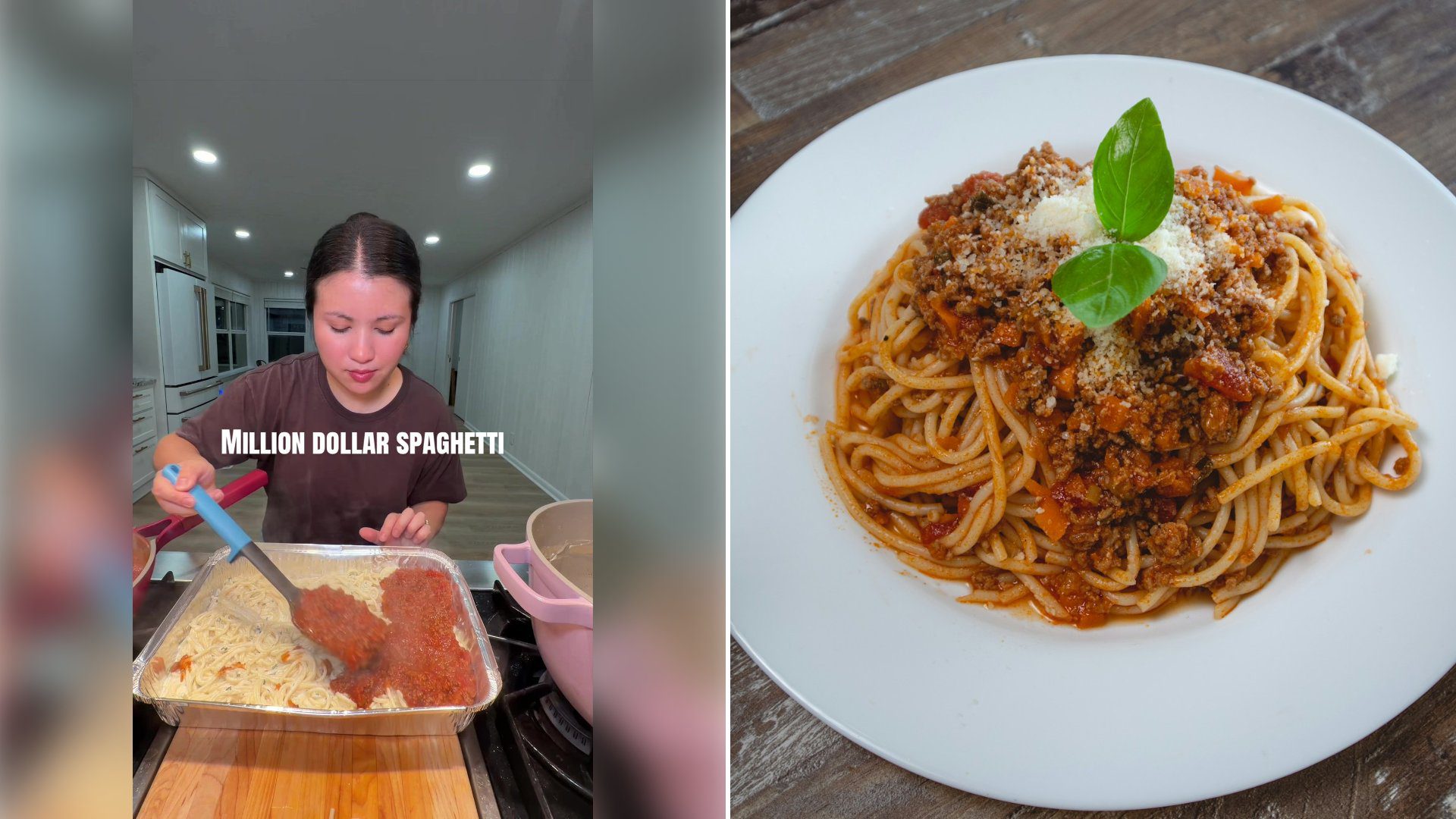
A video from the account Ayomadelyn shows a tray of “Million Dollar Spaghetti,” a baked spaghetti dish layered with a cream cheese mixture before being topped with meat sauce, coming together in her new home’s kitchen. Tagged #dinner, #millondollarspaghetti, #cooking, and #momsoftiktok, the video frames the dish as an affordable, filling dinner for her family of four. The clip pulled in 119,400 likes, 558 comments, 4,825 saves, and 1,477 shares.
@ayomadelyn Million dollar spaghetti #dinner #millondollarspaghetti #cooking #momsoftiktok #ayomadelyn
A pasta bake built around ground beef, pasta, and a cream cheese layer sits comfortably within what the USDA’s own food cost data says a family of four actually needs to budget for groceries overall. The USDA’s Thrifty Food Plan, the baseline used to calculate SNAP benefits, currently estimates roughly $229 a week, or just under $993 a month, for a family of four to eat on a lean but adequate budget. The Moderate-Cost plan, a step up from strict thrift, runs closer to $311 a week, about $1,347 a month. A single dinner built from pantry staples, ground beef, pasta, canned tomato sauce, and cream cheese, fits easily inside even the Thrifty plan’s per-meal math, which is part of why dishes like this one circulate so widely among budget-focused parents.
The “million dollar” name itself is a long-running shorthand in home cooking for exactly this kind of dish: something that tastes considerably richer than its ingredient list and total cost would suggest, usually through a layer of dairy, cream cheese, sour cream, or cottage cheese, that adds the texture and richness of a far more expensive baked pasta dish without the expensive cuts of meat or specialty ingredients. For a family working within something like the Thrifty Food Plan’s weekly allotment, dishes built on that principle, inexpensive bulk ingredients doing the work that pricier ones usually do, are one of the more reliable ways to stretch a grocery budget without the meals feeling like a downgrade.
None of this means every family needs to hit the Thrifty Food Plan’s number specifically, it’s calculated as a minimum rather than a target, but it does give a useful benchmark for a dinner like this one: a dish built from a handful of inexpensive staples that still reads as a full, satisfying family meal is squarely in line with what the USDA’s own data says a lean grocery budget can actually produce.
More from Decluttering Mom
- Mom of Two Opens Her Three Car Garage on a Doom Pile of Boxes, Finds Diapers From a Subscription Still Running and a Sauna Boxed for a Year, Then Clears Enough to Park Inside
- Woman Says She Came Home From a Cleaning Service Visit to a Gas Burner Left On With No Flame, Then Found Her Purse, Tax Documents and Real Silverware in Two Garbage Bags Downstairs
- Homeowner Whose Husband Said He Could Not See the Garage Floor Hauls Out Four Years of Stuff, Patches and Paints One Wall White, Then Hangs Bikes, Helmets and a Vacuum on Rails